Monsoon flower seeds (برسات کے پھولوں کے بیج) bring fresh colour to pots, borders, flower beds and climbing supports during Pakistan’s warm and rainy months. Zinnia, Marigold, Balsam, Cockscomb and Cosmos provide seasonal flowers, while Morning Glory, Butterfly Pea and other flowering vines cover fences, trellises and balcony railings.
Monsoon moisture can help young plants establish, but heavy rain can also disturb fine seeds and keep roots wet for too long. Successful rainy-season growing depends on warm-weather varieties, open drainage holes, suitable spacing and shelter for newly sown containers.
Choose Flowers
| Garden Plan |
Suitable Choices |
Growth and Display |
| Small pots |
Thumbelina Zinnia, Button Box Zinnia and compact Marigold |
Short plants for pots and front borders |
| Medium pots |
Lilliput Zinnia, Balsam and Cockscomb |
Bushy or upright seasonal flowers |
| Large pots |
Giant Zinnia, Cosmos and taller Marigold |
Taller stems with more open growth |
| Flower beds |
Zinnia, Marigold, Balsam, Cockscomb and Cosmos |
Groups, rows and mixed displays |
| Trellises |
Morning Glory, Butterfly Pea, Hyacinth Bean and Mina Lobata |
Climbing flowers for vertical spaces |
| Water gardens |
Pink Lotus |
Wide aquatic container or pond |
Choose according to the mature plant. Compact flowers can complete their display in ordinary pots, while tall flowers need more root space and flowering vines require both a larger container and climbing support.
Zinnia Types
Zinnias are among the most dependable warm-season flowers for pots and beds. They germinate quickly in warm soil and usually begin flowering approximately 8 to 12 weeks after sowing.
Thumbelina Mix and Button Box Dwarf Mix remain compact and suit smaller pots, pathways and the front of a border. Lilliput produces bushier plants with smaller rounded flowers and fits naturally into medium pots or mixed flower beds.
Giant Double varieties develop taller plants with large layered flowers. Individual red, rose, orange, golden, purple and white varieties allow a planned colour display, while Benary’s Giant Mix brings several colours together.
Cactus Mix has narrow, pointed petals. Candy Stripe and Jazzy Mix provide patterned flowers, while Super Yoga and other mixes create a less formal combination of colours and flower forms.
Tall Zinnias benefit from open spacing and may need light support after strong rain. Regularly removing faded blooms encourages the plants to continue producing flowering branches.
Pot Flowers
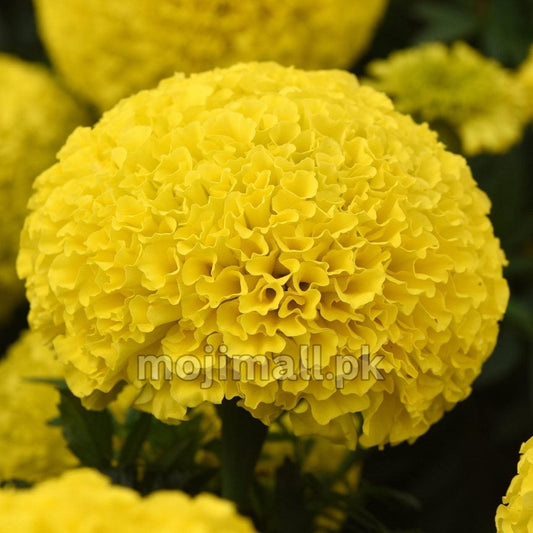
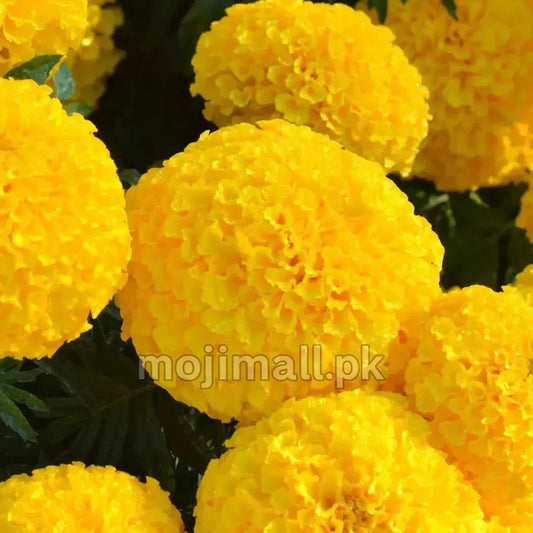
Marigold or Genda (گیندا) produces rounded flowers in yellow, orange and mixed shades. French Marigold or Gul Jafari (گل جعفری) stays comparatively compact and works well in pots, front borders and repeated rows.
Named Tagetes varieties provide individual colours such as orange, gold, yellow and vanilla. Check the mature height because compact and taller Marigold types need different positions within a flower bed.
Balsam, commonly called Gul Mehndi (گل مہندی), grows upright with flowers arranged close to its leafy stems. Bush Mix and Double Mix suit medium pots, borders and groups planted through a sunny bed.
Cockscomb or Celosia produces distinctive crested or plume-shaped flower heads. Mixed varieties provide several bright colours, while Cockscomb Red creates a more focused display. Its fine seeds are easier to manage in a protected tray during heavy rain.
These flowers can be combined in one display by placing compact Marigolds at the front, Balsam and Cockscomb through the middle and taller Zinnias towards the back.
Tall Flowers
Cosmos develops light, branching growth and daisy-shaped flowers held on slender stems. Mixed, pink and white varieties suit informal beds, larger pots and open spaces where the stems can move freely.
Cosmos Sea Shells Mix produces unusual rolled or fluted petals. Cosmos Sulphureus develops yellow, orange and golden flowers and generally handles warm conditions well.
Tall Cosmos can reach approximately 3 to 5 feet depending on the variety and growing conditions. Give it direct sunlight and enough space for air to move through the branches.
Cosmos and tall Zinnias work well behind shorter Marigolds or Cockscomb. In exposed rooftop gardens, a thin stake or support line can help prevent the stems from leaning after wind and rain.
Flowering Vines
Morning Glory grows quickly once warm conditions arrive. Heavenly Blue, Crimson, Scarlet O’Hara and Grandpa Ott provide classic colours, while Flying Saucers, Milky Way, Picotee and Kikyo Zaki varieties add stripes, edges or unusual flower shapes.
Most Morning Glory flowers open early in the day and close as temperatures rise. White Moon Flower follows a different rhythm and opens its large white flowers during the evening.
Butterfly Pea produces blue, light-blue, purple or white flowers on a vigorous vine. Double White provides a fuller flower form. Butterfly Pea can continue for more than one season in warm areas where winter temperatures remain mild.
Balloon Vine is valued for fine climbing growth and inflated seed pods. Hyacinth Bean provides broad leaves and purple or white flowers, while Mina Lobata develops changing flower colours along upright clusters.
Alamo Vine adds another climbing option for fences and trellises. Each vine has its own final spread, so allow strong-growing types enough width instead of placing several plants around one narrow support.
Explore the complete flowering vine seed collection for more colours and climbing styles.
Other Flowers
Adenium develops a swollen base and trumpet-shaped flowers as it matures. It needs warmth, bright sunlight and a growing mixture that drains quickly. Starting it during humid weather requires careful watering because its young roots should not remain saturated.
Pink Lotus or Kanwal (کنول) is an aquatic plant for ponds and wide water containers. It does not follow the ordinary potting method used for Zinnia, Marigold or Cosmos. Plant it in suitable heavy soil inside an aquatic container and maintain water above the planted surface.
Rain Lily and Spider Lily products may also appear within the collection. These grow from bulbs and follow different planting instructions from flower seeds. Check the product title before ordering and use the individual planting depth provided for the selected bulb.
Bloom Guide
| Flower |
Approximate Height |
First Flowers |
| Dwarf Zinnia |
8 to 15 inches |
Around 8 to 10 weeks |
| Lilliput Zinnia |
18 to 24 inches |
Around 8 to 12 weeks |
| Giant Zinnia |
30 to 48 inches |
Around 10 to 12 weeks |
| French Marigold |
8 to 15 inches |
Around 8 to 10 weeks |
| Balsam |
18 to 30 inches |
Around 8 to 12 weeks |
| Cockscomb |
12 to 36 inches |
Around 8 to 12 weeks |
| Cosmos |
3 to 5 feet |
Around 8 to 12 weeks |
| Morning Glory |
6 to 10 feet as a vine |
Around 8 to 12 weeks |
| Butterfly Pea |
6 feet or more as a vine |
Around 10 to 14 weeks |
These figures are general guides. The exact height and flowering time depend on the variety, temperature, sunlight, spacing and container size.
Sowing Time
In Lahore, Faisalabad, Islamabad and Rawalpindi, sow Zinnia, Balsam, Cockscomb, Cosmos, Marigold and flowering vines from late June through August. Protect trays and newly sown pots during strong rain. A July or August sowing can continue flowering as intense summer heat begins easing.
In Karachi, July through September can suit warm-season flowers when containers drain freely. Zinnia, Balsam, Cockscomb, Morning Glory and Butterfly Pea can be started during this period. Give young seedlings bright morning light and protection from severe afternoon heat and direct downpours.
In southern Punjab, July and August provide the main monsoon window. Begin after the strongest dry heat has started easing and keep newly sown containers in a bright, sheltered position until seedlings become established.
In colder northern and hilly areas, warm-season flowers can be sown from May through July after cold nights have passed. The earlier start gives the plants enough time to flower before autumn temperatures become low.
Monsoon timing changes from year to year. Use local temperature and rain conditions as the final guide instead of sowing immediately after one isolated shower.
How to Sow
- Fill pots or a seedling tray with loose, well-draining growing mixture.
- Sow fine seeds shallowly and cover larger flower seeds according to the product instructions.
- Water gently so the seeds remain evenly placed.
- Keep the containers in a bright position protected from direct downpours.
- Thin or transplant the seedlings after they develop several true leaves.
Zinnia, Marigold, Balsam and Cosmos can be sown directly in their final pots or flower beds. Starting them in trays makes it easier to protect small seedlings during unsettled weather.
Cockscomb has very fine seeds and benefits from a light covering. A loose seed starter mix helps maintain steady moisture without forming a hard surface.
Morning Glory and other firm vine seeds may benefit from soaking before sowing. Place climbing varieties close to their final support so the first long stems can be guided upwards.
Pots and Beds
Thumbelina Zinnia, Button Box Zinnia and compact French Marigold suit pots approximately 8 to 10 inches wide. One plant can fill an individual pot, while several can be arranged through a wider planter.
Lilliput Zinnia, Balsam and compact Cockscomb benefit from pots around 10 to 12 inches wide. A 12 × 12-inch HDPE grow bag can hold one bushy plant or a carefully spaced group of smaller flowers.
Use an 18 × 6-inch Kiyari grow bag for a short row of Marigold, dwarf Zinnia or compact Cockscomb. This shape also works well along a wall, railing or pathway.
Giant Zinnia, tall Cockscomb and Cosmos need larger pots or open flower beds. Use a container around 12 to 14 inches wide for one tall plant and provide support where wind is strong.
Morning Glory can grow in a 12 × 12-inch grow bag with a trellis. Butterfly Pea, Hyacinth Bean and stronger vines benefit from a 14 × 14-inch, 18 × 15-inch or 10-gallon container.
Choose containers with several drainage holes. Raise pots slightly where water collects across a rooftop, balcony or tiled floor.
Rain Protection
Newly sown containers need moisture, but direct heavy rain can uncover seeds, move them to one side or press the growing mixture into a hard layer.
Keep trays and small pots beneath a transparent roof, shade structure or balcony edge during strong rain. Leave the sides open so heat and humidity can escape.
Once plants are established, move them into their final sunny position. Continue checking the soil because covered containers may remain dry even when it has rained heavily elsewhere in the garden.
Use a loose potting mix and keep drainage holes clear. Empty trays or decorative outer pots that collect water beneath the container.
Space mature plants according to their final width. Open space helps wet leaves dry and reduces the time moisture remains trapped around the stems.
Plant Care
-
Sunlight: Around 6 to 8 hours of direct sunlight
-
Soil: Loose growing mixture with good drainage
-
Watering: Check the soil after rain and water when needed
-
Spacing: Allow air to move between mature plants
-
Feeding: Apply a balanced flower fertilizer during active growth
-
Support: Stake tall flowers and provide trellises for vines
-
Grooming: Remove faded blooms and damaged leaves
-
Shelter: Protect young seedlings from strong rain
Water around the base during dry periods. Morning watering gives surface moisture time to dry as the day becomes warmer.
Remove faded Zinnia, Marigold, Cosmos and Balsam flowers regularly. This keeps the display tidy and encourages new flowering branches before the plant directs its energy towards mature seeds.
Inspect new shoots, buds and the undersides of leaves for aphids, mites, whiteflies and caterpillars. Humid conditions can also encourage brown spots and white powdery patches on crowded foliage.
Secure tall plants and climbing supports before windy weather. Spread vine stems across the available trellis so the leaves and flowers are not concentrated in one dense area.
Browse the collection to buy monsoon flower seeds online in Pakistan for rainy-season pots, borders, flower beds, fences and rooftop trellises.
Find More
Explore monsoon seeds and bulbs for the complete rainy-season range or browse flowering vine seeds for Morning Glory, Butterfly Pea and other climbers.
You can also find summer flower seeds, Zinnia seeds, flower bulbs, grow bags, seedling trays and potting mixes.
FAQs
Why are my flower seedlings tall and weak?
Seedlings stretch when they receive insufficient light or remain crowded for too long. Move them into brighter light after germination, thin crowded sections and turn trays occasionally so growth remains even.
Why does my Marigold have healthy leaves but few flowers?
Limited direct sunlight and heavy nitrogen feeding can encourage leafy growth. Give the plant more sun, remove faded flowers and use light, balanced feeding during active growth.
Can seeds be collected from mixed flower varieties?
Yes. Allow selected flowers to dry fully on healthy plants before collecting their mature seeds. The next plants may produce different colours or flower forms, particularly when several varieties grew together. Seeds collected from F1 varieties may not remain identical to the original plants.
Why is Morning Glory bare near the bottom of its trellis?
The growing tips naturally continue upwards towards stronger light. Redirect flexible stems sideways, add horizontal strings and pinch selected tips to encourage branching across the lower part of the support.
How should unused flower seeds be stored during monsoon?
Close each packet and place it in an airtight container in a cool, dry cupboard. A food-safe moisture absorber can help protect the packets from humid air. Keep the container away from direct sunlight and heat.