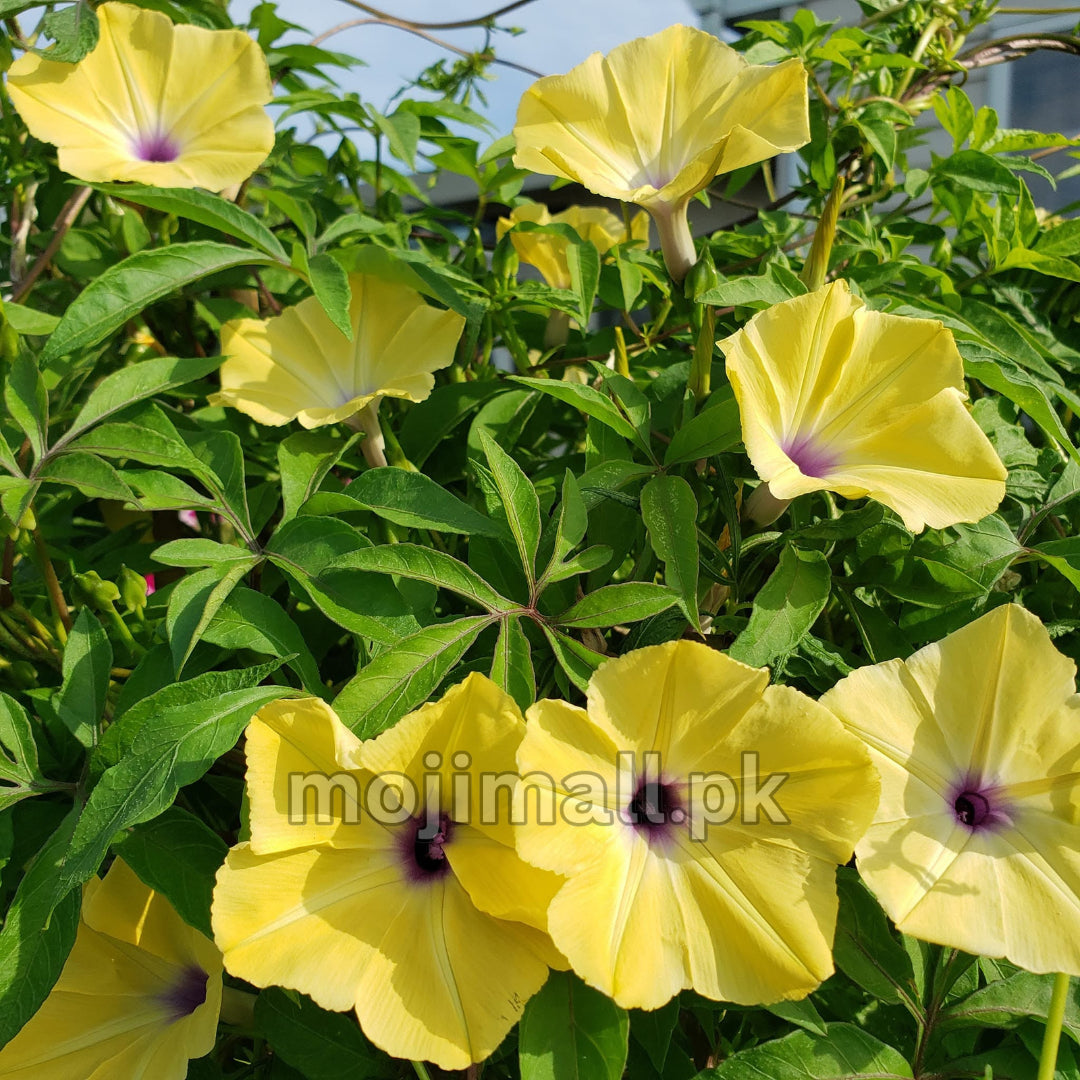
Morning Glory Tuberculata brings creamy-yellow, funnel-shaped flowers with contrasting purple throats to fences, trellises and balcony grills. Its deeply lobed green leaves add a decorative shape around the blooms, giving the vine an attractive appearance between flowering periods.
Native to parts of Africa and South Asia, this warm-season climber grows by winding its slender stems around nearby supports. Grow it beside a garden fence or train a potted plant over a trellis where the pale flowers and dark centres can be appreciated closely.
Why Gardeners Choose It
-
Distinctive Colour: Creamy-yellow flowers surround a contrasting purple throat.
-
Decorative Foliage: Deeply divided leaves add texture to the climbing display.
-
Vertical Flowers: Suitable for fences, balcony grills, arches and trellises.
-
Container Friendly: Can be grown in a spacious pot with securely anchored support.
Best Conditions
-
Germination: Usually 14–28 days
-
Germination temperature: Around 20–25°C
-
Sunlight: At least 6–8 hours of direct sunlight
-
Pot size: A 12–14-inch pot for one vine
-
Spacing: About 18–24 inches between plants
-
Vine length: Around 6–8 feet, with longer growth possible in favourable conditions
-
Support: A trellis, fence, arch or climbing mesh
-
Soil: Light, moderately fertile and well-draining mix
Sowing note: In Lahore, Faisalabad, Islamabad and Rawalpindi, sow from March to April after the risk of frost has passed. In Karachi and southern Punjab, sow from February to March, or again from September to October while nights remain warm. In colder northern and hilly areas, sow from April to May once the soil has warmed.
How to Sow
- Lightly rub a small patch of each seed coat with sandpaper without exposing the inside.
- Soak the seeds in clean, lukewarm water for around 24 hours, then drain.
- Fill individual small pots with fine, moist seed starter mix.
- Sow one seed per pot around ½ inch deep and cover lightly.
- Water gently and keep the mix lightly moist until seedlings appear.
- Transplant after 2–3 true leaves develop, keeping the soil around the roots intact.
Plant Care
Water regularly while the vine establishes, then allow the upper layer of the mix to begin drying between waterings. Guide young stems onto their support as they lengthen. Use loose ties where needed and lightly trim growth that extends beyond the available space.
Mix a small amount of Vermicompost into the final planting mix. Check young shoots and leaf undersides for aphids and spider mites. If pests appear, apply Neem Oil according to the label, covering the affected foliage and avoiding open flowers.
Local Gardener Tips
- Gradually acclimatise seedlings before moving them into their final outdoor position.
- Protect small seedlings from harsh afternoon heat and heavy rain.
- Secure pots and climbing supports firmly on windy balconies and rooftops.
- Keep the vine away from small neighbouring plants that its stems could wrap around.
Flowering and Display
Position Tuberculata near a pathway, entrance or sitting area where its contrasting flower centres remain visible. The pale blooms show particularly well against dark supports and green foliage.
Guide several branches across the framework to spread the display. Remove dry or damaged growth and trim selectively, keeping healthy leafy stems in place.
FAQs
Why are my seedlings collapsing at soil level?
This may be damping-off, especially if the stem becomes thin, dark or soft near the surface. Remove affected seedlings, improve airflow and avoid repeatedly soaking the mix. Start replacements in clean pots with fresh seed starter mix.
Is Morning Glory Tuberculata an annual or perennial?
Ipomoea tuberculata Ker Gawl. is classified as an annual species. Plan a fresh sowing for the following season. New plants may also appear where mature vines were allowed to release seeds.
Common names: Morning Glory Tuberculata, Yellow Morning Glory, Ipomoea tuberculata Ker Gawl.