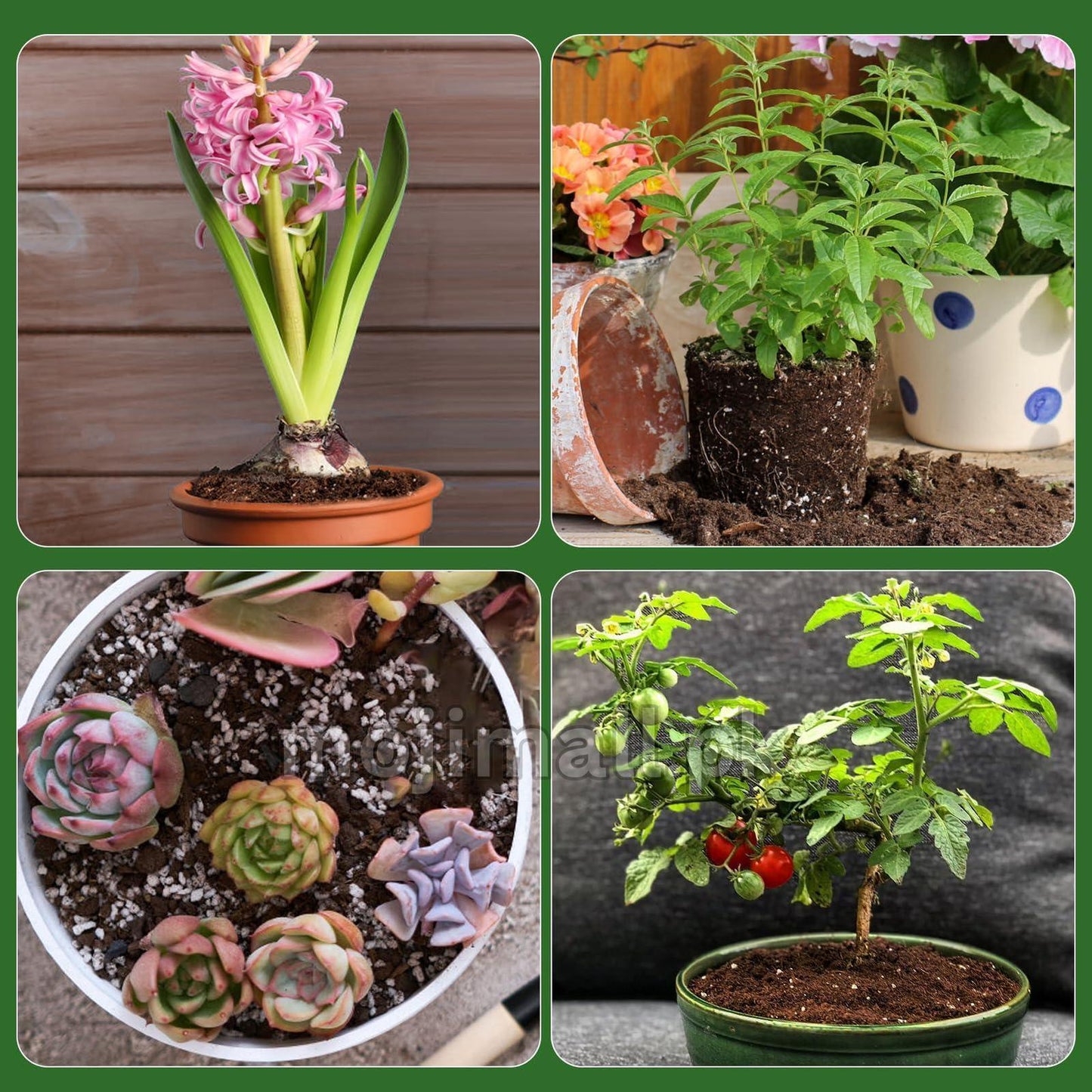
Seed Starter Mix is a ready-to-use growing medium prepared for germinating vegetable, herb and flower seeds. Its soft, light texture allows delicate roots to develop more easily than they would in heavy or compact garden soil.
The mixture contains coco peat, perlite, vermicompost and added fungicide. Together, these ingredients help maintain moisture, provide airflow and reduce the risk of common fungal problems during early seedling growth.
Why Use It
- Ready to use without adding other ingredients
- Light texture for newly developing roots
- Holds moisture around germinating seeds
- Allows excess water to drain
- Suitable for seed trays and nursery pots
- Contains gentle nutrition from vermicompost
- Added fungicide helps reduce early fungal problems
Seeds still require suitable temperatures, correct sowing depth and careful watering. A good growing medium provides the right starting conditions but cannot correct unsuitable weather or poor-quality seeds.
What’s Inside
Coco Peat
Coco peat holds moisture around the seeds and keeps the mixture soft. This helps prevent the surface from drying immediately after watering.
Perlite
Perlite creates air spaces and helps excess water move through the mixture. It prevents the material from becoming tightly packed inside small tray cells.
Vermicompost
Vermicompost provides a small amount of organic nutrition for early seedling development. It is included in a controlled quantity so the mixture does not become excessively rich.
Fungicide
Added fungicide helps reduce the risk of fungal problems such as damping-off. Correct watering, airflow and clean trays remain important because no treatment can fully protect seedlings kept in constantly wet conditions.
Best For
This seed-starting soil mix can be used for:
- Tomato, chilli, capsicum and brinjal seeds
- Cucumber, gourd, melon and okra seeds
- Cabbage, cauliflower, lettuce and other winter vegetables
- Basil, coriander, mint and other herbs
- Marigold, petunia, pansy, zinnia and other flowers
- Seasonal seeds grown in plug trays or nursery pots
- Rooting selected plant cuttings
Large seeds that dislike transplanting, such as many beans, peas and gourds, may also be started directly in individual pots to reduce root disturbance.
Pack Guide
| Pack |
Suitable Use |
| 1kg |
One seedling tray or several small nursery pots |
| 5kg |
Seasonal sowing for a home or rooftop garden |
| 25kg |
Repeated sowing, multiple trays or larger home nurseries |
The exact number of trays filled will depend on the cell size, tray depth and how firmly the mixture is packed.
How to Sow
- Fill clean seedling trays or nursery pots loosely with the mixture.
- Sow each seed at the depth recommended for its variety.
- Cover lightly where required. Do not bury small seeds too deep.
- Water gently with a spray bottle or fine misting nozzle.
- Place the tray in a bright location with temperatures suitable for the selected seeds.
Do not press the mixture firmly into the cells. Lightly tapping the tray is enough to settle it while preserving air space around developing roots.
Sowing Depth
Seed size provides a useful general guide. Larger seeds are normally planted deeper than fine flower and herb seeds.
Very small seeds may need only a light covering, while some varieties require light to germinate and should remain close to the surface. Always check the instructions for the specific seed being sown.
If seeds are buried too deeply, the young shoots may use their stored energy before reaching the surface.
Watering
Keep the mixture evenly moist during germination without leaving it soaked. Check the tray daily because small cells can dry faster than large pots.
Use a fine spray for small seeds so they are not displaced. Once seedlings emerge, water around them carefully instead of repeatedly wetting the stems and leaves.
Make sure the tray or nursery pot has open drainage holes. Empty standing water from the tray underneath after the mixture has absorbed enough moisture.
Light and Air
Most seeds need warmth and moisture before germination, but newly emerged seedlings also require good light. Move sprouted trays into a bright position before the stems become pale, thin and stretched.
Introduce young seedlings to stronger sunlight gradually. Tender growth may be damaged if moved suddenly from shade into intense afternoon sun.
Leave space between trays and avoid keeping them in a closed, humid corner. Gentle airflow helps the surface dry normally and reduces conditions that encourage fungal growth.
Transplanting
Seedlings are generally ready to move after developing true leaves and enough roots to hold the growing mixture together. The first leaves that appear after germination are seed leaves and may look different from the plant’s normal foliage.
Water the tray lightly before transplanting. Lift each seedling with its root ball and avoid pulling it by the stem.
Move established seedlings into garden soil or a suitable potting mix that provides enough space and nutrition for continued growth.
Local Tips
- Start cool-season vegetable and flower seeds away from intense late-summer heat.
- During hot weather, keep trays in bright light with protection from strong afternoon sun.
- During winter, provide warmth to seeds that need higher germination temperatures.
- Raise trays above the ground during the monsoon so water can drain freely.
- Label different varieties because germination times can vary considerably.
- Clean previously used trays before starting another group of seeds.
- Store unused mixture in a tightly closed bag away from rain and direct sunlight.
FAQs
Why did my seedlings emerge and then fall over?
Seedlings that become thin near the soil surface and collapse may be affected by damping-off. Excessive moisture, poor airflow, contaminated trays and overcrowding can contribute to the problem. Remove affected seedlings and allow the surface to dry slightly before watering again.
Should I add fertilizer before sowing?
Additional fertilizer is usually unnecessary during germination because seeds contain stored energy and the mixture already includes vermicompost. Strong fertilizer may damage tender roots. Begin light feeding later only when the seedlings are established and require it.
Can seedlings remain in this mixture permanently?
The mixture is prepared mainly for germination and early development. Transfer established seedlings into a suitable potting mixture or garden soil once they have true leaves, stronger roots and enough size to handle transplanting.
Does the mixture need to be sterilized before use?
No. It is supplied as a ready-to-use seed starter. Use clean hands, tools and trays to avoid introducing contaminated soil or old plant material.
How should an opened bag be stored?
Close the bag securely and keep it in a cool, dry place protected from rain, insects and dirty water. Do not store it in direct sunlight or leave the mixture exposed between sowing sessions.