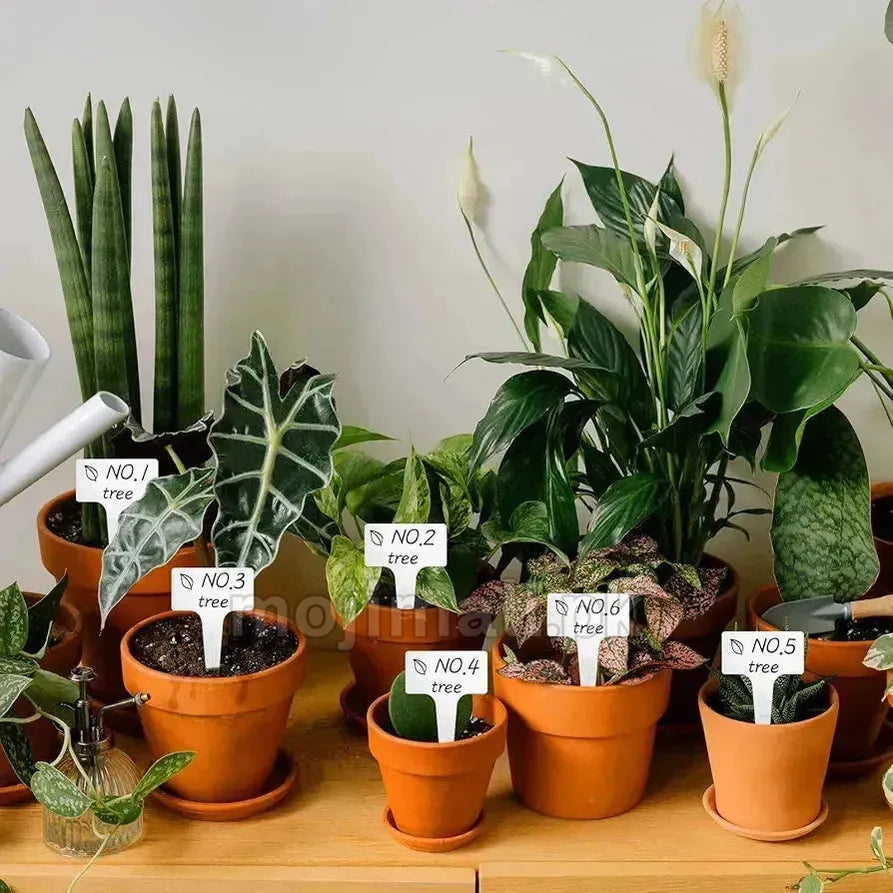
White Plastic Plant Tags provide a simple way to identify seeds, seedlings and plant varieties in pots, seedling trays and garden beds. Their T-shaped design provides a clear writing area above the growing medium and a pointed end for easy placement.
Choose a pack of 10 for a few pots or a pack of 100 for larger seedling batches and regular home gardening.
Why Use Them
- Helps identify similar-looking seedlings
- Keeps different varieties correctly separated
- Provides space for plant names and dates
- Useful for recording sowing and transplanting
- T-shaped design with a clear writing area
- Pointed end for easy placement
- Lightweight plastic construction
- Suitable for pots, trays and garden beds
- Can be cleaned and reused when suitable
Product Details
| Detail |
Information |
| Product type |
Plant identification tags |
| Material |
Plastic |
| Colour |
White |
| Shape |
T-shaped |
| Pack options |
Pack of 10 or pack of 100 |
| Placement |
Inserted into the growing medium |
| Best use |
Names, varieties and planting records |
| Suitable for |
Pots, trays, containers and beds |
The tags are supplied blank so you can add the information required for each plant.
What to Write
Useful information can include:
- Plant name
- Variety name
- Seed source
- Sowing date
- Transplanting date
- Flower colour
- Batch number
- Short care reminder
For seedlings, writing the variety and sowing date is usually enough. Longer records can be kept in a notebook or phone using the same number written on the tag.
Best Uses
Plant tags are particularly useful for:
- Seedling trays containing several varieties
- Similar-looking vegetable seedlings
- Different flower colours
- Herb collections
- Seed-saving plants
- Newly planted bulbs
- Rooted cuttings
- Nursery pots
- Balcony containers
- Seasonal garden beds
They are helpful when growing several varieties of tomatoes, chillies, onions, flowers or herbs that may look almost identical during their early growth.
How to Use
- Write the required information on the blank surface.
- Allow the writing to dry completely.
- Insert the pointed end gently into the growing medium.
- Keep the label visible without covering the plant.
- Update or replace it when the information changes.
Place the tag near the side of the pot rather than directly beside the main stem. Insert it carefully around established plants to avoid pushing through thick roots.
In seedling trays, place one tag at the beginning of each variety. Use one tag in every cell only when individual identification is required.
Pack Choice
The pack of 10 is suitable for:
- A few indoor plants
- Small balcony gardens
- One or two seedling trays
- Testing different varieties
The pack of 100 is suitable for:
- Frequent seed sowing
- Larger home gardens
- Multiple seedling trays
- Nurseries and plant sellers
- Organising saved seeds and cuttings
Select the pack according to the number of plants or varieties you need to identify.
Garden Records
Plant tags become more useful when combined with simple written records. Assign each plant or seed batch a number, write that number on the tag and keep its complete details in a notebook or spreadsheet.
This provides more information without trying to fit long notes onto a small label.
Cleaning
Remove loose soil with clean water and a soft cloth. Mild dishwashing liquid can be used when necessary. Rinse the tags and allow them to dry before writing on them again.
Do not transfer an uncleaned tag from an unhealthy plant to another pot. Replace faded or cracked tags before their information becomes difficult to read.
Storage
Keep unused tags together in their original pack or a closed container. Store them away from direct sunlight until required.
Keeping blank tags, a marker and seed packets together makes it easier to label each variety immediately after sowing.
FAQs
Which pen should be used on these tags?
A permanent marker is suitable for general use. An oil-based paint marker usually lasts longer outdoors. Allow the writing to dry before touching the surface or placing the tag near water.
Will the writing remain visible outdoors?
The plastic tag can tolerate normal outdoor conditions, but the writing may fade after extended exposure to strong sunlight and rain. Marker quality has a major effect on how long it remains readable.
Can permanent marker be removed?
A small amount of nail polish remover applied with cotton can remove some permanent-marker ink. Test it on one tag first because some removers may dull the plastic surface.
What is the difference between these and threaded tags?
These T-shaped tags are inserted into pots, trays or garden beds. Threaded Plant Tags are tied to branches, plant supports, pot handles or packaged plants.
Common Names: Plant Tags, Plant Labels, Garden Markers, Nursery Tags, Seedling Labels