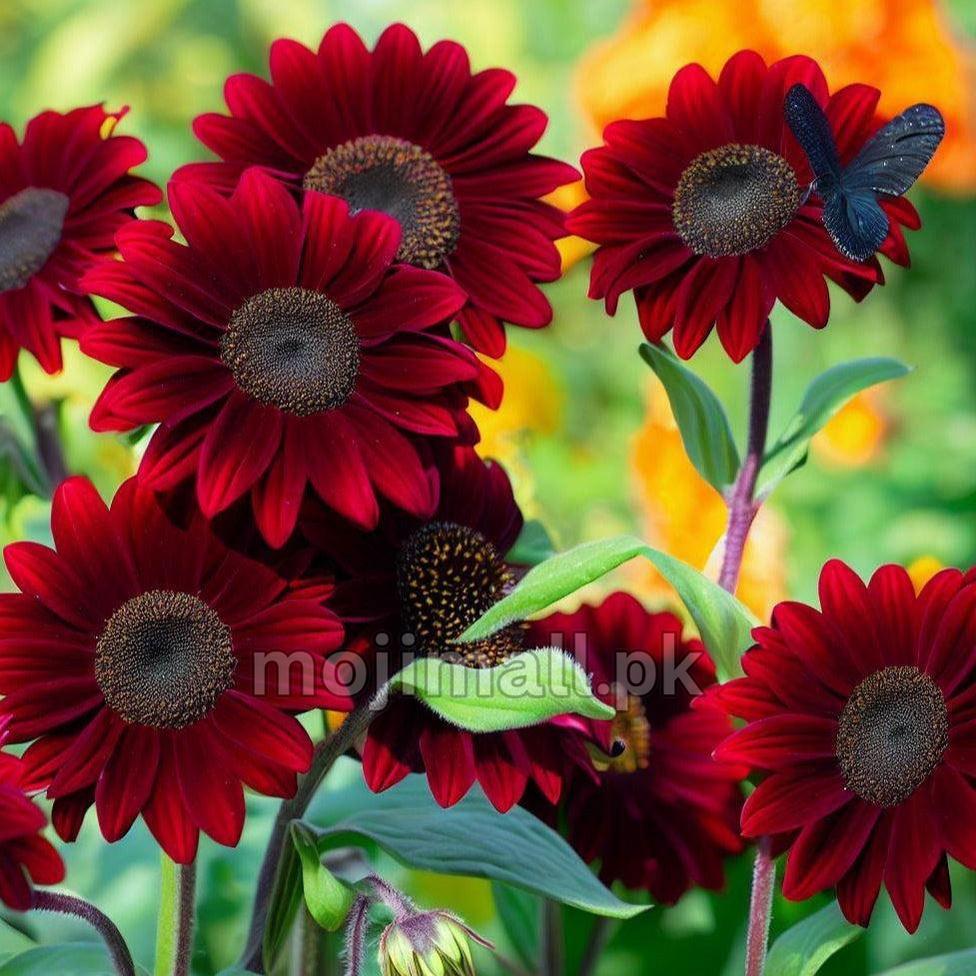
Helianthus Red and Brown produces dramatic sunflower blooms with velvety deep red petals, darker brown-burgundy shading and large chocolate-brown centres. The rich colour looks especially striking against its broad green leaves and tall upright stems.
This warm-season ornamental sunflower creates a bold background in sunny flower beds and can also be grown as a feature plant in a large, deep pot. The blooms attract bees and butterflies and can be cut for distinctive indoor arrangements.
Why Gardeners Love It
-
Rich Flower Colour: Velvety red petals develop dark brown and burgundy shading.
-
Dark Centres: Large chocolate-brown centres create a strong contrast.
-
Tall Garden Display: Adds height behind shorter summer flowers.
-
Pollinator Friendly: Attracts bees and butterflies while flowering.
-
Suitable for Cutting: Produces distinctive flowers for arrangements.
Best Conditions
-
Germination: Usually 7–14 days
-
Germination temperature: Around 20–30°C
-
Growing temperature: Around 20–35°C
-
Sunlight: At least 6–8 hours
-
Pot size: A deep 14–16-inch pot for one plant
-
Spacing: About 12–18 inches between plants
-
Plant height: Usually around 4–6 feet
-
Soil: Deep, fertile and well-draining mix
-
First flowers: Usually around 10–14 weeks after sowing
Sowing note: In Lahore, Faisalabad, Islamabad and Rawalpindi, sow from February to April. In hotter areas such as Karachi and southern Punjab, sow from January to March, or again from August to September after prolonged monsoon rain and the strongest heat have eased. In colder northern and hilly areas, sow from March to May after the risk of hard frost has passed.
How to Sow
- Choose a sunny garden position or fill a deep pot with moist, well-draining soil.
- Sow each seed approximately ½ inch deep.
- Water gently and keep the soil lightly moist until germination.
- Thin crowded seedlings and retain the strongest plant at each position.
- If starting in containers, use separate cells or small pots for each seed.
- Transplant while the seedlings are young, keeping the root ball together.
Plant Care
Water deeply whenever the upper inch of soil begins drying. Avoid frequent shallow watering because taller plants develop better stability when their roots grow deeper. Install a stake early if the plants are exposed to strong wind, and tie the stem loosely as it grows.
Mix a small amount of Vermicompost into the soil before sowing. When flower buds begin forming, apply NPK 5-15-45 lightly according to its directions. Avoid excessive nitrogen fertilizer because it can produce tall, weak stems. Check the new growth and flower buds for aphids, thrips, whiteflies and spider mites. If found, spray Neem Oil on the affected areas while avoiding open flowers.
Local Gardener Tips
- Direct sow in the final position whenever possible.
- Stake the stem before it becomes tall and top-heavy.
- Protect young seedlings from snails, birds and strong watering.
- Sow a few seeds every 2–3 weeks for flowers over a longer period.
Flowering
The flower heads begin opening approximately 10–14 weeks after sowing. Depending on individual plants and growing space, a strong central stem may carry one large primary flower followed by smaller side blooms.
For arrangements, cut the stem early in the morning when the petals have opened but the flower is still fresh. Place it in clean water immediately. Leave selected mature heads on the plant if you want to collect seeds or provide food for garden birds.
FAQs
Will every flower have exactly the same shade?
No. Individual plants may produce flowers ranging from dark red to burgundy, bronze-red or brown-red. The depth of colour can also change as each flower matures.
Why is my sunflower growing tall without producing a bud?
The plant may still be immature. Weak sunlight, excessive nitrogen fertilizer or crowded conditions can also delay bud development.
Will saved seeds produce the same red and brown flowers?
Not always. Sunflowers are easily cross-pollinated by insects, so seeds collected from the plants may produce variations if other sunflower varieties were flowering nearby.
Why are the lower leaves turning yellow?
One or two older lower leaves may yellow naturally as the plant grows. Widespread yellowing can indicate waterlogged soil, prolonged dryness, root damage or insufficient nutrients.
Is this sunflower an annual or perennial?
This Helianthus is grown as an annual. It germinates, flowers and produces seeds within one warm growing season.
Common names: Helianthus Red and Brown, Red Sunflower, Dark Red Sunflower, Ornamental Sunflower, Suraj Mukhi, Helianthus annuus, سورج مکھی