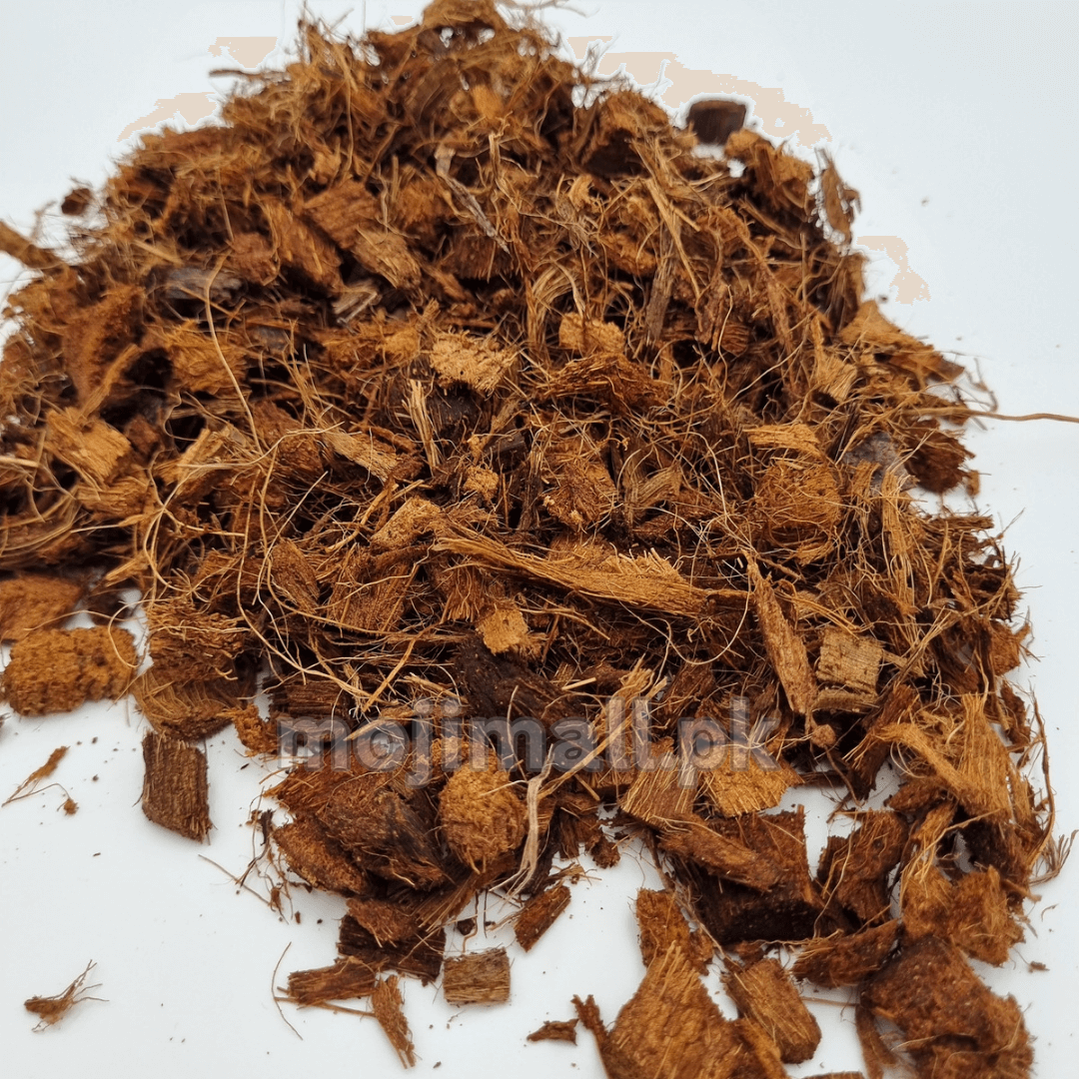
Coco chips are chunky pieces of dried coconut husk used in potting mixtures and around container plants. Their firm, fibrous structure creates air spaces while absorbing enough moisture to prevent the mixture from drying too quickly.
They are particularly useful for orchids, aroids and other indoor plants that need moisture around their roots without remaining in dense, compacted soil. Coco chips can also be added to general potting mixtures or used as a surface mulch.
Why Use It
- Creates larger air spaces in potting mixtures
- Holds moisture without becoming as dense as coco peat
- Helps prevent container mixtures from compacting
- Suitable for orchids, aroids and many indoor plants
- Can be mixed with coco peat, perlite and potting soil
- Useful as a surface mulch in pots
- Made from natural coconut husk
Product Details
| Detail |
Information |
| Material |
Dried coconut husk |
| Texture |
Chunky and fibrous |
| Main use |
Potting mixture amendment and surface mulch |
| Water holding |
Moderate |
| Airflow |
High due to spaces between the chips |
| Pack options |
800g and 5kg |
| Best for |
Orchids, aroids and indoor container plants |
The pieces vary naturally in size and shape because they are cut from coconut husks rather than manufactured into identical particles.
Before Use
- Place the required coco chips in a bucket or tub.
- Rinse them with clean water to remove loose dust.
- Cover them with water and allow the dry pieces to absorb moisture.
- Stir the chips so all sides become wet.
- Drain the excess water before adding them to the potting mixture.
For orchids and other plants sensitive to mineral salts, rinse the chips thoroughly before use.
Potting Mixes
Coco chips can be combined with other potting mediums according to the type of plant and local weather.
Orchids
Use coco chips as the main chunky material or mix them with perlite, horticultural charcoal or another coarse orchid medium. Choose a pot with several open drainage holes.
Coco chips hold more moisture than many bark-based materials, so allow the mixture to begin drying before watering again.
Indoor Plants
Add coco chips to mixtures for Monstera, Philodendron, Syngonium, Anthurium and other tropical indoor plants. Combine them with potting soil, coco peat and perlite to balance moisture and airflow.
Use more chunky material when the basic potting mixture is dense or drains slowly.
Adenium and Succulents
Coco chips may be added in a limited amount, but they should not replace the coarse drainage materials required by these plants. Combine them with a fast-draining mixture and allow it to dry properly between watering.
Reduce the amount during humid weather or when the pots are protected from direct sunlight.
General Pots
Mix coco chips through heavy or fine potting mixtures to create larger spaces between the particles. This is useful in pots that have become compacted after repeated watering.
The amount required depends on the plant. Moisture-loving plants can use a smaller proportion, while plants needing stronger airflow can use more.
Surface Mulch
Spread a light layer of coco husk chips over the potting mixture to slow moisture loss and keep loose soil from splashing during watering.
Leave a small open space around the main stem. A thick, wet layer touching the stem can hold unnecessary moisture against the plant.
During the monsoon or prolonged humid weather, reduce or temporarily remove the mulch if the potting mixture is drying too slowly.
Watering
Coco chips absorb water and release it gradually. Their upper surface may appear dry while the lower pieces remain moist.
Check below the surface before watering. Lift a few chips or feel the mixture underneath instead of judging moisture only from the top layer.
Watering frequency will depend on the plant, pot size, sunlight, temperature and proportion of coco chips in the mixture.
Plant Food
Coco husk chips are mainly used to manage moisture and airflow. They do not provide complete nutrition for continued plant growth.
Use a suitable fertilizer according to the plant type. Flush container mixtures occasionally with clean water so excess fertilizer salts do not build up around the chips and roots.
Storage
Keep unused coco chips in a clean, dry place protected from rain and standing water.
Allow wet chips to dry before storing them for an extended period. Do not seal heavily soaked material inside an airtight bag because trapped moisture can cause an unpleasant smell or fungal growth.
FAQs
Why do coco chips float when soaked?
Dry coconut fibres contain air, causing many pieces to float at first. Stir them or place a clean weight over them until they have absorbed enough water. Floating does not mean the chips are unusable.
Can coco chips be reused after repotting?
Yes, chips from a healthy plant may be rinsed and reused. Remove old roots and badly broken pieces first. Do not reuse material from a plant affected by root rot, serious disease or a heavy pest problem.
Why did my pot start drying faster after adding coco chips?
A larger proportion of chunky material creates wider air spaces and faster drainage. Reduce the amount of chips or add a moisture-holding material if the mixture dries faster than the plant requires.
What is the difference between coco chips and coco peat?
Coco chips are coarse pieces used mainly to create airflow and structure. Coco peat is fine and sponge-like, making it more suitable for holding moisture and preparing seed-starting or general potting mixtures.
Common Names: Coco Chips, Coco Husk Chips, Coconut Husk Chips, Coco Chunks, Coco Coir Chips