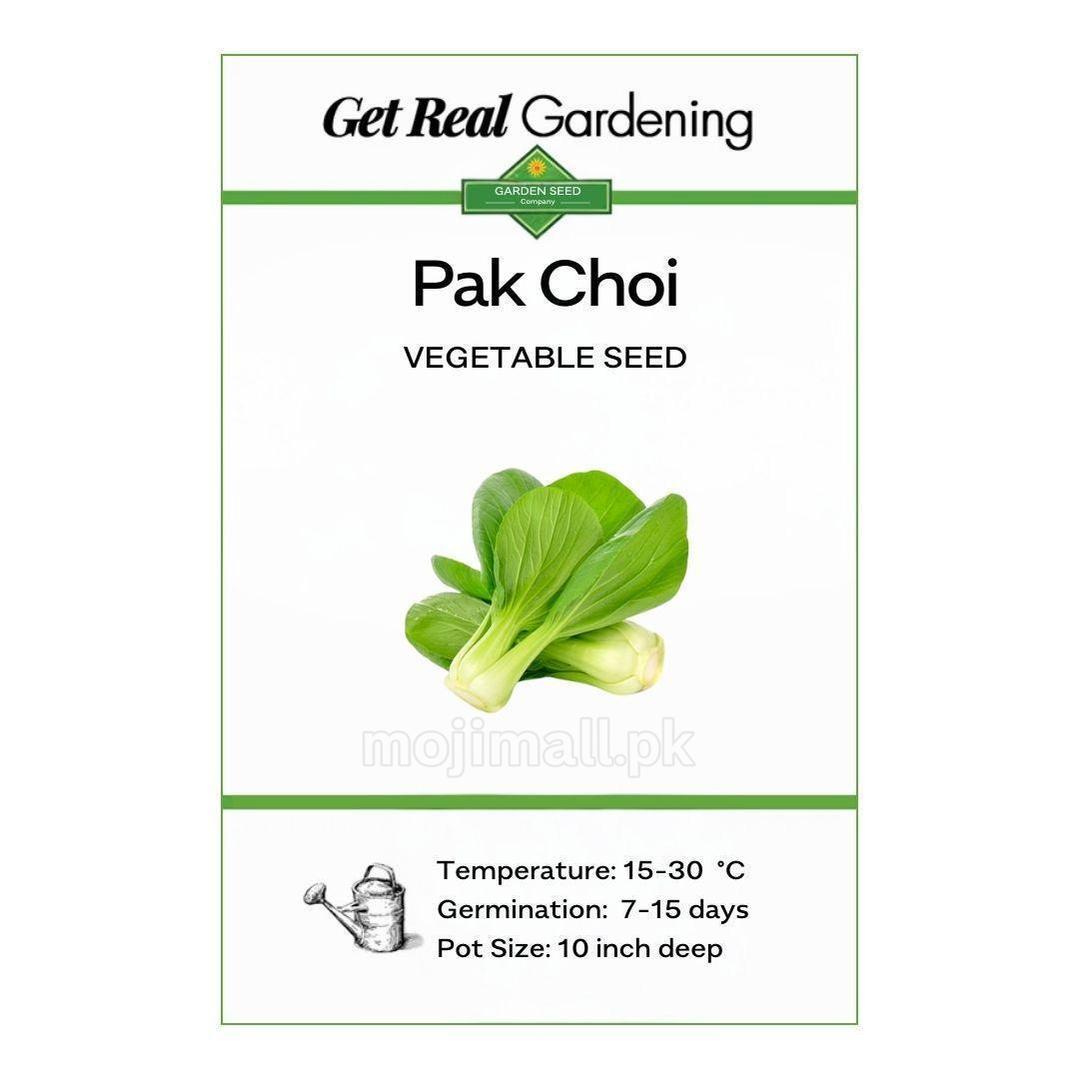
Bok Choy Seeds, also known as Pak Choi, Pak Choy, or Chinese cabbage, produce compact leafy plants with crisp pale-green stems and tender dark green leaves. They grow best in cool weather, bright sunlight to partial shade, and loose fertile soil, making them suitable for 8–10-inch pots, grow bags, raised beds, and kitchen gardens.
Native to China and widely used in East Asian cooking, Bok Choy became popular worldwide for its quick growth, mild flavour, and use in stir-fries, soups, salads, and steamed dishes.
Bok Choy is a fast-growing cool-season vegetable for home gardeners who want fresh leafy greens without waiting too long. It is especially useful for small spaces because plants stay compact and can be harvested young or allowed to form fuller heads.
Why Gardeners Love It
-
Fast-Growing: Ready to harvest young leaves quickly in cool weather.
-
Crispy: Mild flavour works well in fresh and cooked dishes.
-
Great for Pots: Compact growth suits containers, grow bags, and small beds.
-
Cooking: Good for stir-fries, soups, salads, steaming, and sautéing.
Best Growing Conditions
Bok Choy grows best in mild, cool weather with steady moisture. Heat, dry soil, or stress can cause early flowering, also called bolting, so autumn to winter sowing is usually the safest window for Pakistan.
-
Sunlight: 4–6 hours of sunlight is enough; light afternoon shade helps in warmer areas.
-
Soil: Use loose, fertile, and well-draining soil rich in organic matter.
-
Watering: Keep soil consistently moist, not waterlogged.
-
Pot Size: Use an 8–10-inch pot for one plant, or wider containers for multiple plants.
-
Season: Best sown from September to December for cool-season growth.
How to Grow Bok Choy Seeds
When to Sow
- Sow from September to December in most areas of Pakistan.
- Harvest baby leaves in about 25–35 days.
- Full plants usually take around 45–60 days, depending on weather and spacing.
Where to Grow
- 8–10-inch pots, grow bags, raised beds, or well-prepared garden soil.
- Choose a bright spot with morning sun and good airflow.
- In warmer areas, give light afternoon shade to reduce heat stress.
Sowing Tips
- Use 2 parts garden soil with 1-part Vermicompost.
- Sow seeds about 1/4 inch deep in moist soil.
- Keep seedlings 6–8 inches apart for compact plants.
- For larger heads, keep 8–10 inches spacing.
- Water gently after sowing and keep the soil evenly moist.
- Thin extra seedlings early so plants do not become overcrowded.
Fertilizer & Care
- At sowing, mix in Vermicompost to support healthy leaf growth.
- During active growth, apply NPK 20 20 20 Fertilizer lightly if leaves look pale or growth slows.
- Avoid letting the soil dry completely, as stress can cause early bolting.
- Check leaves regularly for chewing pests and aphids.
- Harvest outer leaves first or cut the whole plant when the head reaches usable size.
Harvesting Tips
Bok Choy can be harvested young for tender baby leaves or grown longer for fuller stems and heads. For repeat picking, remove outer leaves and allow the centre to continue growing. For a full harvest, cut the plant near the base when stems are crisp and leaves are fresh.
Harvest before hot weather becomes strong, as heat can make plants flower early and reduce leaf quality.
FAQs
Can Bok Choy grow in pots?
Yes, Bok Choy grows well in pots. Use an 8–10-inch pot for one plant or a wider container if growing multiple plants.
Why is my Bok Choy flowering early?
Early flowering usually happens because of heat, dry soil, overcrowding, or plant stress. Sow in cool months and keep the soil evenly moist.
Can I harvest Bok Choy leaves more than once?
Yes, you can pick outer leaves first and allow the centre to keep growing. For a full head, cut the whole plant near the base.
What pests attack Bok Choy?
Common pests include aphids, flea beetles, caterpillars, and leaf-eating insects. Check leaves often and use Neem Oil Spray when needed.
Common Names
Bok Choy, Pak Choi, Pak Choy, Chinese Cabbage, Baby Bok Choy