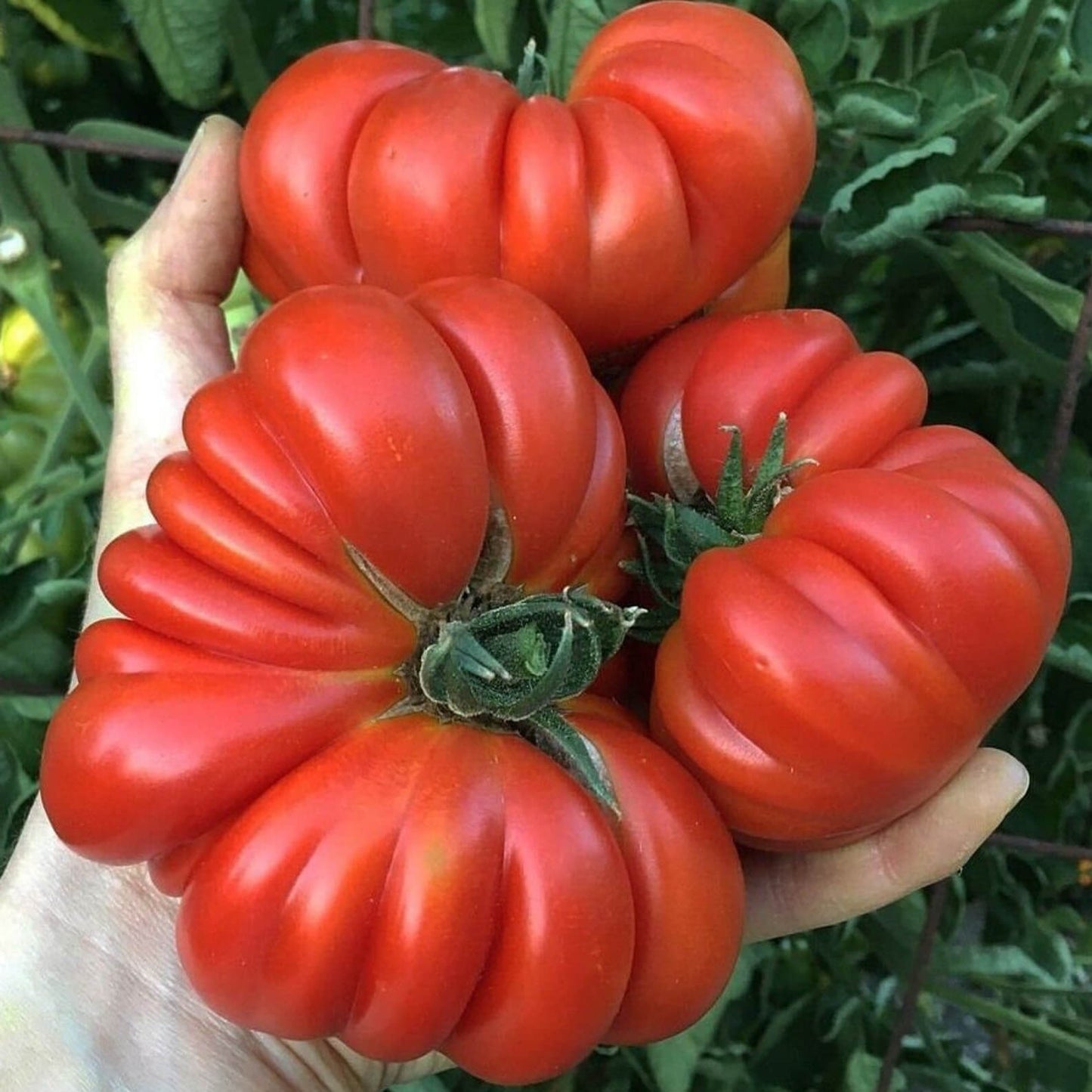
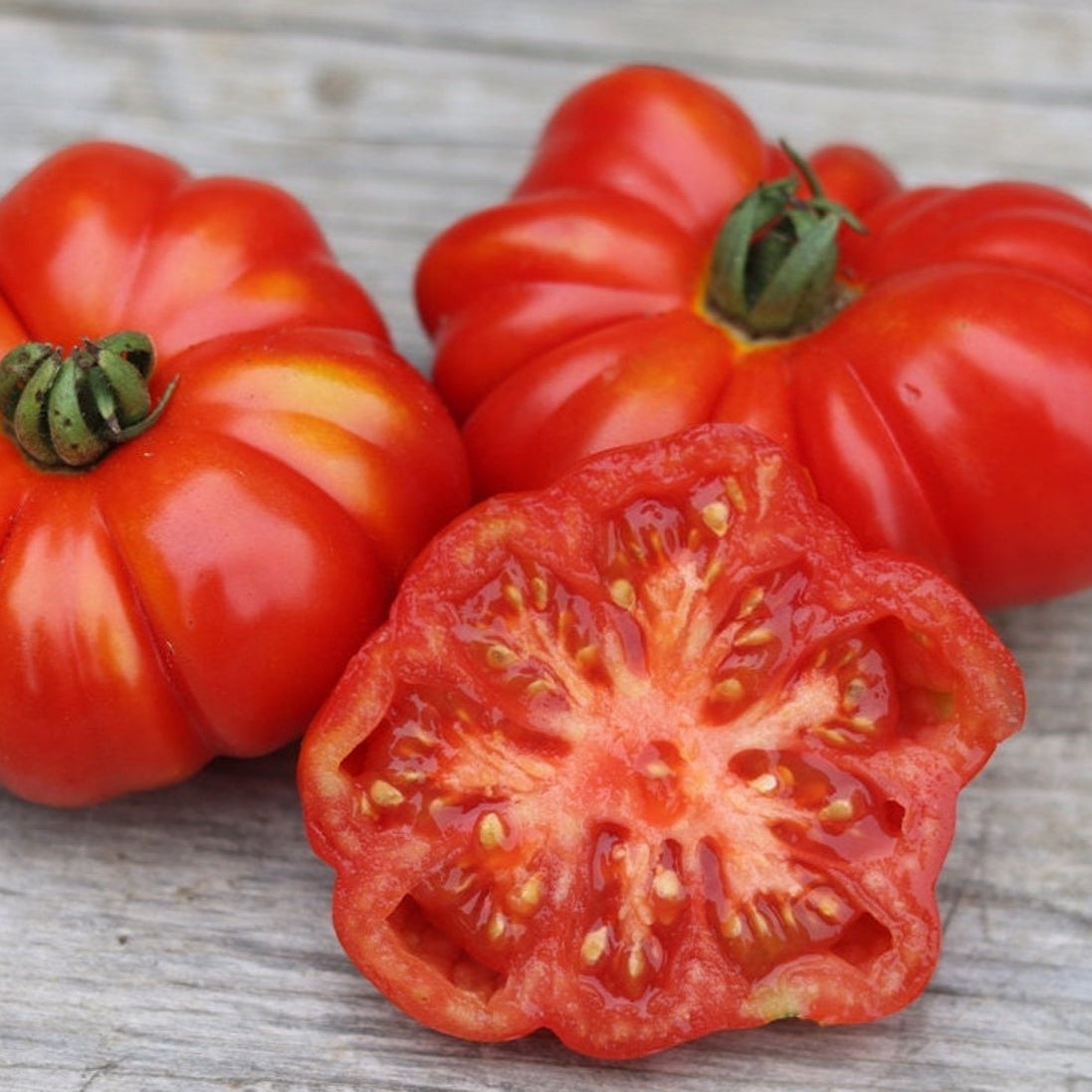
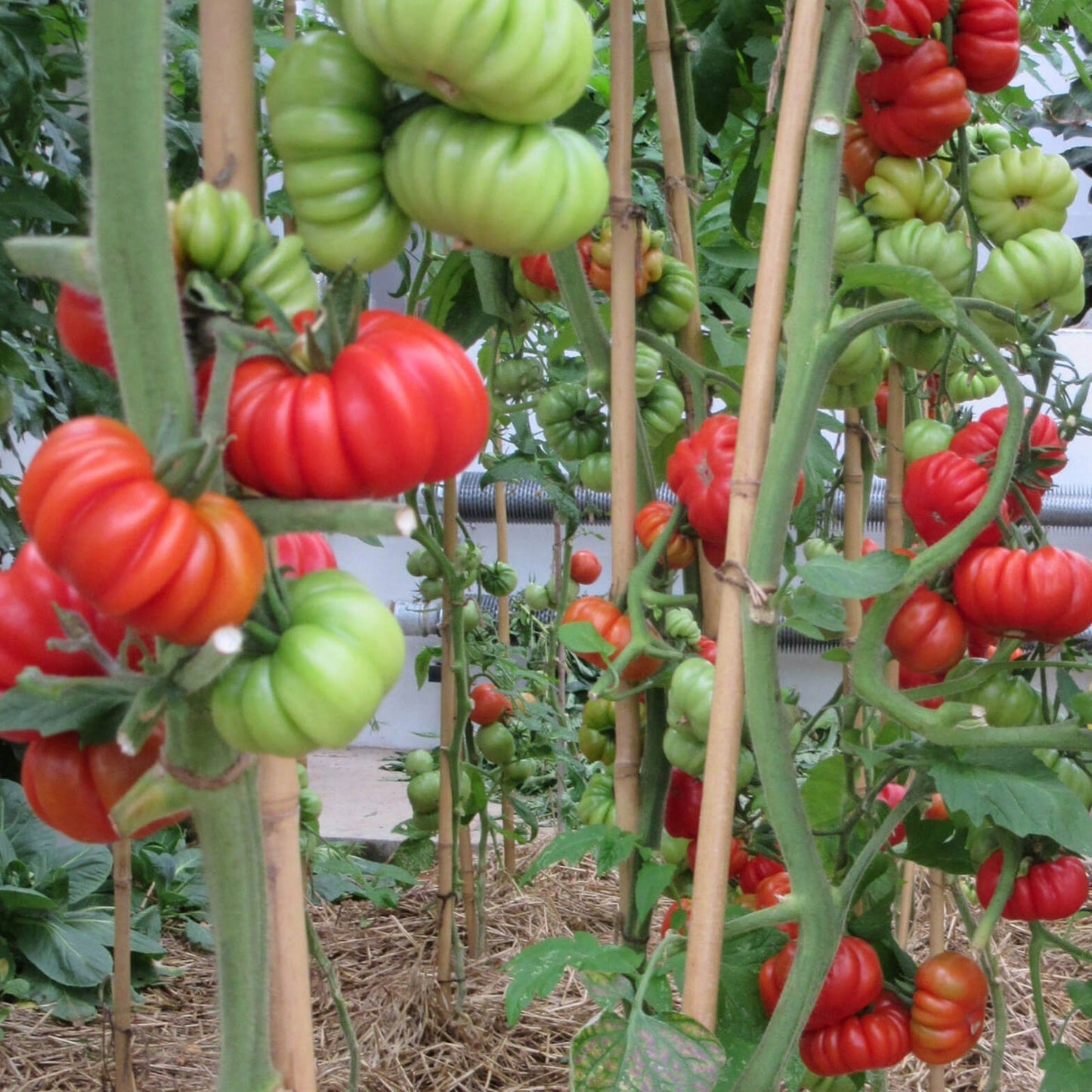
Beef Tomato Seeds produce large, fleshy red tomatoes suited to slicing, sandwiches, salads, burgers, sauces and everyday cooking. The fruits need more time and plant support than small tomato types, but their substantial size makes them useful for gardeners who prefer large tomatoes.
Each pack contains 20+ seeds. Grow one plant in a large pot or grow bag, or provide generous spacing in a sunny garden bed.
Seed Details
| Detail |
Information |
| Tomato type |
Large-fruited beef tomato |
| Seed quantity |
20+ seeds |
| Plant origin |
South America |
| Sowing method |
Start in a nursery tray |
| Germination |
Usually 6–14 days |
| Transplanting |
Approximately 5–8 weeks after sowing |
| Sunlight |
At least 6–8 hours |
| Container size |
Approximately 10 gallons |
| First harvest |
Commonly 70–90 days after transplanting |
| Main use |
Slicing, salads, sauces and cooking |
The exact fruit size, shape and ripening time can vary with weather, container size, pollination and plant care.
Why Gardeners Love It
- Produces large red slicing tomatoes
- Fleshy fruits for fresh and cooked dishes
- Suitable for large pots, grow bags and beds
- Can produce over several weeks in suitable weather
- 20+ seeds for starting multiple seedlings
- Useful for rooftop and home gardens
Best Time
Tomatoes grow best during mild to warm weather. Severe summer heat can reduce flower setting, while frost and very cold nights can damage the plants.
In Lahore, Faisalabad and central Punjab, start seeds from January to February for spring planting. A second nursery can be started from July to August for autumn planting.
In Islamabad and Rawalpindi, start the spring nursery from late January through February. For autumn plants, sow from mid-July into August and protect young seedlings from severe afternoon heat.
In southern Punjab, including Multan, Bahawalpur and Rahim Yar Khan, start spring seeds from December to January. Start autumn seeds from July to August under light shade.
In Karachi and coastal Sindh, start seeds from August to October for autumn and winter growth. Another small nursery can be started from December to January.
How to Sow
- Fill a seedling tray or small nursery pots with moist seed starter mix.
- Sow one or two seeds per cell approximately ¼ inch deep.
- Cover lightly and keep the mixture evenly moist.
- Move seedlings into bright light immediately after germination.
- Transplant the strongest seedlings when they are sturdy and have several true leaves.
If two seedlings grow in one cell, retain the stronger plant and cut the weaker one at soil level. Pulling it out can disturb the roots of the remaining seedling.
Pots and Beds
Grow one Beef Tomato plant in a container holding approximately 10 gallons of growing mixture. A pot or grow bag around 18–20 inches wide and deep provides better root space for this large-fruited tomato type.
In beds, leave approximately 18–24 inches between supported plants. Allow additional space where airflow is poor or branches will not be pruned.
Install a strong stake, cage or trellis at transplanting time. Large tomatoes can make unsupported branches bend or break as the fruits gain weight.
Plant Care
Give the plant at least 6–8 hours of direct sunlight. Protect newly transplanted seedlings from intense afternoon heat until they become established.
Water deeply when the upper inch of soil begins drying. Try to keep moisture consistent after flowering because repeated drying and heavy watering can contribute to fruit cracking and blossom-end rot.
Begin with compost or a suitable organic fertilizer mixed into the soil. After transplanting, allow the plant to establish before applying additional fertilizer. Avoid excessive nitrogen once flower buds begin forming because it can encourage leaves at the expense of tomatoes.
Tie growing stems loosely to their support. Check the ties regularly and loosen any that begin pressing into the stems.
For detailed regional timing, transplanting, feeding and troubleshooting, read the Tomato Growing Guide.
Harvesting
Allow the tomatoes to develop their full red colour while remaining gently firm. Cut or twist them carefully from the plant without damaging nearby flowers or smaller fruits.
Large tomatoes may ripen unevenly during very hot weather. If a fruit begins cracking or attracting insects, pick it after colour development has started and allow it to finish ripening in a shaded indoor place.
FAQs
Why are the flowers falling without producing tomatoes?
Very high temperatures, cold nights, poor pollination and irregular watering can cause tomato flowers to drop. Large-fruited tomatoes can be particularly demanding during unsuitable weather. Keep the plant evenly watered and wait for milder conditions.
What causes a black patch on the bottom of the tomato?
A dark, sunken patch on the blossom end is commonly associated with irregular moisture preventing calcium from reaching the developing fruit consistently. Correct the watering pattern before adding calcium or other fertilizer.
Why are the tomatoes cracking before harvest?
Cracking often happens when dry soil receives a large amount of water from irrigation or rain. Maintain steadier moisture and harvest coloured fruits before prolonged rain when possible.
Why are the shoulders remaining green while the rest of the fruit ripens?
Strong heat, direct exposure and the natural behaviour of the tomato type can delay colour development around the stem. Provide leaf cover over developing fruits and allow additional ripening time if the fruit remains healthy.
Common Names: Beef Tomato, Beefsteak Tomato, Slicing Tomato