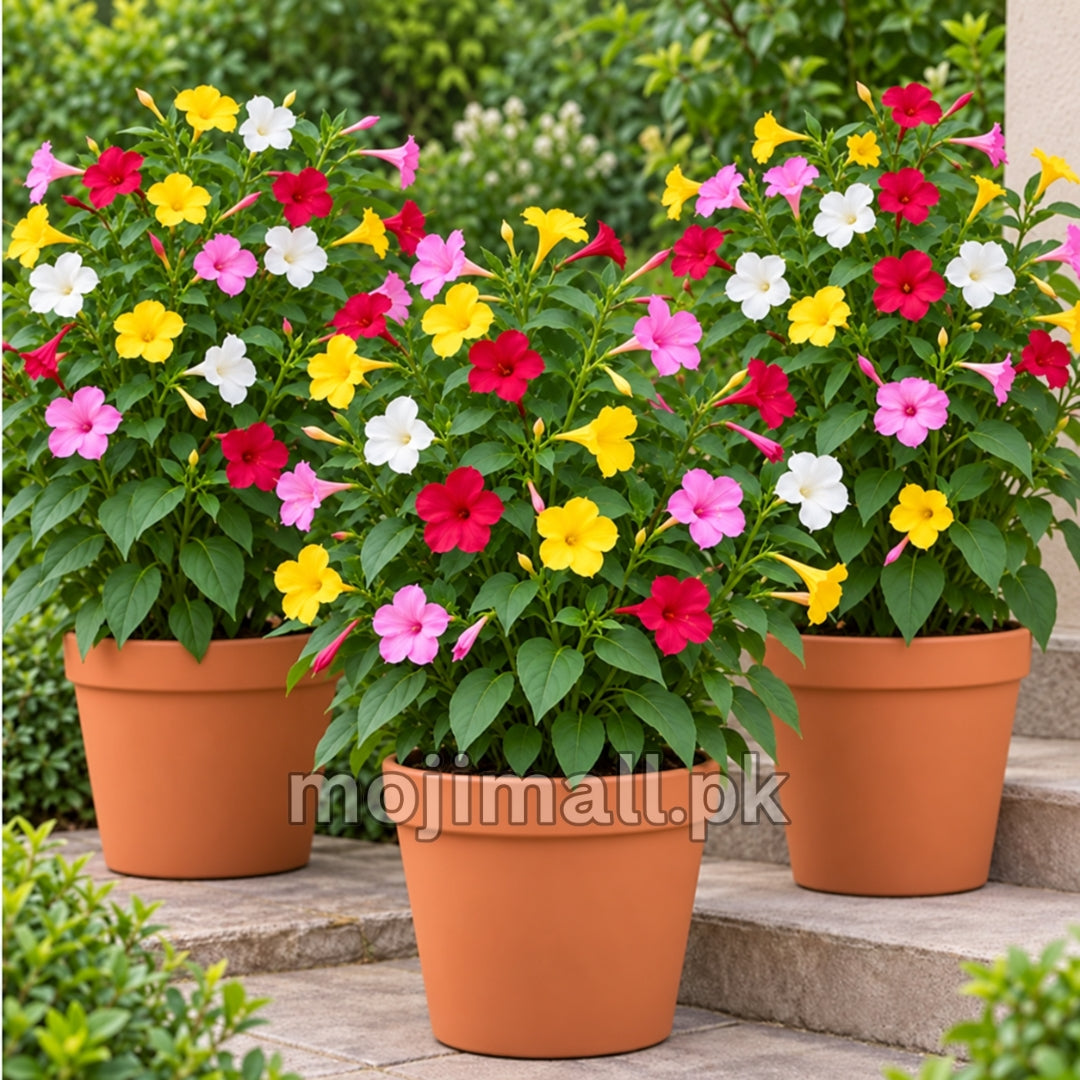
4 O’Clock Mix, also called Gul Abbasi, produces fragrant trumpet-shaped flowers that open during the late afternoon and remain open through the evening. The mix can produce white, yellow, pink, rose, magenta and red flowers, with some plants developing striped, splashed or bicoloured blooms.
The bushy plants flower throughout warm weather and are especially enjoyable near entrances, patios and sitting areas where their evening fragrance can be appreciated. Individual plants may produce more than one flower colour or pattern during the season.
Why Gardeners Love It
-
Evening Flowers: Blooms open during the late afternoon and evening.
-
Fragrant Display: Produces a sweet fragrance while the flowers are open.
-
Colourful Mix: Includes white, yellow, pink, rose, magenta and red shades.
-
Interesting Patterns: Some plants may develop striped, splashed or bicoloured flowers.
-
Bushy Growth: Suitable for borders, large pots and informal seasonal hedges.
Best Conditions
-
Germination: Usually 5–10 days
-
Germination temperature: Around 20–24°C
-
Growing temperature: Around 20–35°C
-
Sunlight: At least 6 hours
-
Pot size: A 12–14-inch pot for one plant
-
Spacing: About 18–24 inches between plants
-
Plant height: Usually around 2–3 feet
-
Soil: Fertile, moist and well-draining mix
-
First flowers: Usually around 8–10 weeks after sowing
Sowing note: In Lahore, Faisalabad, Islamabad and Rawalpindi, sow from February to April, or again from July to August for autumn flowering. Protect the second sowing from heavy monsoon rain. In hotter areas such as Karachi and southern Punjab, sow from January to March, or again from August to September after prolonged rain and the strongest heat have eased. In colder northern and hilly areas, sow from March to May after the risk of hard frost has passed.
How to Sow
- Soak the seeds in clean water overnight to help soften their hard outer covering.
- Fill the final pot, individual cells or small pots with moist seed-starting mix.
- Sow each seed approximately ¼ inch deep.
- Water gently and keep the soil lightly moist, but not waterlogged.
- Place the pots in a warm, bright position until the seedlings appear.
- Transplant after 2–3 true leaves develop, keeping the root ball together.
Plant Care
Water deeply whenever the upper inch of soil begins drying. Four O’Clock plants become bushy and may develop brittle stems, so provide support in windy locations. Remove faded flowers if you want a cleaner appearance, or remove developing seeds if extra seedlings are not wanted.
Mix a small amount of Vermicompost into the soil before sowing or transplanting. When buds begin forming, apply NPK 5-15-45 lightly according to its directions. Check young growth for aphids, thrips, whiteflies and spider mites. If found, spray Neem Oil on the affected foliage while avoiding open flowers.
Local Gardener Tips
- Place the plants near an entrance or sitting area to enjoy their evening fragrance.
- Shelter taller plants from strong wind because the stems can break.
- Hand-pick snails and slugs that feed on young seedlings.
- Allow a few seeds to mature only if new seedlings are wanted next season.
Flowering
The trumpet-shaped flowers usually open during late afternoon as the temperature and light begin falling. They may open earlier on cloudy or rainy days and normally close or fade by the following morning.
Each flower lasts for a short time, but established plants continue producing fresh buds over several weeks. Four O’Clock is best enjoyed as a living garden display because individual flowers may close soon after being cut.
FAQs
Do the flowers always open at exactly four o’clock?
No. The name describes their late-afternoon flowering habit. Opening time changes with sunlight, temperature and cloud cover, so flowers may open earlier or later.
Can one plant produce flowers in different colours?
Yes. Some plants can produce flowers of different colours or patterns on separate branches. A flower may also develop stripes, splashes or sections of another colour.
Will Four O’Clock return next year?
It develops a tuberous root that may survive and regrow in warm, frost-free locations. In colder areas it is usually treated as an annual, although dropped seeds may produce new plants.
Why does my plant wilt during the afternoon?
Leaves may temporarily droop during extreme heat and recover in the evening. Check the soil before watering because adding more water to already wet soil can damage the roots.
Can I collect seeds from the flowers?
Yes. Collect the dark, hard and wrinkled seeds after they separate easily from the faded flower. Plants grown from saved seeds may produce different colours because this is a mixed variety.
Common names: 4 O’Clock Mix, Four O’Clock Flower, Gul Abbasi, Gul-e-Abbasi, Marvel of Peru, Evening Flower, Mirabilis jalapa, گلِ عباسی