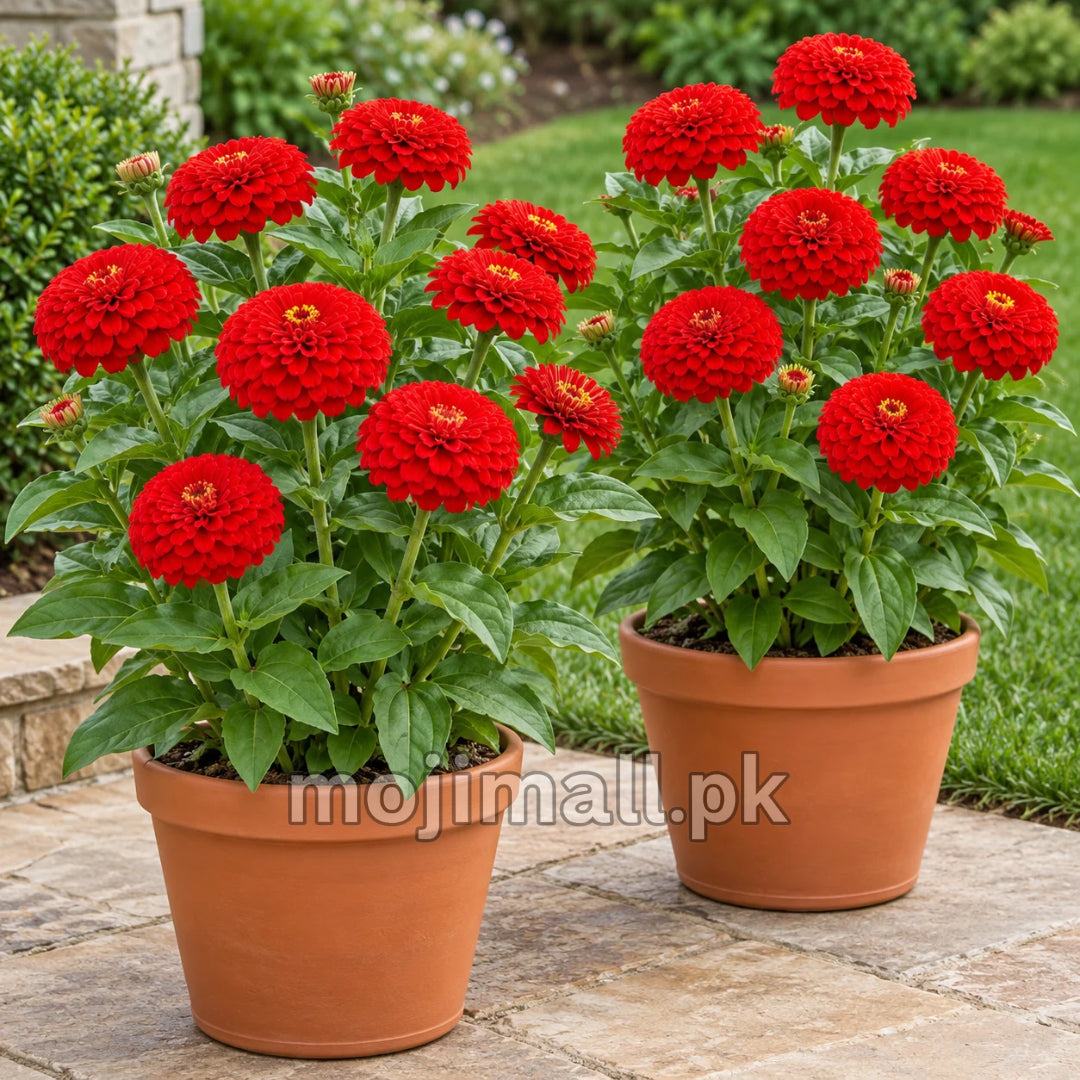
Zinnia elegans Dahlia Red produces bold red flowers packed with broad, overlapping petals. The rounded blooms rise above the foliage on long, upright stems, creating a strong display of red throughout the flowering season.
Its layered flowers resemble decorative dahlias, but this warm-season annual grows quickly from seed. Use it to add rich colour to sunny beds, borders and large pots, or grow several plants for home-cut bouquets.
Why Gardeners Love It
-
Rich Red Colour: Produces striking flowers in bold red shades.
-
Dahlia-Style Form: Overlapping petals create full, rounded blooms.
-
Excellent for Cutting: Long stems make the flowers suitable for bouquets.
-
Repeated Flowering: Regular cutting and deadheading encourage more buds.
-
Heat Loving: Performs well in warm, sunny home gardens.
Best Conditions
-
Germination: Usually 5–10 days
-
Germination temperature: Around 21–27°C
-
Growing temperature: Around 18–32°C
-
Sunlight: At least 6–8 hours
-
Pot size: A 12–14-inch pot for one plant
-
Spacing: About 12–18 inches between plants
-
Plant height: Usually around 30–40 inches
-
Soil: Fertile, loose and well-draining mix
-
First flowers: Usually around 8–12 weeks after sowing
Sowing note: In Lahore, Faisalabad, Islamabad and Rawalpindi, sow from February to April, or again from August to September after prolonged monsoon rain has eased. In hotter areas such as Karachi and southern Punjab, sow from January to March, or from September to October once the strongest summer heat has eased. In colder northern and hilly areas, sow from April to May after the risk of hard frost has passed.
How to Sow
- Fill small pots or seed cells with fine, moist seed-starting mix.
- Sow one or two seeds in each cell around ¼ inch deep.
- Cover the seeds lightly and water them with a gentle spray.
- Keep the mix warm and lightly moist until seedlings appear.
- Move the seedlings into strong light immediately after germination.
- Transplant carefully after 2–3 pairs of true leaves have developed.
Plant Care
Water deeply when the upper inch of soil begins drying, directing water towards the base instead of repeatedly wetting the leaves. Pinch the growing tip when the plant reaches approximately 8–10 inches tall to encourage branching. Tall plants may need a slim stake in windy locations.
Mix a small amount of Vermicompost into the soil before sowing or transplanting. Check new growth and flower buds for aphids, thrips, whiteflies and spider mites. If pests appear, spray Neem Oil over the affected areas, including underneath the leaves.
Local Gardener Tips
- Give the plants open sunlight for strong stems and fuller flowers.
- Leave enough spacing for airflow during humid and monsoon weather.
- Remove faded flowers before they begin forming mature seeds.
- Protect tall plants from strong wind with discreet stakes or support netting.
Flowering and Cutting
Flowers usually begin opening around 8–12 weeks after sowing and continue developing while warm conditions remain suitable. Removing faded blooms prevents energy from being directed into seed production and encourages additional flowering stems.
For bouquets, cut flowers during the cooler morning hours when the bloom is fully coloured and the stem has become firm. Cut just above a healthy pair of leaves so the remaining plant can develop new branches. Remove leaves that would sit below the water level and place the stems in clean water immediately.
FAQs
Is Zinnia Dahlia Red a true dahlia?
No. It is a variety of Zinnia elegans. The name refers to its rounded flowers and overlapping petals, which resemble dahlia blooms.
Will every flower be completely double?
This strain is selected for full dahlia-style flowers, but natural variation can occur in seed-grown plants. Some early or heat-stressed blooms may have fewer petals than flowers produced under better conditions.
Why are white powdery patches appearing on the leaves?
This is commonly powdery mildew, which becomes more likely when plants are crowded or leaves remain damp with poor airflow. Remove badly affected leaves, increase spacing and avoid watering over the foliage late in the day.
Can seeds be saved from the flowers?
Yes. Allow a healthy flower head to dry completely on the plant before collecting its seeds. If other zinnia colours are flowering nearby, the next generation may produce different shades or flower forms because cross-pollination can occur.
Common names: Zinnia Dahlia Red, Dahlia-Flowered Zinnia, Red Zinnia, Zinnia elegans, Common Zinnia, زینیا