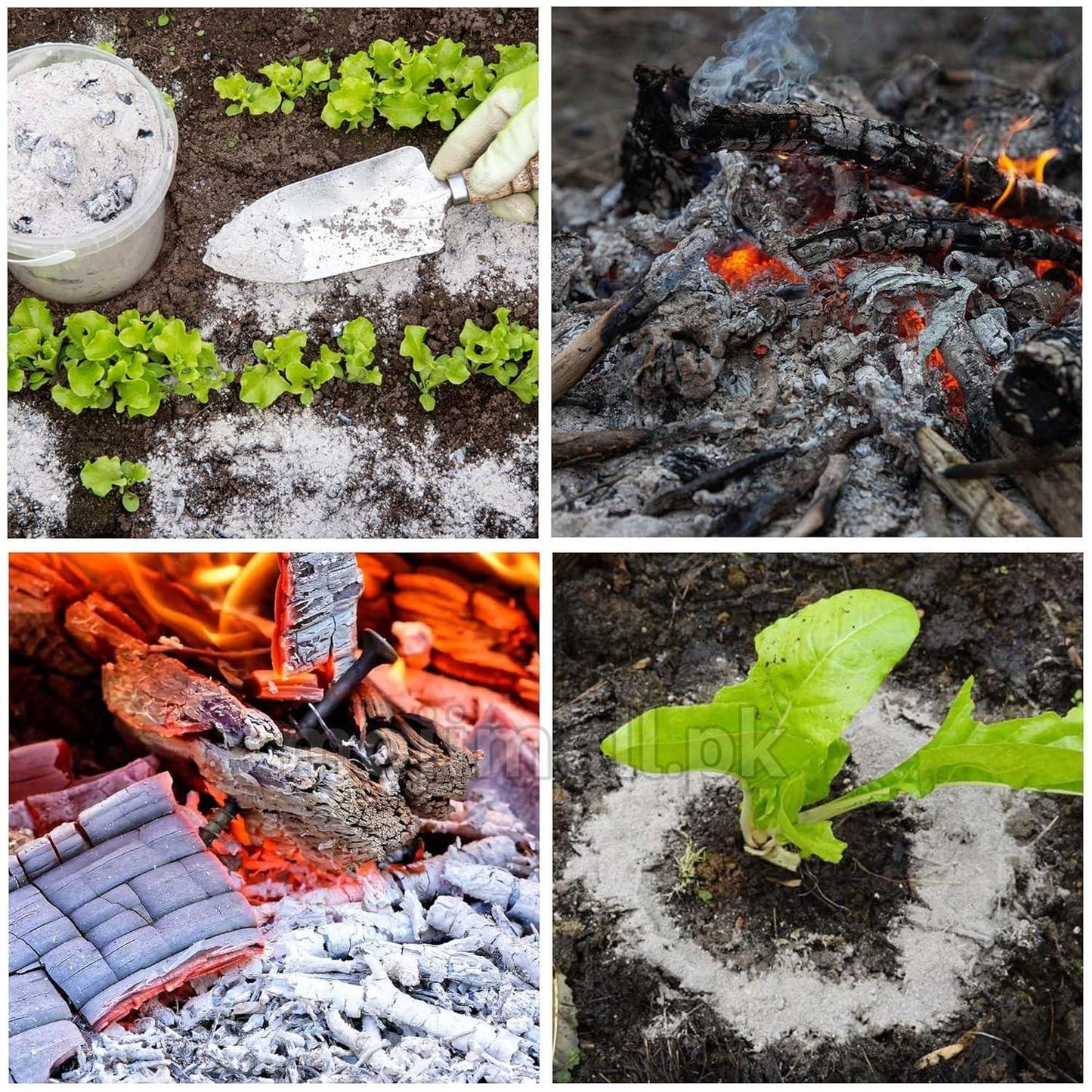
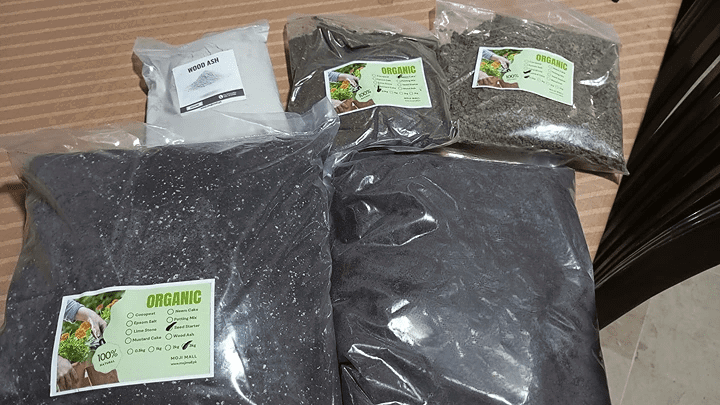
Wood Ash is a natural soil amendment made from clean burned wood. It contains useful minerals such as potassium, calcium, magnesium, and small amounts of phosphorus, making it helpful for soil improvement, flowering plants, fruiting plants, vegetables, lawns, and compost.
It is especially useful where soil is slightly acidic and needs a natural pH-balancing amendment. In Pakistan, it can be used carefully in kitchen gardens, rooftop pots, grow bags, lawns, and garden beds, especially for plants that prefer neutral to slightly alkaline soil.
Unlike regular fertilizers, wood ash should be used in small amounts. It is alkaline, so overuse can raise soil pH too much and reduce nutrient availability for some plants. Avoid using it on acid-loving plants or in soil that is already alkaline.
Pack Size Guide
500g: Best for a few pots, trial use, or small balcony plants.
1kg: Suitable for regular use in pots, grow bags, and small garden beds.
5kg: Good for lawns, larger beds, compost use, and repeat application.
Most home gardeners choose: 1kg or 5kg.
Benefits
Rich in Potassium
Supports flowering, fruiting, and overall plant strength when used correctly.
Adds Calcium
Helps improve soil balance and supports healthy plant growth.
Helps Balance Acidic Soil
Wood ash can raise soil pH, making it useful for mildly acidic soil.
Useful in Compost
A small amount can add minerals to compost and help balance acidity.
Supports Lawns and Garden Beds
Can be used lightly on lawns and beds where soil needs potassium and pH correction.
Natural Soil Amendment
A simple organic byproduct for improving soil when used in moderation.
How to Use Wood Ash
For Garden Beds
- Sprinkle 1–2 cups per square meter over the soil.
- Mix lightly into the topsoil.
- Water after application.
- Use only once a year unless soil testing shows more is needed.
For Pots and Grow Bags
- Use a very small amount, about 1 teaspoon for an 8–10-inch pot.
- Mix lightly into the soil.
- Water well after applying.
- Avoid frequent use in pots because pH can rise quickly in small soil volumes.
For Compost
- Add a thin sprinkle between compost layers.
- Do not add thick layers, as too much ash can make compost overly alkaline.
- Mix well before using compost in pots or beds.
For Lawns
- Spread lightly and evenly over the lawn.
- Water well after application.
- Use only where soil is acidic or weak in potassium.
For Slugs and Snails
- Dust a thin, dry ring around affected plants.
- Reapply after rain or watering.
- Use carefully, as too much ash around roots can affect soil pH.
Best For
Vegetables: e.g. tomatoes, okra, beans, cabbage, and onions.
Fruit plants: e.g. citrus, guava, pomegranate, and fig, where soil pH is suitable.
Flowers: e.g. marigold, zinnia, chrysanthemum, and seasonal flowers.
Lawns: useful where grass needs potassium and soil pH correction.
Compost: useful in small amounts to add minerals.
Avoid Using On
Avoid or use very carefully around acid-loving plants and plants sensitive to alkaline soil, such as gardenia, azalea, camellia, blueberry, and similar plants. Also avoid using wood ash in already alkaline soil, as it can make nutrient lockout worse. Wood ash should never be used in large amounts because it can raise soil pH quickly.
Wood Ash Nutrients
Nutrient levels can vary depending on the type of wood burned, but wood ash commonly contains:
| Nutrient |
Approximate Amount |
| Calcium |
20–45% |
| Potassium |
5–10% |
| Magnesium |
1–4% |
| Phosphorus |
0.5–2% |
| Other trace minerals |
Less than 1% each |
FAQs
Can I use wood ash for all plants?
No. Wood ash raises soil pH, so it is not suitable for all plants. Avoid using it on acid-loving plants and in already alkaline soil.
How often should I apply wood ash?
Use wood ash only once or twice a year in small amounts. Overuse can make soil too alkaline and reduce nutrient availability.
Is wood ash good for potted plants?
Yes, but only in very small amounts. Use about 1 teaspoon for an 8–10-inch pot, mix lightly, and avoid repeated use.
Does wood ash repel pests?
Wood ash can help deter slugs and snails when sprinkled as a thin ring around plants. It is not a complete pest control solution and needs reapplication after watering or rain.
Is wood ash safe for composting?
Yes, but use only a thin sprinkle at a time. Too much wood ash can raise compost pH too much.