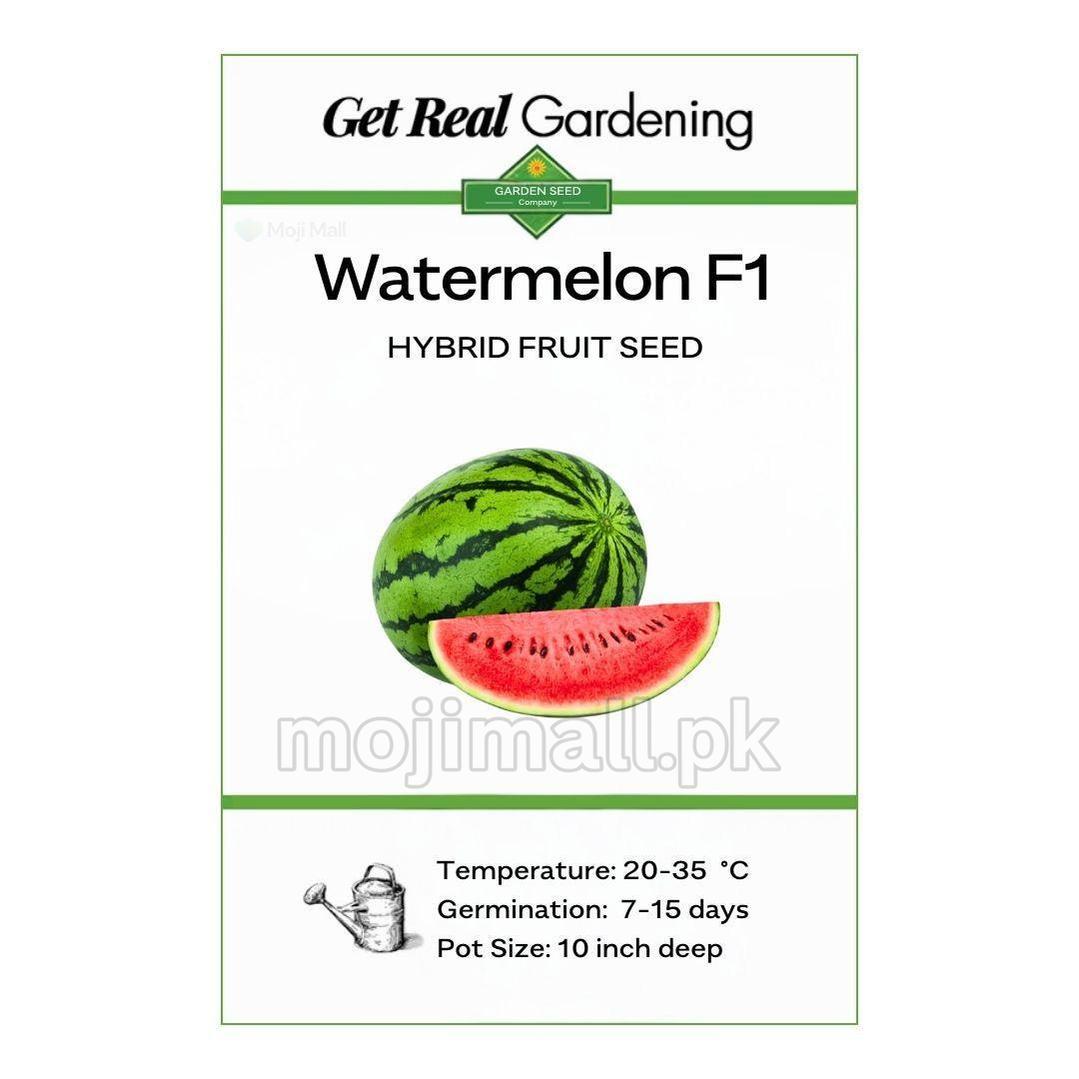
Watermelon Zebra F1 Hybrid produces round to oval watermelons with a striped green rind and red flesh. The vigorous vines need warm weather, full sunlight and enough open space to spread.
Each pack contains 10 F1 hybrid seeds for growing in home gardens, raised beds, large containers and rooftop setups.
Seed Details
| Detail |
Information |
| Variety |
Zebra |
| Hybrid type |
F1 hybrid |
| Seed quantity |
10 seeds |
| Fruit shape |
Round to oval |
| Rind |
Green with lighter stripes |
| Flesh |
Red |
| Growing season |
Warm season |
| Sowing method |
Direct sowing or careful transplant |
| Germination |
Approximately 7 to 15 days |
| Best temperature |
Approximately 20 to 35°C |
| Plant habit |
Spreading vine |
Germination time can vary with seed freshness, temperature, moisture and sowing conditions.
F1 Hybrid
Zebra is an F1 hybrid selected for more consistent plant growth and fruit characteristics than mixed or unselected seed.
Watermelon belongs to the gourd family and naturally produces long vines. Even when grown in a container, the vine needs open floor or rooftop space in which to spread.
Best Time
Watermelon grows best in warm soil and does not tolerate frost.
In Lahore and Faisalabad, February to March is the main sowing period. An additional sowing may be possible around July when excessive rain and standing moisture can be managed.
In Islamabad and Rawalpindi, sow from late February into March after persistent cold has passed. Avoid placing young plants outdoors during unusually cold nights.
In Karachi and southern Punjab, January to March provides a practical main window. Early planting allows flowering and fruit development before the most intense summer heat.
In colder northern and hilly areas, sow from March to April after the danger of hard frost has passed and the soil has warmed.
A second warm-season sowing may be possible in some areas, but the plants need enough suitable weather to develop and ripen their fruit.
Best Conditions
Choose a location with:
- At least 6 to 8 hours of direct sunlight
- Loose and fertile growing medium
- Protection from prolonged standing water
- Enough room for vines to spread
- Access for bees and other pollinating insects
Watermelon vines can quickly cover nearby plants, paths and containers. Decide where the vine will run before sowing.
How to Sow
- Sow each seed approximately 1 inch deep.
- Keep the growing medium lightly moist until germination.
- Place seedlings in full sunlight once established.
- If starting separately, transplant young seedlings with the complete root ball.
- Leave approximately 2 to 3 feet between plants and provide additional space for the vines.
Watermelon roots dislike unnecessary disturbance. Direct sowing is usually easier once outdoor conditions are warm enough.
In Containers
Use one plant in a large container or grow bag approximately 18 to 24 inches wide and at least 12 inches deep. Fill it with a loose growing medium containing compost or well-rotted organic matter.
Place the container in its final position before the vine becomes large. Allow the runners to spread across a clean rooftop or balcony surface without blocking walkways.
The 10-inch depth shown on the seed label is a minimum reference. A wider and deeper container provides more growing medium and remains moist for longer during hot weather.
Plant Care
Water deeply enough to moisten the root area, then check the soil before watering again. Consistent moisture is particularly important during flowering and early fruit development.
Avoid repeatedly wetting the leaves late in the day. Warm, humid conditions and constantly damp foliage can encourage leaf diseases.
Once fruit begins ripening, avoid sudden heavy watering after the soil has become very dry. Rapid moisture changes can contribute to fruit cracking.
Place a piece of dry cardboard, tile, straw or another clean material beneath developing fruit to keep it away from wet soil.
Feeding
Mix compost or well-rotted organic matter into poor soil before sowing. Once vines begin spreading, apply a balanced fertilizer according to its label directions.
Avoid excessive nitrogen after flowering begins. Too much nitrogen can produce long leafy vines while delaying flowers and fruit development.
Pollination
Watermelon plants produce separate male and female flowers. Bees transfer pollen between them, allowing fruit to develop.
Avoid spraying insect-control products over open flowers while bees are active. If natural pollination is poor, transfer pollen from a freshly opened male flower to the centre of a female flower during the morning. Female flowers have a small melon-shaped swelling behind them.
Harvesting
Check several signs before harvesting:
- The curly tendril nearest the fruit has become brown and dry
- The area touching the ground has changed from pale green or white to cream or yellow
- The rind looks less shiny
- The fruit has reached its expected full shape
Do not depend only on tapping the watermelon. The sound can vary and is difficult to judge accurately.
Cut the fruit from the vine with a clean knife or pruner instead of pulling it.
Local Tips
On hot rooftops, protect containers from direct contact with extremely heated concrete. Raise them slightly or place them where the root area receives some protection during the hottest part of the day.
During humid or rainy periods, keep vines open and avoid crowding them between other plants. Check the lower leaves regularly for mildew, yellow patches and sucking insects.
Aphids and mites can weaken young growth. Cold-pressed neem oil may be used according to its directions when treatment is needed, but avoid spraying open flowers or active bees.
FAQs
Why are the first flowers falling without producing fruit?
The first flowers are commonly male flowers, which do not form watermelons. Female flowers appear later and can be recognised by the small swelling behind each flower.
Can the vines be trained vertically?
Yes, but the structure must be strong enough to carry the vines and developing fruit. Each watermelon should be supported in a wide cloth or net sling as it becomes heavier.
How many watermelons can one plant produce?
The number depends on growing space, sunlight, pollination, feeding and weather. In a home garden, two or three well-developed fruits on a healthy plant is a reasonable result, although production can be lower or higher.
Can seeds from the harvested fruit be planted again?
They can germinate, but plants grown from saved F1 seed may differ from Zebra F1 in fruit size, shape, rind and performance. Use fresh hybrid seed when consistent characteristics are required.
Common Names: Zebra Watermelon, F1 Watermelon, Tarbooz (تربوز), Tarbooz Ke Beej (تربوز کے بیج)