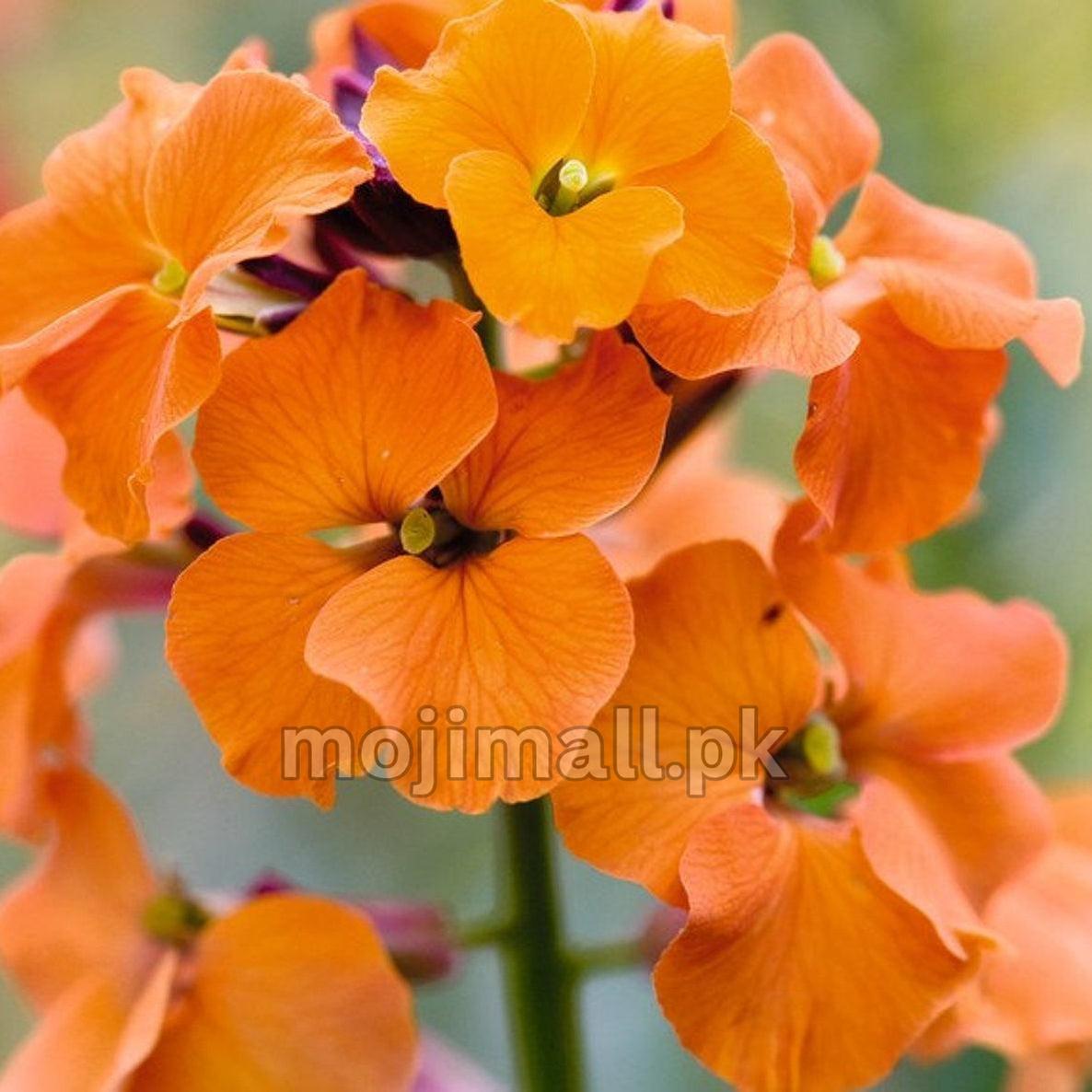
Wallflower Mix forms bushy, upright plants with short spikes of small, four-petalled flowers. The mix may produce cream, yellow, gold, orange, red, maroon and purple shades, often with a rich, sweet fragrance. It looks especially attractive in sunny pots, front borders and beside pathways.
Native to southeastern Europe, Common Wallflower is a short-lived perennial usually grown as a biennial. In Pakistan, it performs best as a cool-season flower, establishing during autumn before producing its strongest display from late winter into spring.
Why Grow It
-
Mixed Colours: Produces warm and deep shades ranging from cream to purple.
-
Sweet Fragrance: Flower clusters release a noticeable, pleasant scent.
-
Spring Display: Provides colour during late winter and early spring.
-
Bee Friendly: The open flowers attract bees and other visiting pollinators.
Best Conditions
-
Germination: Usually 7–14 days
-
Temperature: Around 18–21°C
-
Sunlight: At least 6 hours
-
Pot size: 8–12-inch-wide pot
-
Spacing: About 10–12 inches between plants
-
Plant height: Usually around 12–20 inches
-
Spread: Approximately 8–12 inches
-
Soil: Light, fertile and very well-draining mix
In Lahore, Faisalabad, Islamabad and Rawalpindi, sow from September to November so the plants can become established before spring. In hotter areas such as Karachi and southern Punjab, sow from October to December after the strongest heat has eased. In colder northern and hilly areas, sow from March to May after the risk of hard frost has passed. Spring-sown plants in colder areas may flower during the following spring.
How to Sow
Wallflower is easiest to start in a seed tray or small pots.
- Fill the tray or pots with fine, moist seed starter mix.
- Sow the seeds thinly and cover them with around ⅛ inch of the mix.
- Mist gently and keep the container at around 18–21°C.
- Provide bright light and keep the mix lightly moist while seedlings develop.
- Transplant at 2–3 true leaves, leaving 10–12 inches between plants.
Plant Care
Water regularly while the young plants become established. Afterwards, water when the upper soil begins to dry. Wallflower needs excellent drainage, so never leave its pot standing in collected water.
Pinch the growing tips when the seedlings are around 4–6 inches tall if you want bushier plants with more flowering stems. Naturally compact plants may require little shaping.
Mix a small amount of Vermicompost into the final potting mix. Heavy feeding is unnecessary and can produce soft, leafy growth. If aphids or flea beetles damage the leaves, apply Neem Oil to the affected growth while avoiding open flowers. Remove slugs and snails if they attack young seedlings.
Local Gardener Tips
- Protect newly sown trays from strong watering and heavy autumn rain.
- Give plants full winter sun, then light afternoon shade as spring becomes warmer.
- Leave space between plants so the lower leaves receive good airflow.
- Place fragrant plants near a doorway, pathway or outdoor sitting area.
Flowering
Autumn-sown Wallflower usually produces its strongest display from late winter into spring. Exact timing depends on the types included in the mix, the sowing date and local temperatures. Traditional biennial types may take longer than modern bedding varieties.
Cut faded spikes just above a healthy side shoot to keep the display tidy and support later buds. For a vase, cut stems when the lower flowers have opened and place them in clean water.
FAQs
Does Wallflower need to grow beside a wall?
No. Wallflower is a bushy, upright plant and does not climb. Its name comes from its ability to grow in rocky gaps and old wall crevices.
Will every plant produce all the colours shown?
No. Each plant normally produces one main flower colour. Because this is a mixed packet, the number of plants obtained in each shade can vary.
Common names: Wallflower Mix, Common Wallflower, English Wallflower, Garden Wallflower, Wall Gilliflower, Winter Gilliflower