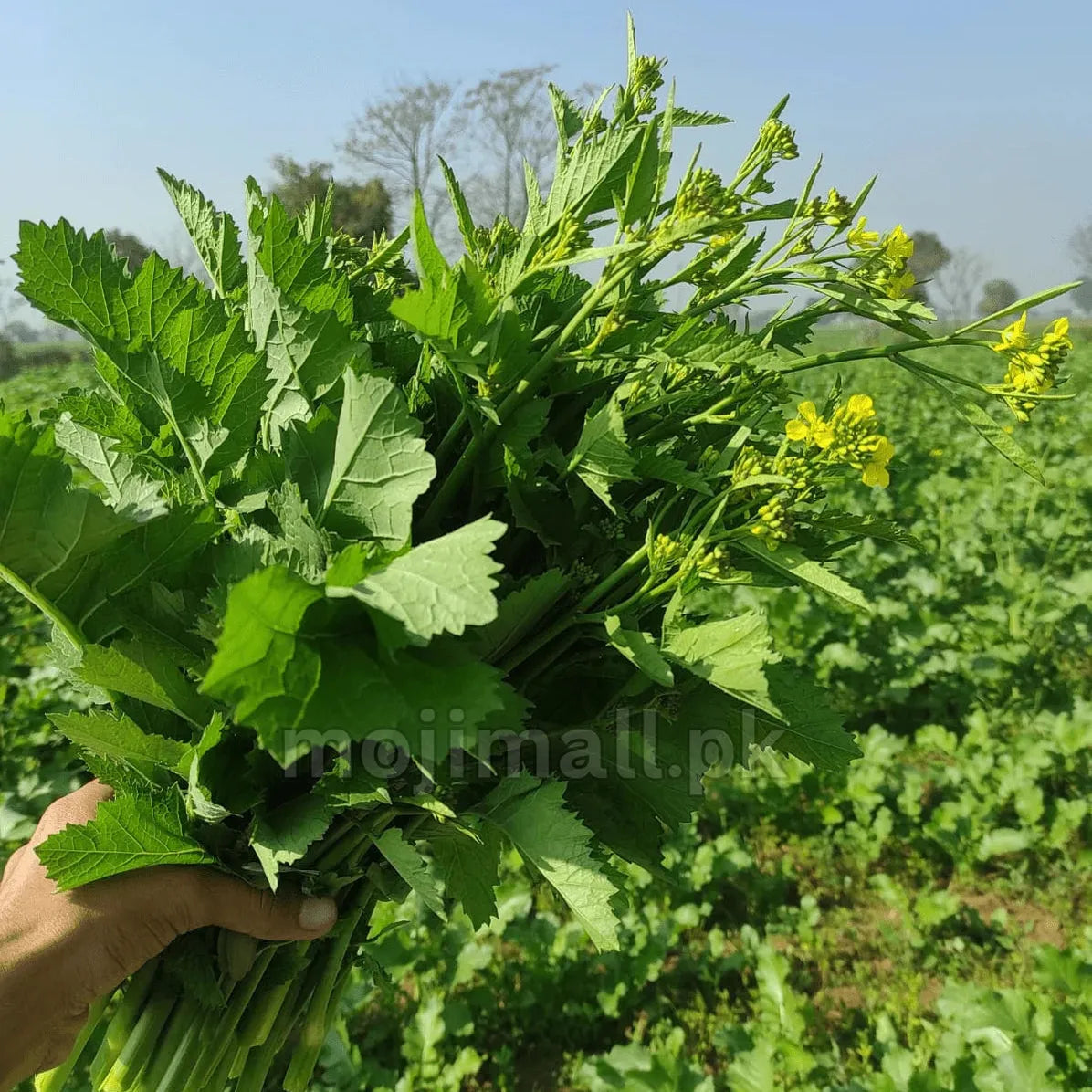
Toria Saag is a fast-growing winter leafy vegetable with broad green leaves and tender young stems. It has a fresh, mildly sharp mustard taste that becomes softer after cooking. Prepare it as saag, mix it with palak or bathua, or add it to dal, potatoes, meat and other vegetable dishes.
Toria belongs to an old mustard group native from the Mediterranean region through western Asia. It has long been grown across South Asia for its edible leaves and seeds. The plants grow quickly during cool weather and later develop small yellow flowers.
Why Grow It
-
Traditional Taste: Provides fresh mustard-flavoured leaves for homemade saag.
-
Tender Leaves: Young leaves and soft stems cook easily.
-
Quick Growing: Leaves are usually ready within 30–45 days.
-
Repeated Picking: Outer leaves can be harvested while the centre continues growing.
-
Winter Friendly: Suitable for pots, grow bags and home garden beds.
Best Conditions
-
Germination: Usually 4–7 days
-
Temperature: Around 10–25°C
-
Sunlight: At least 5–6 hours
-
Pot size: A wide 10–12-inch pot
-
Spacing: About 4–6 inches between plants
-
Plant height: Usually around 8–18 inches before flowering
-
Soil: Moist, fertile and well-draining mix
In Lahore, Faisalabad, Islamabad and Rawalpindi, sow from September to December. In hotter areas such as Karachi and southern Punjab, sow from October to January. In colder northern and hilly areas, sow from August to September before hard frost, or from March to April after severe cold has passed.
How to Sow
- Fill a pot or garden bed with fine, moist potting mix.
- Make shallow rows around ¼–½ inch deep.
- Sow the seeds thinly and cover them lightly.
- Water gently and keep the soil lightly moist.
- Thin the seedlings to about 4–6 inches apart.
Plant Care
Water regularly while the leaves are developing, but do not keep the soil constantly wet. Thin crowded seedlings early because tightly packed plants produce smaller leaves and have less airflow.
Mix a small amount of Vermicompost into the soil before sowing. Add another small amount after the first major picking to support fresh leaf growth.
Check the leaves for aphids, flea beetles and small caterpillars. Hand-pick visible caterpillars and remove badly damaged leaves. Spray Neem Oil on affected plants, including the undersides of the leaves.
Local Gardener Tips
- Sow directly where the plants will grow.
- Give the plants maximum sunlight during winter.
- Sow a small new batch every 2–3 weeks for a longer supply.
- Water in the morning during cold or humid weather.
- Remove developing flower stems if you want to continue picking leaves.
Harvesting
Begin harvesting when the leaves are around 6–8 inches long, usually 30–45 days after sowing. Pick the larger outer leaves first and leave the smaller central leaves to continue growing.
You can also cut a group of leaves about 2 inches above the soil. Avoid damaging the central growing point. Wash the leaves and tender stems thoroughly before cooking them alone or mixing them with other winter greens.
FAQs
Is Toria Saag the same as Sarson Saag?
No. They are related mustard greens, but Toria is a distinct type commonly grown for quick winter leaves. Sarson can refer to several other mustard types, so their leaf shape, texture and taste may differ.
Why do the leaves feel slightly rough?
Some Toria varieties naturally produce fine hairs on their leaves and stems. This is a normal plant feature and not a disease.
Why has the taste become too strong?
Older leaves develop a stronger mustard taste, especially when the weather becomes warm or the soil remains dry. Harvest younger leaves and water regularly for a milder taste.
Common names: Toria Saag, Toria Mustard, Toria, Indian Rape, Turnip Rape, توریا ساگ