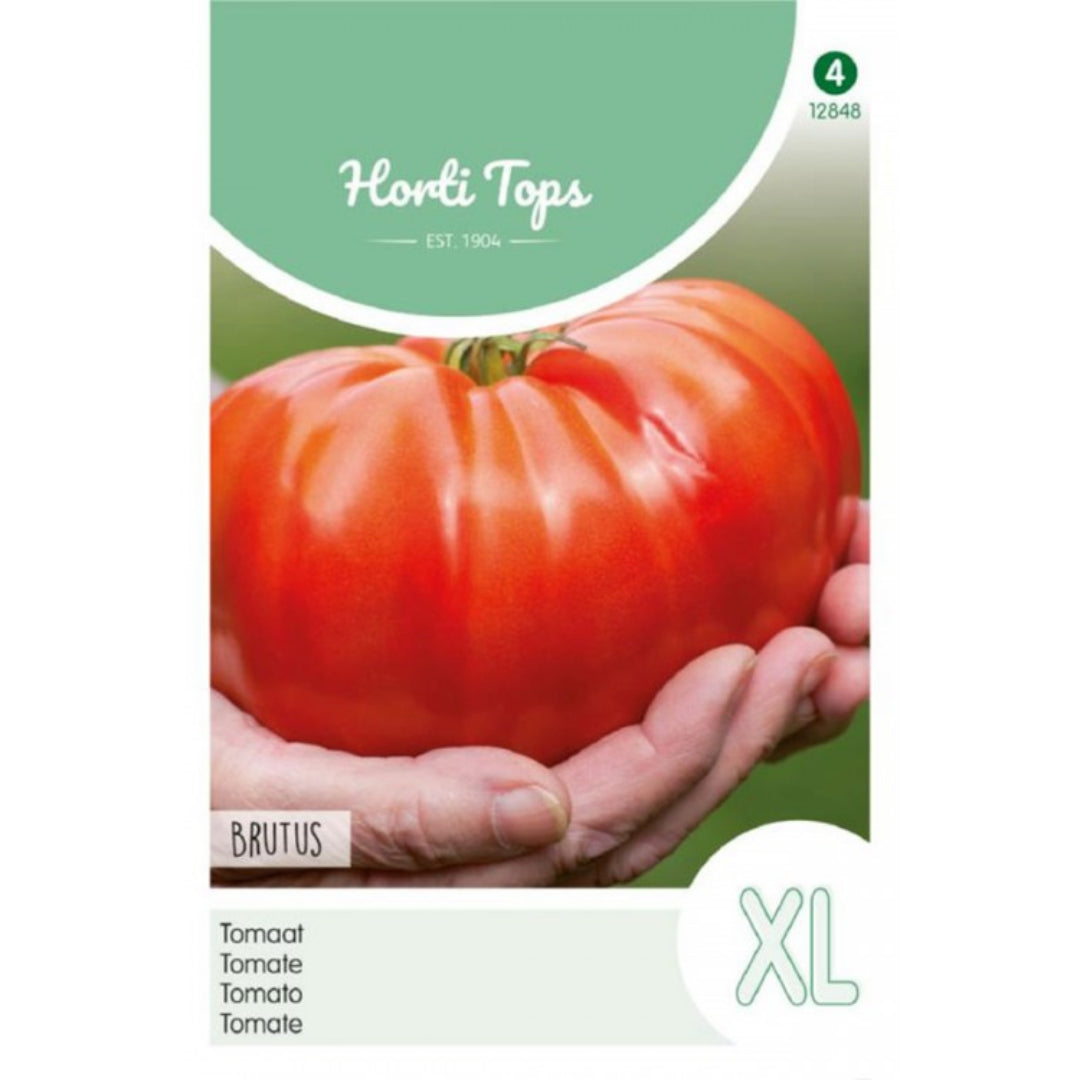
Brutus XL Tomato produces large, ribbed red fruits with thick, juicy flesh and a mild flavour. Its broad slices suit sandwiches, burgers and fresh salads, while fully ripe tomatoes can also be used for homemade sauces and soups.
This tall-growing beefsteak variety continues developing new flower clusters while conditions remain suitable. Grow it beside a strong stake or trellis in a sunny home garden, raised bed or deep container.
Why Gardeners Love It
-
Large Beefsteak Fruits: Produces substantial red tomatoes with pronounced ribs.
-
Thick Slices: Fleshy tomatoes suit sandwiches, burgers and salads.
-
Mild Flavour: Enjoy fresh or use in sauces and everyday cooking.
-
Extended Picking: Continues forming fruit during suitable growing weather.
-
Vertical Growing: Can be trained along a stake or trellis.
Best Conditions
-
Germination: Usually 7–14 days
-
Germination temperature: Around 20–25°C
-
Sunlight: At least 6–8 hours
-
Pot size: A deep 12-inch pot for one plant
-
Spacing: About 24–30 inches between plants
-
Plant height: Usually around 5–6 feet with support
-
Growth habit: Indeterminate, with continued upward growth
-
Soil: Fertile, moisture-retentive and well-draining mix
-
First harvest: Usually around 80–100 days after transplanting; longer in cool weather
Sowing note: In Lahore, Faisalabad, Islamabad and Rawalpindi, start seeds under protection from January to February for spring planting, or again from July to August for autumn growth. In Karachi, sow from August to October. In southern Punjab, sow from January to February, or again from July to August with protection from extreme heat and heavy rain. In colder northern and hilly areas, start seeds from March to April and transplant after frost has passed.
How to Sow
- Fill a seed tray or small pots with fine, moist seed starter mix.
- Sow the seeds around ¼ inch deep and cover lightly.
- Water gently and keep the mix moist without leaving it soggy.
- Once seedlings appear, give them plenty of light to prevent stretched stems.
- Move seedlings into individual pots when they develop two pairs of true leaves.
- Gradually introduce them outdoors, then transplant slightly deeper with the root balls intact.
Plant Care
Water at the base when the upper inch of soil begins drying, keeping moisture steady as the tomatoes swell. Tie the main stem to its support with loose, soft ties. For a manageable single-stem plant, pinch out small side shoots growing between the leaf stalks and main stem.
Mix a small amount of Vermicompost into the soil before transplanting. Begin feeding with a tomato fertiliser when the first fruits start swelling, following its label. Check beneath leaves for aphids, whiteflies and spider mites; treat affected foliage with Neem Oil at its labelled dilution and observe the stated interval before harvesting.
Local Gardener Tips
- Support heavy fruit clusters with broad, soft slings before their stems begin bending.
- Keep healthy leaves around developing tomatoes to protect them from sunscald.
- Position rooftop pots away from walls that reflect strong afternoon heat.
- Transplant in the late afternoon so seedlings have cooler hours to settle.
Harvesting
Pick when the tomatoes have developed a full red colour and feel slightly yielding under gentle pressure. Support each fruit in your hand and snip its stalk instead of pulling against the branch.
Check between the ribs and around the shoulders because these areas can colour unevenly. Use fully ripe fruit promptly for its best texture, and handle carefully to avoid bruising.
FAQs
Do I need two plants to get tomatoes?
No. Tomato flowers are self-fertile, so one Brutus XL plant can produce fruit. On sheltered balconies or inside protected growing areas, gently tapping open flower clusters can help release pollen.
Why is there a dark, sunken patch underneath a tomato?
This is often blossom end rot, which develops when insufficient calcium reaches the growing fruit. Dry roots, fluctuating moisture or root damage can interrupt calcium movement even when the soil contains enough. Existing damage will not heal, so focus on improving root conditions to protect developing fruit.
Common names: Brutus XL Tomato, Brutus Tomato, Beefsteak Tomato, Tamatar, ٹماٹر, Solanum lycopersicum ‘Brutus’