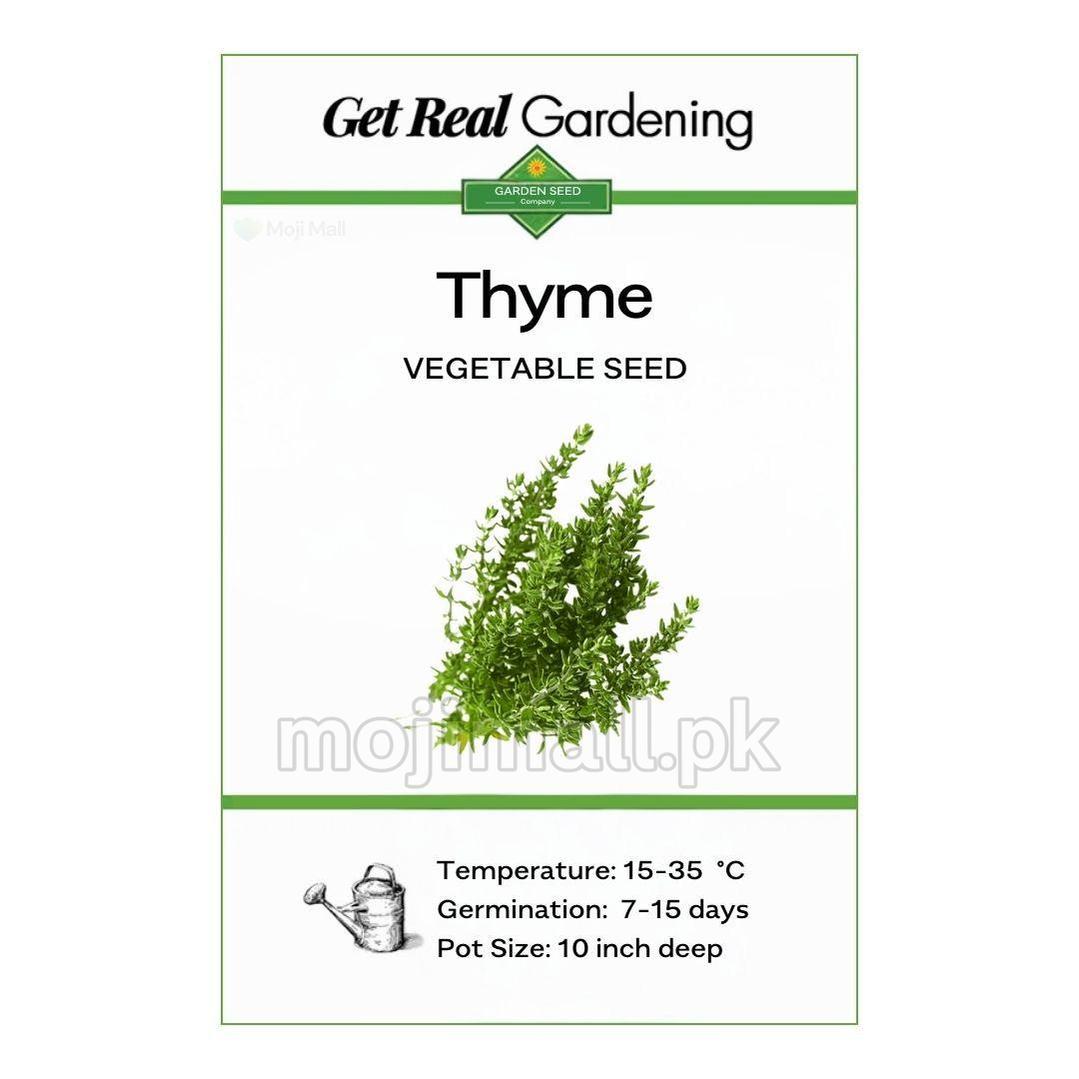
Thyme is a compact perennial herb recognised for its tiny aromatic leaves. It has a fresh, earthy flavour with slight sweetness and a light peppery taste. The leaves can be used fresh or dried in soups, sauces, marinades, roasted vegetables, chicken and meat dishes.
Native to parts of southern Europe, thyme is closely associated with Mediterranean cooking. This sun-loving herb grows well in pots, borders and home herb gardens, preferring mild weather and soil that drains easily.
Why Grow It
-
Distinctive Flavour: Mildly sweet, with light mint and clove-like flavour.
-
Fresh or Dried: Leaves retain a strong flavour after drying.
-
Repeated Picking: Regular trimming provides leaves for several months.
-
Pollinator Friendly: Small flowers attract bees and beneficial insects.
-
Pot Friendly: Suitable for balconies, rooftops and small gardens.
Best Conditions
-
Germination: Usually 10–21 days
-
Temperature: Around 15–25°C
-
Sunlight: At least 6 hours
-
Pot size: An 8–10-inch pot
-
Spacing: About 8–12 inches between plants
-
Plant height: Usually around 8–12 inches
-
Soil: Light and well-draining mix with compost
Sowing note: In Lahore, Faisalabad, Islamabad and Rawalpindi, sow from October to November, or again from February to March. In hotter areas such as Karachi and southern Punjab, sow after the strongest summer heat has eased, from November to February. In colder northern and hilly areas, sow from March to April, after the risk of hard frost has passed.
How to Sow
- Fill a tray or small pot with fine, moist seed starter mix.
- Scatter the tiny seeds thinly over the surface.
- Press the seeds gently, but do not cover them.
- Mist the surface and cover the tray with clear plastic.
- Keep the tray in a warm place with bright, indirect light.
- Open the cover daily and keep the surface lightly moist.
- Remove the cover once the seedlings appear.
- Move them to stronger light and transplant at 3–4 true leaves.
Plant Care
Water regularly until the plant becomes established. After that, water when the upper layer of the potting mix becomes dry. Thyme tolerates some dryness, but its roots can rot if the soil remains constantly wet.
Mix a small amount of Vermicompost into the final potting mix. Avoid frequent fertilizer, as thyme grows well with light feeding.
Thyme is usually trouble-free. If aphids or spider mites appear, spray Neem Oil on the affected leaves, including their undersides.
Local Gardener Tips
- Protect the tiny seeds from strong watering and heavy rain.
- Keep pots sheltered during prolonged monsoon rain.
- Avoid frequent or heavy fertilizer.
- Provide afternoon shade during extreme summer heat.
- Trim lightly after flowering without cutting into bare woody stems.
Harvesting
Begin light harvesting once the plant has developed several healthy branches. Cut young leafy tips just above a leaf joint, taking no more than one-third of the plant at one time.
For drying, harvest sprigs shortly before the flowers open. Dry them in a shaded, airy place, then remove the leaves and store them in a sealed container.
FAQs
Why is my thyme growing slowly?
Thyme naturally grows slowly from seed, especially during its early stages. Give the seedlings strong light and avoid excessive watering while their roots develop.
Can thyme grow indoors?
It can grow near a very sunny window that receives at least six hours of direct sunlight. Without enough light, the stems may become thin and weak.
Is thyme the same as ajwain?
No. Thyme and ajwain are different herbs. Thyme has much smaller leaves and a milder, earthy flavour.
Can thyme flowers be eaten?
Yes. The small flowers have a flavour similar to the leaves and can be added to salads or used as a garnish. Leave some flowers for bees and other pollinators.
Common names: Thyme, Common Thyme, Garden Thyme, English Thyme, Hasha