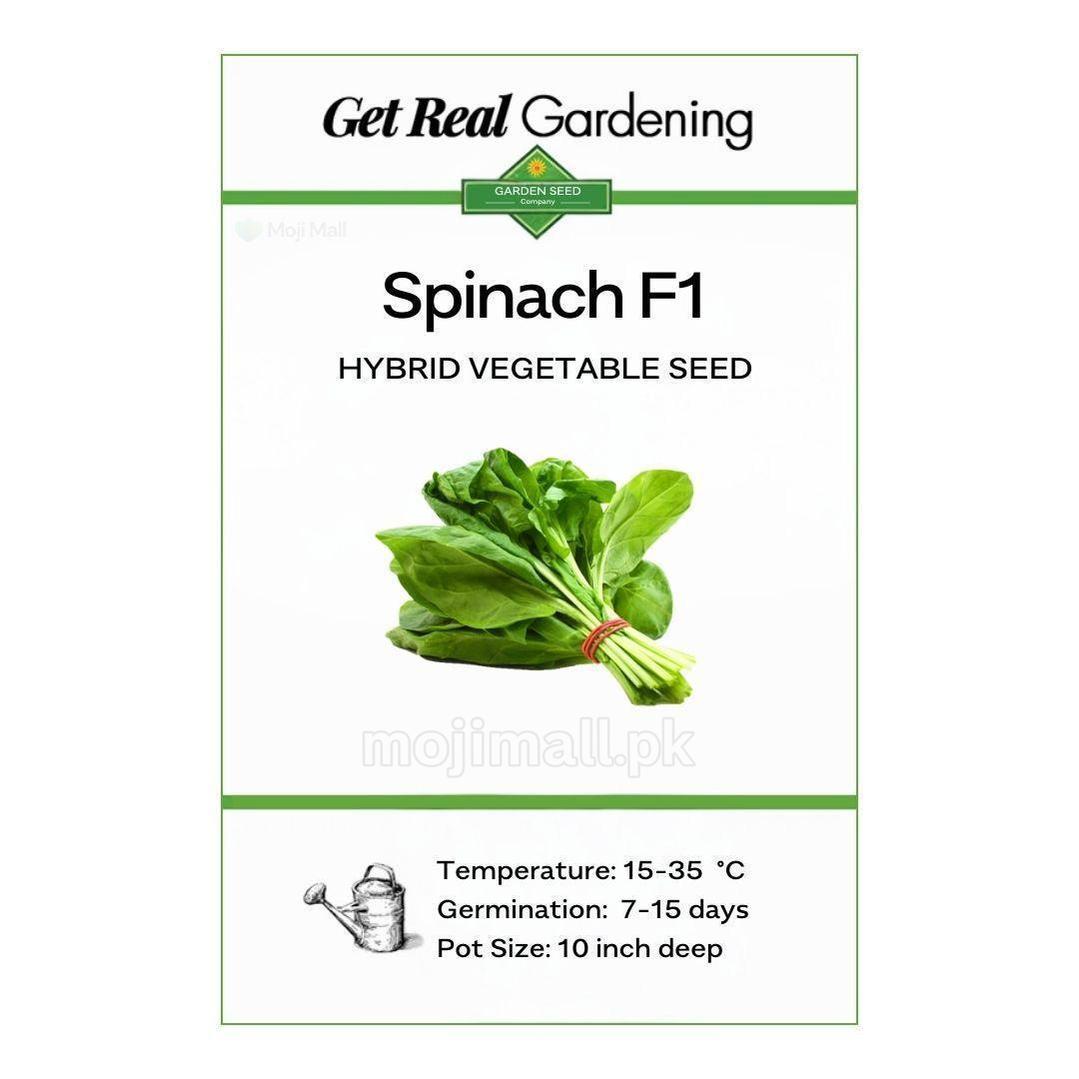
Spinach F1 Hybrid produces tender green leaves with the mild palak flavour used in saag, daal, curries, pakoras, omelettes, soups and paratha filling. The leaves can be picked young or allowed to grow larger for cooked dishes.
This F1 hybrid is selected for quick, more uniform growth and slower flowering during suitable cool weather. Plants develop at a similar pace, making it easier to harvest evenly from containers, rows and garden beds.
Why Grow It
-
F1 Uniformity: Plants develop with a more consistent size and growth rate.
-
Quick Harvest: Leaves are usually ready within 30–45 days.
-
Tender Leaves: Suitable for picking young or at full leaf size.
-
Repeated Picking: Outer leaves can be removed while the centre continues growing.
-
Container Friendly: Grows well in wide pots, grow bags and garden beds.
Best Conditions
-
Germination: Usually 5–10 days
-
Temperature: Around 10–24°C
-
Sunlight: At least 4–6 hours
-
Pot size: A wide container at least 8 inches deep
-
Spacing: About 3–4 inches between plants
-
Plant height: Usually around 8–12 inches
-
Soil: Moist, fertile and well-draining soil
Sowing note: In Lahore, Faisalabad, Islamabad and Rawalpindi, sow from September to February. In hotter areas such as Karachi and southern Punjab, sow from October to February once the strongest heat has eased. In colder northern and hilly areas, sow from March to April after severe frost has passed, or from August to September for autumn growth.
How to Sow
- Prepare the final container or garden bed with fine, moist soil.
- Make shallow rows around ½ inch deep and sow the seeds 1–2 inches apart.
- Cover lightly and water with a gentle spray.
- Keep the soil evenly moist without leaving it waterlogged.
- Thin seedlings to 3–4 inches apart after their true leaves develop.
Plant Care
-
Watering: Keep the soil evenly moist while the leaves develop. Water when the surface begins drying because repeated dry periods can slow growth and start early flowering.
-
Feeding: Mix Vermicompost into the soil before sowing. If established plants remain pale green and grow slowly despite proper light and drainage, mix 1 tablespoon of Blood Meal into the upper soil of a 12-inch pot and water immediately. Apply it once and check the new growth before feeding again.
-
Pests and Disease: Check for aphids, leaf miners and yellow patches caused by downy mildew. Remove badly affected leaves and improve airflow. If insects continue spreading, spray Neem Oil in the evening, including underneath affected leaves.
Local Gardener Tips
- Sow a fresh small row every two weeks for a longer picking period.
- Use seedlings removed during thinning as young palak leaves.
- Sow in the evening if the soil is still warm at the beginning of the season.
- Give late plantings morning sunlight and light afternoon shade.
- Replace plants after a central flower stalk develops because the leaves become smaller and stronger in taste.
Harvesting
Begin picking when the leaves are around 4–6 inches long, usually 30–45 days after sowing. Remove the larger outer leaves and leave the small central leaves untouched so they can continue developing.
For a larger one-time harvest, cut the plant around 1 inch above the soil. Some healthy plants may produce another smaller set of leaves. Harvest before a tall central flower stalk forms for better leaf size and texture.
Use freshly picked spinach soon after harvesting. If storing it, keep the unwashed leaves dry and refrigerated, then rinse them thoroughly before cooking.
FAQs
Is F1 Hybrid Spinach genetically modified?
No. F1 hybrid seed is produced by crossing two selected parent lines to combine useful traits such as uniform growth. This is different from genetic modification.
Can I save seeds from F1 Hybrid Spinach?
The plants can produce seeds, but plants grown from saved F1 seed may differ in leaf size, growth rate and flowering time. Use fresh F1 seed when consistent growth is important.
Why are my Spinach seeds not germinating during warm weather?
Spinach seed may remain inactive or germinate unevenly when the soil is too warm. Wait for cooler weather, sow in the evening and keep the seed area moist and lightly shaded.
Common names: Spinach F1 Hybrid, Hybrid Spinach, Spinach, Palak, Green Palak, پالک