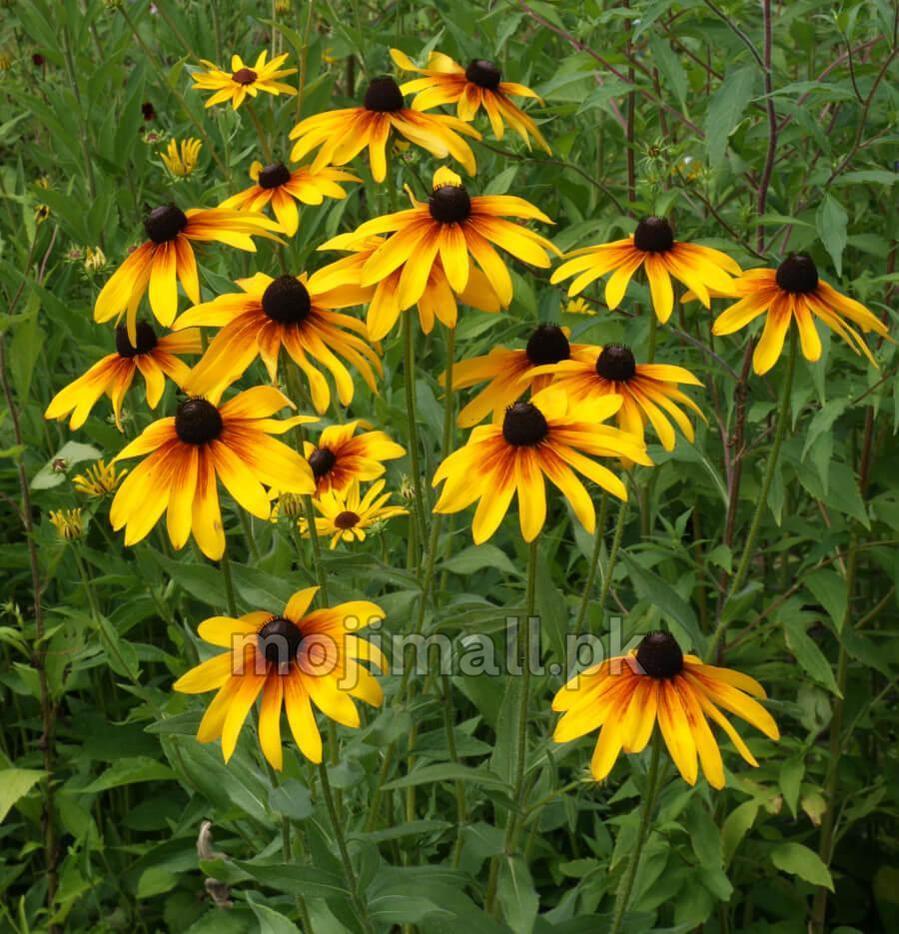
Rudbeckia, also called Black-Eyed Susan, produces golden yellow, daisy-shaped flowers with prominent dark centres. Plant it in sunny borders, patio pots or mixed flower beds for warm colour and fresh flowers to cut for indoor arrangements.
Native to North America, Rudbeckia is valued for its long flowering display and ability to handle heat once established. Its open flowers attract bees and butterflies, making it a useful addition to a home garden that welcomes pollinators.
Why Gardeners Choose It
-
Distinctive Flowers: Golden petals surround a dark, raised centre.
-
Long Flowering Display: Established plants develop fresh buds over several weeks.
-
Fresh Bouquets: Flower stems work well in simple vases and mixed arrangements.
-
Heat Tolerant: Handles warm, sunny conditions once its roots are established.
-
Pollinator Friendly: Open flowers attract bees and butterflies.
Best Conditions
-
Germination: Usually 8–14 days
-
Germination temperature: Around 20–22°C
-
Sunlight: At least 6 hours of direct sunlight
-
Pot size: A 10–12-inch pot for one plant
-
Spacing: About 12–18 inches between plants
-
Soil: Moderately fertile, moist and well-draining mix
-
First flowers: Allow roughly 14–18 weeks from sowing
Sowing note: In Lahore, Faisalabad, Islamabad and Rawalpindi, sow from February to April for warm-season flowers. Autumn sowing from September to November can also be raised in a protected location for flowering the following spring or summer. In Karachi and southern Punjab, start seeds after the strongest summer heat has eased, or from February to March. In colder northern and hilly areas, sow from March to April once severe frost has passed.
How to Sow
- Fill a seed tray or small pots with fine, lightly moistened seed starter mix.
- Scatter the seeds thinly and press gently onto the surface without burying them deeply.
- Mist carefully and cover with a loose clear lid to help retain surface moisture.
- Place in bright, indirect light and open the lid daily to allow fresh air.
- Remove the cover after germination and water gently as the seedlings develop stronger roots.
- Transplant at 3–4 true leaves after gradually introducing the seedlings to direct outdoor sunlight.
Plant Care
Water at the base when the upper soil begins drying, keeping moisture consistent while buds and flowers develop. Avoid leaving pots in standing water. Remove weeds around young plants and keep mulch away from the stems. If stems lean in an exposed position, support them with a cane and loose ties.
Mix a small amount of Vermicompost into the final potting mix before transplanting. Avoid heavy feeding with nitrogen-rich fertilizer, which can encourage leafy growth and reduce flowering. Check new shoots and leaf undersides for aphids. If they appear, apply Neem Oil according to its label, treating affected foliage and keeping spray away from open flowers.
Local Gardener Tips
- Protect seed trays from hot afternoon sun and heavy rain.
- Give established plants morning sun with light afternoon shade during extreme heat.
- Check young plants after dark if slugs or snails are damaging the leaves.
- Use pots with open drainage holes and enough room for the roots.
Flowering and Cutting
Remove faded flowers by cutting their stems back to a healthy leaf or side shoot. This keeps the display tidy and encourages continued flowering while conditions remain suitable.
For fresh arrangements, cut stems as the petals unfold, before the flowers are completely open. Place them in water immediately, remove leaves below the waterline and refresh the vase water regularly.
FAQs
Why is my Rudbeckia producing leaves but no flower buds?
Rudbeckia can spend several weeks developing a leafy rosette before flowering. Short winter days can also delay bud formation, even when the plant looks healthy. Autumn-sown plants may begin flowering as days lengthen in spring.
Why are my seedlings collapsing at soil level?
This can be damping-off, a disease that attacks the base of young seedlings. Affected stems may look thin, dark or water-soaked. Remove collapsed seedlings promptly. If losses continue, restart in a washed tray with fresh seed starter mix.
Will Rudbeckia return next year?
Seed-grown Rudbeckia hirta is commonly grown as a seasonal flowering plant. Some plants survive into another season, but this is less dependable than with perennial Rudbeckia species. New seedlings may also appear if mature flower heads were allowed to release seeds.
Common names: Rudbeckia, Rudbeckia hirta, Black-Eyed Susan, Gloriosa Daisy, روڈبیکیا