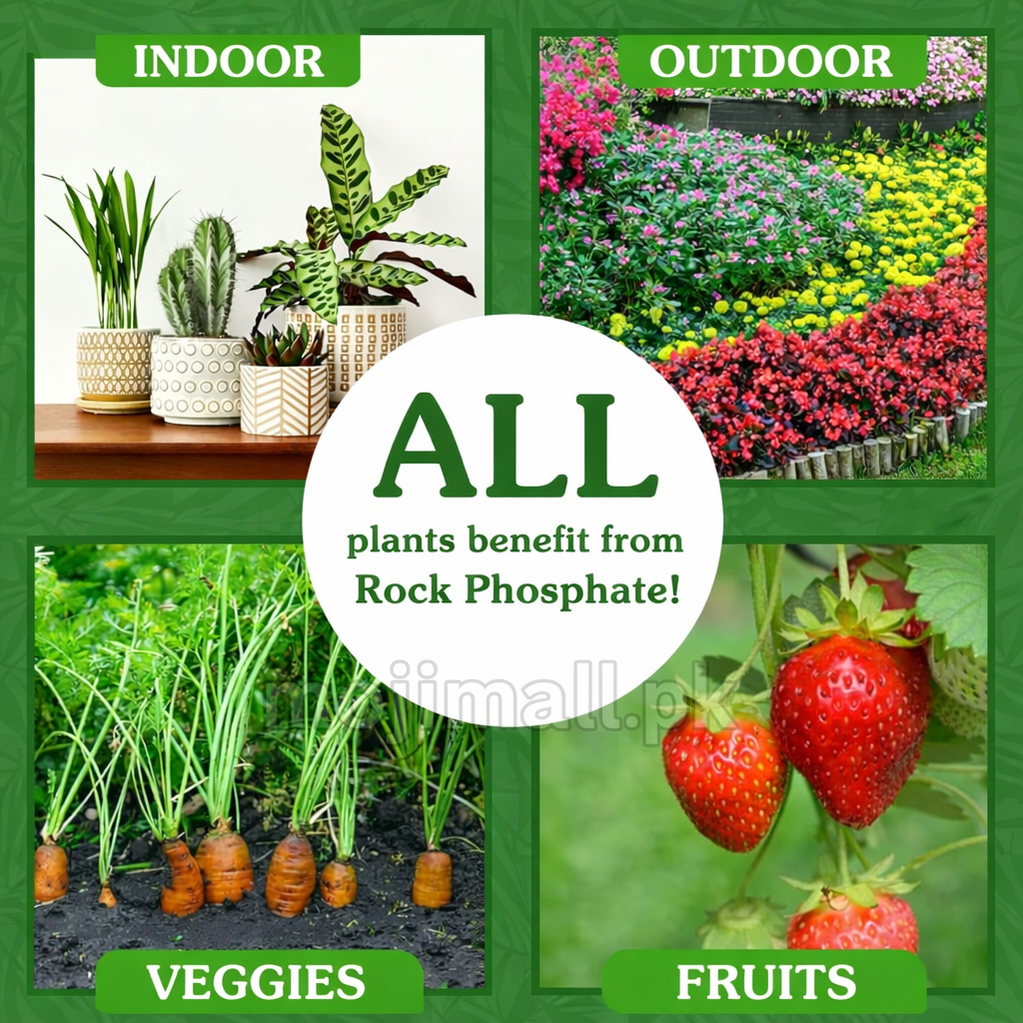
Rock Phosphate is a natural slow-release phosphorus fertilizer made from finely ground phosphate rock. It supports long-term soil fertility, stronger root development, flowering, and fruit formation by gradually releasing phosphorus through soil moisture, acidity, and microbial activity.
It is useful for vegetables, herbs, flowering plants, fruit plants, trees, pots, grow bags, and garden beds where slow and steady phosphorus support is needed. In Pakistan, it is best used with organic matter such as compost, vermicompost, neem cake, or mustard cake powder to improve nutrient availability in rooftop pots, kitchen gardens, and home garden soil.
Unlike quick chemical phosphorus fertilizers, rock phosphate is not designed for instant deficiency correction. It works gradually and is better suited for soil building, planting preparation, and repeated seasonal use.
Pack Size Guide
Choose from 800g, 5kg or 25kg packs using the size selector.
Key Benefits
Slow-Release Phosphorus
Provides long-lasting phosphorus support for roots, flowering, and fruiting.
Supports Root Development
Useful during planting, transplanting, and early root establishment.
Helps Flowering and Fruit Formation
Supports flowering plants, fruiting vegetables, and fruit trees when phosphorus is needed.
Builds Long-Term Soil Fertility
Best for gardeners focused on soil improvement rather than fast feeding.
Works Well with Organic Matter
Performs better when used with compost, vermicompost, neem cake, or mustard cake powder.
Gentle for Regular Gardening
Suitable for pots, grow bags, vegetables, herbs, fruit plants, flowers, and trees when used correctly.
Best Uses
Vegetables and herbs: e.g. tomatoes, chillies, dhania, spinach, and okra.
Flowering plants: e.g. roses, marigold, zinnia, petunia, and seasonal flowers.
Fruit plants and trees: e.g. citrus, guava, papaya, pomegranate, and moringa.
Pot gardening: useful for long-term soil nutrition without quick nutrient shock.
Garden beds: good for soil preparation before planting.
How to Use Rock Phosphate
For Potted Plants
- Mix 1–2 tablespoons into the topsoil of a 10–12-inch pot.
- Water well after application.
- Use once every 2–3 months if needed.
For Garden Beds
- Apply 200–300g per 100 square feet.
- Mix evenly into the soil before planting or during soil preparation.
- Use once per growing season.
- For intensive planting, repeat after 3 months if needed.
For Fruit Plants and Trees
- Use 200–500g per plant, depending on plant size.
- Apply around the root zone, not directly against the stem or trunk.
- Mix lightly into the soil and water well.
- Use 2 times per year, once at the start of the growing season and once before flowering.
Best Practice
Rock phosphate works best when mixed into soil with organic matter such as vermicompost, neem cake, mustard cake powder, or compost. Organic matter supports microbial activity and can help improve phosphorus availability over time.
How Long Does Rock Phosphate Take to Work?
Rock phosphate is slow acting by nature.
- Initial benefits may appear in 3–6 weeks, depending on soil condition.
- Full results develop gradually as phosphorus becomes available.
- Best results come from seasonal or repeated use.
- It is better for soil building than quick correction of phosphorus deficiency.
Rock Phosphate vs Bone Meal
Rock Phosphate: Very slow-release, long-lasting, and better for ongoing soil fertility. Works best with organic matter and suitable soil conditions.
Bone Meal: Usually faster than rock phosphate and useful for roots, bulbs, and flowering plants, but may not last as long.
For gardeners focused on long-term soil health and sustained phosphorus support, rock phosphate is usually the better long-term option, while bone meal is often better when faster phosphorus availability is needed.
Important Soil Note
Rock phosphate is less available in neutral to alkaline soils and works better in acidic soil conditions. If your soil is alkaline, use it with organic matter and do not expect instant results. For fast phosphorus correction, a more available phosphorus fertilizer may be needed.
Safety for Edible Plants
Rock phosphate can be used for vegetables, herbs, and fruit plants when applied as recommended.
- No waiting period is required before harvest.
- Apply to the soil, not directly on edible parts.
- Always wash produce thoroughly before eating.
FAQs
Can I use rock phosphate in pots regularly?
Yes, rock phosphate can be used in pots, but only occasionally. Applying it once every 2–3 months is usually enough for pot-grown plants.
Is rock phosphate suitable for flowering plants?
Yes, it can support flowering plants when phosphorus is needed. Mix it into soil before planting or apply lightly around the root zone.
Does soil type affect rock phosphate performance?
Yes. Rock phosphate works best in soil with good organic matter, microbial activity, and suitable acidity. It is less effective in alkaline or highly calcareous soil.
Can I combine rock phosphate with other fertilizers?
Yes, it works well with organic inputs like vermicompost, neem cake, mustard cake, compost, and seaweed liquid fertilizer. Avoid overusing multiple phosphorus-rich fertilizers together.
Is rock phosphate better than bone meal?
Rock phosphate is usually better for very long-term soil building, while bone meal is often better when faster phosphorus availability is needed for bulbs, roots, and flowering plants.