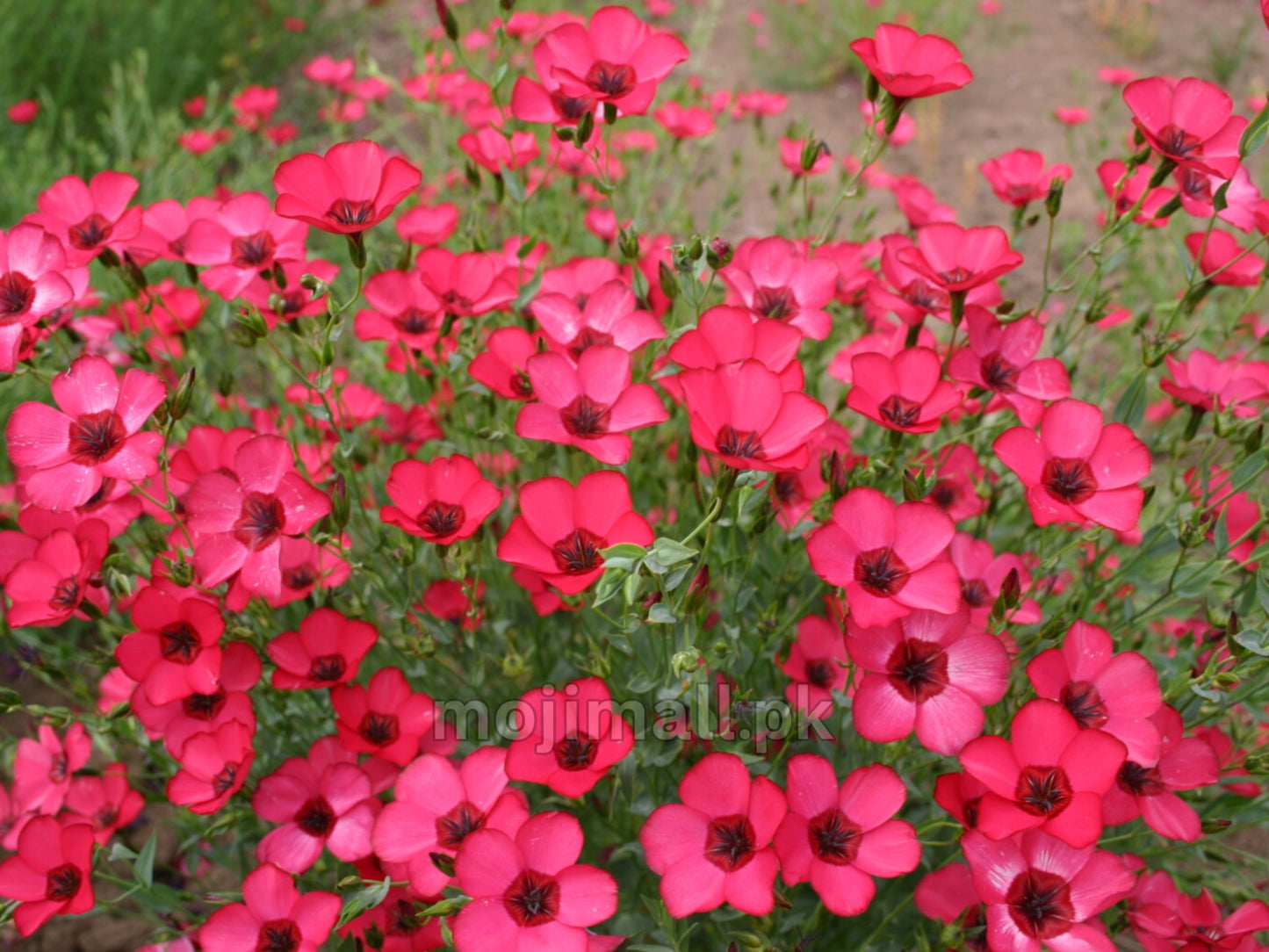
Red Flax forms loose, branching plants topped with silky crimson-red flowers. Each bloom has five rounded petals, often with a dark centre, held above fine grey-green leaves. Its light growth looks attractive in sunny pots, front borders, grouped planting and natural-style flower areas.
Native to Algeria and Tunisia in North Africa, Red Flax grows quickly during cool to mild weather. It prefers full sunlight and light soil that drains freely. Several plants grown together create a stronger and more noticeable display.
Why Grow It
-
Crimson Blooms: Silky red flowers add strong colour to sunny spaces.
-
Airy Growth: Fine stems and narrow leaves create a light, natural look.
-
Quick Flowering: Blooms may begin within 8–12 weeks of sowing.
-
Bee Friendly: The open flowers attract bees to the garden.
-
Germination Tested: Seeds with a high germination rate.
Best Conditions
-
Germination: Usually 10–20 days
-
Temperature: Around 18–21°C
-
Sunlight: At least 6 hours
-
Pot size: A 10–12-inch-wide pot
-
Spacing: About 4–6 inches between plants
-
Plant height: Usually around 12–20 inches
-
Flower size: Approximately 1–1½ inches
-
Soil: Light, fertile and well-draining mix
In Lahore, Faisalabad, Islamabad and Rawalpindi, sow from September to November, or again from late January to February. In hotter areas such as Karachi and southern Punjab, sow from October to December after the strongest summer heat has eased. In colder northern and hilly areas, sow from March to April, after the risk of hard frost has passed.
How to Sow
Red Flax grows best when sown directly in its final pot or flower bed because the young plants dislike root disturbance.
- Fill the final pot or prepare the bed with fine, moist soil.
- Sow the seeds thinly and evenly over the prepared area.
- Cover them with around ⅛ inch of fine soil.
- Water the surface gently using a fine spray.
- Keep the soil lightly moist until the seedlings appear.
- At 2–3 true leaves, leave 4–6 inches between plants.
Plant Care
Water regularly while the seedlings are becoming established. Once the plants are stronger, water when the upper soil begins to dry. They tolerate short dry periods better than soggy soil, so never leave the pot standing in water.
Mix a small amount of Vermicompost into poor potting mix before sowing. Repeated feeding is unnecessary because overly rich soil can produce weak, leafy stems with fewer flowers.
Red Flax generally has few pest problems. If aphids gather on the tender tips, spray Neem Oil on the affected growth while avoiding open flowers. Remove slugs and snails if they damage young seedlings.
Local Gardener Tips
- Protect newly sown areas from strong watering and heavy rain.
- Grow several plants together for a fuller display.
- Sow another small batch after 2–3 weeks for later flowers.
- Shelter pots from strong rooftop winds that may bend the fine stems.
Flowering
Red Flax usually begins flowering around 8–12 weeks after sowing. Flowering remains strongest during sunny, mild weather and may slow as late spring becomes hot.
When the first display becomes lighter, cut some stems back by about one-third. This may encourage fresh side growth and later flowers while the weather remains comfortable.
FAQs
Why do Red Flax flowers lose their petals quickly?
Each flower naturally lasts for only about one day, so its petals may fall quickly. This is normal, and other buds continue opening over the following days.
Will Red Flax return next season?
The original plant finishes after one season. However, dry seed capsules may release seeds that produce new seedlings when suitable weather returns.
Common names: Red Flax, Scarlet Flax, Flowering Flax, Crimson-flowered Flax, Linum grandiflorum ‘Rubrum’