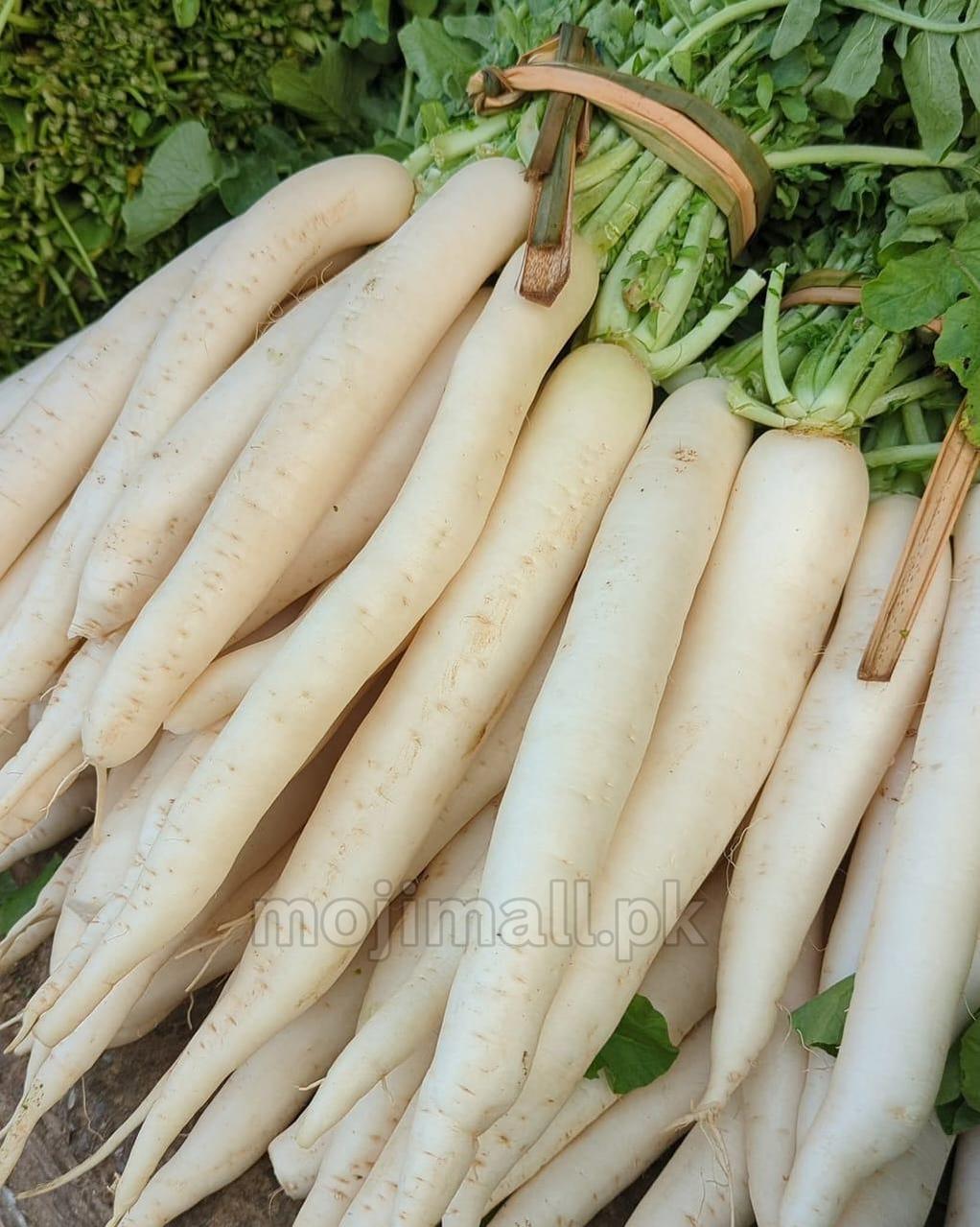
Radish White F1 Hybrid forms long, smooth white roots with crisp flesh and a fresh, sharp taste. The roots can be sliced for salads, served with salt and lemon, grated into parathas, cooked as mooli sabzi or added to achar.
This hybrid is selected for straighter roots with a more consistent length and thickness. Several plants also tend to become ready within a similar period. Loose soil is essential because even a good F1 radish can become bent or divided when its root meets stones, hard soil or compacted lumps.
Why Grow It
-
Long White Roots: Develops elongated roots with clean white skin.
-
Even Shape: F1 roots remain more similar in length and thickness.
-
Harvest Timing: Harvest while the roots are young and tender; timing depends on the variety and growing conditions.
-
Crisp Texture: Suitable for eating raw, pickling or cooking.
-
Deep Containers: Can be grown in pots and grow bags with enough soil depth.
Best Conditions
-
Germination: Usually 3–7 days
-
Temperature: Around 10–20°C
-
Sunlight: At least 5–6 hours
-
Pot size: At least 12–14 inches deep
-
Spacing: About 3–4 inches between plants
-
Plant height: Usually around 8–14 inches above the soil
-
Soil: Deep, loose and free from stones or hard lumps
In Lahore, Faisalabad, Islamabad and Rawalpindi, sow from September to February. In Karachi and southern Punjab, sow from October to February after the strongest heat has eased. In colder northern and hilly areas, sow from March to April, or during early autumn before severe frost begins.
How to Sow
- Loosen the soil to its full depth and remove stones, roots and hard lumps.
- Sow directly in the final pot or bed, around ½ inch deep.
- Place the seeds 1–2 inches apart and water with a gentle spray.
- Thin the seedlings to 3–4 inches apart after their true leaves appear.
- Sow another small row after 10–14 days if radishes are needed over a longer period.
Plant Care
White radish needs steady moisture while its long root is developing. Dry soil can make the flesh tougher and stronger in taste, while sudden heavy watering after a dry period can split the root. Water deeply enough to moisten the root area without leaving the soil soggy.
Mix a modest amount of Vermicompost into the soil before sowing. Avoid fresh manure and excessive feeding because soft, heavily fed soil can encourage large leaves or misshapen roots.
Flea beetles and other small insects may chew tiny holes in the leaves. Mild leaf damage usually does not affect the root, but a serious attack can slow young seedlings. Spray Neem Oil on affected leaves during the evening.
Local Gardener Tips
- Sow directly because radish roots do not respond well to transplanting.
- Thin seedlings early instead of allowing them to compete underground.
- Add a little loose soil around any exposed white root without covering the leaves.
- Use the deepest part of a grow bag so the roots can extend downward.
Harvesting
Long white radishes generally need about 50–70 days from sowing, depending on the variety, weather and growing conditions. Check the root thickness near the soil surface and lift one sample when the roots are well developed and still tender. Use root development as your guide rather than the day count alone.
Water the soil lightly before harvesting, hold the leaves close to their base and pull upward carefully. Do not leave mature roots in the soil for too long because they can become coarse, hollow or excessively sharp.
FAQs
Why is my radish flowering before forming a proper root?
Warm weather, long days or repeated stress can make radish send up a flower stalk early. Once this happens, the root usually stops improving and should be removed.
Can white radish leaves be eaten?
Yes. Young, healthy leaves can be cooked as saag, mixed into other leafy vegetables or added to parathas. Wash them carefully because their surface can hold soil and small insects.
Why has the top of the white root turned green?
The exposed part can develop a green colour after receiving sunlight. Pull a little loose soil around the exposed shoulder while the root is still growing. The green section is usually edible but may taste stronger.
Common names: White Radish, Mooli, Safed Mooli, مولی, سفید مولی