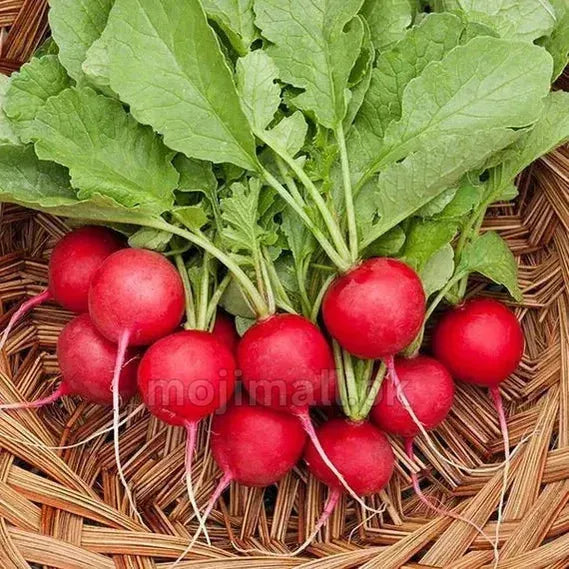
Red Round Radish forms small, globe-shaped roots with bright red skin, white flesh and a crisp bite. It is different from long white mooli and is especially suitable for slicing into salads, serving with salt and lemon, adding to sandwiches, making quick achar or using as a colourful garnish.
Its compact roots develop close to the soil surface and become ready quickly in cool weather. Because the roots do not need the depth required by long mooli, several plants can be grown together in a wide pot or planter.
Why Grow It
-
Round Red Roots: Forms small, rounded radishes with bright red skin.
-
Quick Growing: Can be ready within a few weeks of sowing.
-
Crisp Bite: Fresh roots have firm flesh and a pleasantly sharp taste.
-
Wide Pot Growing: Several plants can be grown across one container.
-
Repeated Sowing: Small batches can be sown at intervals for regular picking.
Best Conditions
-
Germination: Usually 3–7 days
-
Temperature: Around 10–20°C
-
Sunlight: At least 5–6 hours
-
Pot size: At least 6–8 inches deep with a wide surface
-
Spacing: About 2–3 inches between plants
-
Plant height: Usually around 6–10 inches above the soil
-
Soil: Fine, loose and free from stones or hard lumps
In Lahore, Faisalabad, Islamabad and Rawalpindi, sow from September to February. In Karachi and southern Punjab, sow from October to February after the strongest heat has eased. In colder northern and hilly areas, sow from March to April, or during early autumn before severe frost begins.
How to Sow
- Fill the final pot with loose soil and level the surface without pressing it firmly.
- Sow the seeds directly around ½ inch deep and about 1 inch apart.
- Cover lightly and water with a gentle spray.
- Thin the seedlings to 2–3 inches apart after their true leaves appear.
- Sow another small batch after 10–14 days if radishes are needed over a longer period.
Plant Care
Round radishes need open space around each seedling because the root expands sideways near the soil surface. Remove extra seedlings early instead of waiting until their leaves overlap. If a red shoulder becomes exposed, draw a small amount of loose soil around it without covering the leaves.
Keep the soil evenly moist while the roots are swelling. Water slowly so the entire root area becomes moist, then allow excess water to drain. Repeated drying can affect the texture and taste of the radishes.
Mix a modest amount of Vermicompost into the soil before sowing. Avoid fresh manure or repeated heavy feeding because this can encourage excessive leaves and poorly shaped roots.
Small holes in the leaves are often caused by flea beetles or other chewing insects. Mild damage usually does not harm the radish, but Neem Oil can be sprayed during the evening if young plants are being damaged heavily.
Local Gardener Tips
- Sow directly because radishes do not benefit from transplanting.
- Use a wide rectangular pot to grow several roots in one row.
- Thin crowded seedlings before the round roots begin swelling.
- Make small sowings at intervals instead of planting every seed together.
Harvesting
Red Round Radish is generally ready around 25–35 days after sowing. Brush away a little soil and check the width of the root. Harvest when it looks round, feels firm and has reached roughly 1–1½ inches across.
Water the soil lightly before harvesting, then hold the leaves close to their base and pull upward. Remove the leafy tops after harvesting if the radishes will be stored, as attached leaves continue drawing moisture from the roots.
FAQs
Why are my plants making leaves but no round roots?
Crowding, warm weather, insufficient sunlight or excessive fertilizer can delay root swelling. Thin the seedlings early and grow them during cool weather.
Why have the radish plants started flowering?
Radishes may send up flower stalks when temperatures rise or when mature roots remain in the soil too long. Once flowering begins, the roots usually become tougher.
Can the leaves be eaten?
Yes. Young, healthy leaves can be washed and cooked with other leafy vegetables or added to parathas. Older leaves may have a rougher texture.
Can Red Round Radish grow indoors?
It can grow beside a window only if it receives several hours of direct sunlight. A bright room without direct sun usually produces weak leaves and poorly developed roots.
Common names: Red Round Radish, Red Radish, Lal Mooli, Surkh Mooli, لال مولی, سرخ مولی