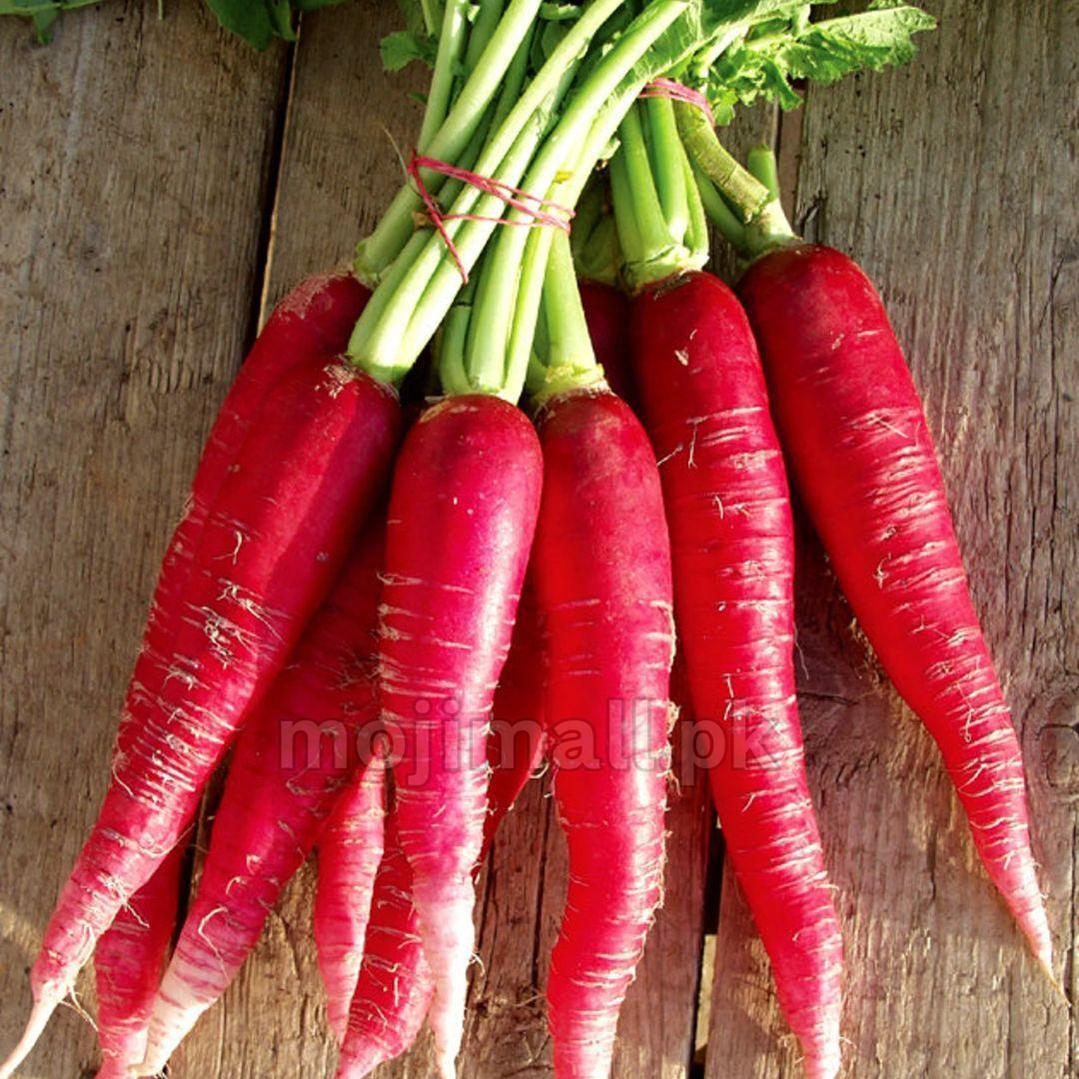
Red Long Radish produces slender, deep-red roots with crisp white flesh and a fresh, peppery flavour. The roots can be sliced into salads, served with salt and lemon, mixed into raita or used in achar and cooked dishes.
Unlike round radishes, this variety needs loose soil to a greater depth so its roots can lengthen without bending or forking. It grows best during cool weather and is suitable for garden beds, deep pots and grow bags.
Why Grow It
-
Distinctive Roots: Develops attractive, elongated roots with deep-red skin.
-
Crisp Texture: Freshly harvested roots are firm and juicy.
-
Everyday Uses: Suitable for salads, raita, achar and cooked dishes.
-
Quick to Mature: Roots are generally ready within a few weeks.
-
Small-Space Friendly: Grows well in deep containers and grow bags.
Best Conditions
-
Germination: Usually 3–7 days
-
Temperature: Around 10–22°C
-
Sunlight: At least 6 hours
-
Pot size: At least 12 inches deep
-
Spacing: About 3–4 inches between plants
-
Plant height: Usually around 8–12 inches
-
Soil: Loose, stone-free and well-draining soil
In Lahore, Faisalabad, Islamabad and Rawalpindi, sow from September to February. In Karachi and southern Punjab, sow from October to February, once the strongest heat has passed. In colder northern and hilly areas, sow from March to April or from August to September, avoiding periods of severe frost.
How to Sow
- Loosen the soil to a depth of at least 12 inches and remove stones and hard clumps.
- Sow the seeds directly about ½ inch deep, leaving roughly 1 inch between them.
- Cover lightly and water with a gentle spray.
- When the seedlings are around 2 inches tall, thin them to 3–4 inches apart by cutting unwanted seedlings at soil level.
- Keep the soil evenly moist while the roots are developing.
Plant Care
Water whenever the upper soil begins to dry. Radishes grow best with steady moisture, so avoid allowing the soil to become completely dry and then soaking it heavily. Keep the soil surface loose and remove weeds carefully without disturbing the developing roots.
Mix a small amount of Vermicompost into the soil before sowing. Radishes usually need little additional feeding. Avoid fresh manure and excessive nitrogen, as these can encourage leafy growth and misshapen roots.
Check young leaves for aphids and flea beetles. Flea beetles leave many tiny round holes in the leaves. If pests appear, spray Neem Oil on both sides of the affected leaves during the cooler part of the day.
Local Gardener Tips
- Loosen the entire depth of the pot, not only the upper few inches.
- Thin seedlings early because crowded roots remain narrow or become twisted.
- Sow a small new row every 10–14 days for radishes at different picking stages.
- Stop sowing when hot weather begins, as heat can make the roots tough and overly sharp.
Harvesting
Begin checking the roots around 35 days after sowing. Brush away a little soil near the top of one plant to examine its width. Harvest once the root has developed a useful length and thickness, usually within 35–50 days depending on the weather and growing conditions.
Water lightly before harvesting if the soil is dry, then hold the leaves close to the crown and pull gently. Do not leave mature roots in the soil for too long because their centres may become hollow or spongy.
Wash the roots, remove the leafy tops and refrigerate them in a bag or covered container. Store the leaves separately if you plan to use them.
FAQs
Why did the roots grow short, bent or forked?
The soil may have been too shallow, compacted or filled with stones and hard clumps. Fresh manure can also cause branching. Prepare the soil deeply before the next sowing.
Can radish leaves be eaten?
Yes. Young, healthy leaves can be washed and added to cooked dishes, parathas or saag. Older leaves may have a rougher texture and stronger taste.
What causes many tiny holes in the leaves?
This is usually caused by flea beetles. Protect young seedlings with fine mesh, remove nearby weeds and treat an active infestation early.
Common names: Red Long Radish, Long Red Radish, Lal Mooli, Surkh Mooli, لال مولی, سرخ مولی