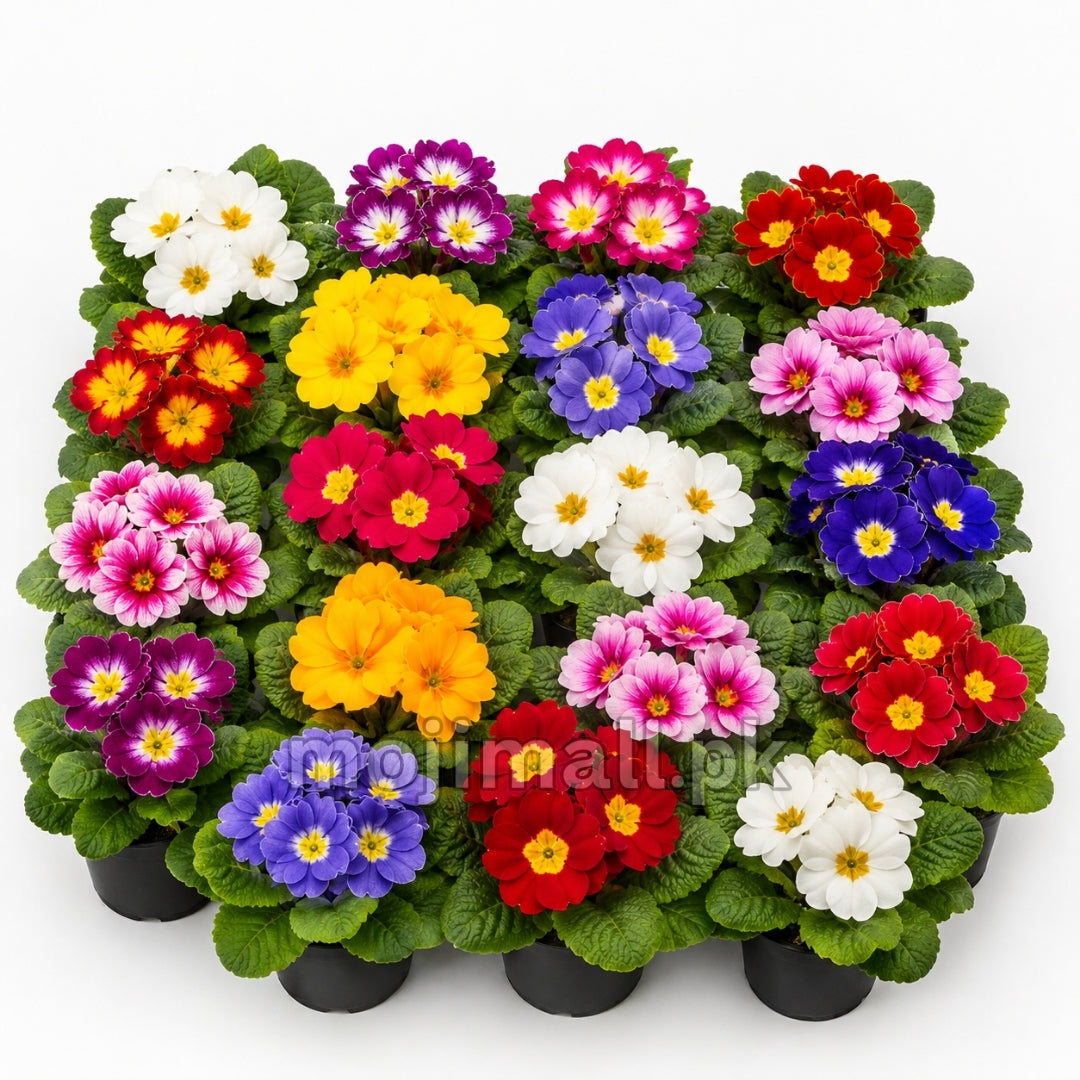
Primula Mix forms neat rosettes of softly crinkled green leaves topped with rounded, five-lobed flowers. The mixture may include yellow, red, pink, purple, blue, white and bicoloured blooms, often with contrasting eyes, rings or petal edges.
Modern bedding Primulas were developed mainly from species native to Europe and western Asia. They prefer cool weather and bring colour to Pakistan’s pots, window boxes and flower-bed edges during winter and early spring.
Why Grow It
-
Partial-Shade Display: Suitable for places that receive limited direct winter sun.
-
Small-Space Friendly: Compact plants fit easily beside entrances and on balconies.
-
Grouped Planting: Several plants can create a colourful low-level display.
-
Pollinator Visits: Open flowers attract bees and other visiting insects.
Best Conditions
-
Germination: Usually 10–21 days
-
Temperature: Around 18–20°C for germination
-
Sunlight: Bright partial shade or 2–4 hours of gentle morning sun
-
Pot size: One plant in a 6–8-inch-wide pot
-
Spacing: About 6–10 inches between plants
-
Plant height: Usually around 5–12 inches
-
Spread: Approximately 6–10 inches
-
Flower size: Around 1–2½ inches
-
Soil: Humus-rich, evenly moist and well-draining mix
In Lahore, Faisalabad, Islamabad and Rawalpindi, start seeds in a protected tray from late September to November. In hotter areas such as Karachi and southern Punjab, sow from November to December after the nights become cooler. In colder northern and hilly areas, sow from March to April after severe winter conditions have eased. Spring-sown plants may flower later in the year or during the following spring.
How to Sow
- Fill a seed tray or small cells with fine, pre-moistened seed starter mix.
- Scatter the tiny seeds thinly and press them gently against the surface without burying them.
- Mist carefully and cover the container with a clear lid or plastic sheet.
- Open the cover daily, maintain light surface moisture and remove the cover when seedlings appear.
- Transplant at 3–4 true leaves, placing the crown level with the surrounding soil.
Plant Care
Water whenever the surface of the mix begins to lose moisture. Primula should not dry out completely, but constantly wet soil can damage its roots. Water near the soil during the morning and empty any water collected in the pot saucer.
Primula naturally develops as a leafy rosette and does not need pinching. Remove yellow or damaged leaves from the centre so moisture and decaying material do not collect around the plant.
Use only light feeding after the seedlings become established. Excessive fertilizer can produce oversized leaves that hide the flowers.
Check the tender growth for aphids, thrips, whiteflies and spider mites. Slugs and snails may chew young leaves. Remove badly damaged foliage and apply Neem Oil when needed, avoiding open flowers. Good airflow helps reduce grey mould, leaf spots and crown rot.
Local Gardener Tips
- Keep containers away from hot west-facing walls and heat reflected from rooftop floors.
- Raise pots slightly during prolonged winter rain so their drainage holes remain clear.
- Shelter open flowers from hail and severe frost in colder areas.
- When planting several Primulas in one bowl, keep each crown separate and uncovered.
Flowering
Seed-grown Primula usually requires around 5–7 months to flower. Early autumn sowing gives the plants enough time to develop before their strongest display from late winter into spring.
Remove each faded flower together with its stalk by cutting near the base. Leave the healthy foliage intact because it continues feeding later buds.
FAQs
Is Primula Mix the same as Cineraria Mix?
No. Primula forms a low rosette with rounded, five-lobed flowers. Cineraria produces taller clusters of daisy-like blooms above broader leaves.
Will every advertised colour grow from one packet?
Not necessarily. Each plant normally produces one main colour or pattern, and the number of seedlings obtained in each shade can vary.
Can Primula survive Pakistan’s summer?
In the plains, prolonged summer heat and humidity often weaken or kill the plants, so they are usually treated as seasonal flowers. They have a better chance of returning in cool northern and hilly gardens.
Common names: Primula Mix, Primrose Mix, Garden Primrose, Bedding Primrose, Primula hybrids