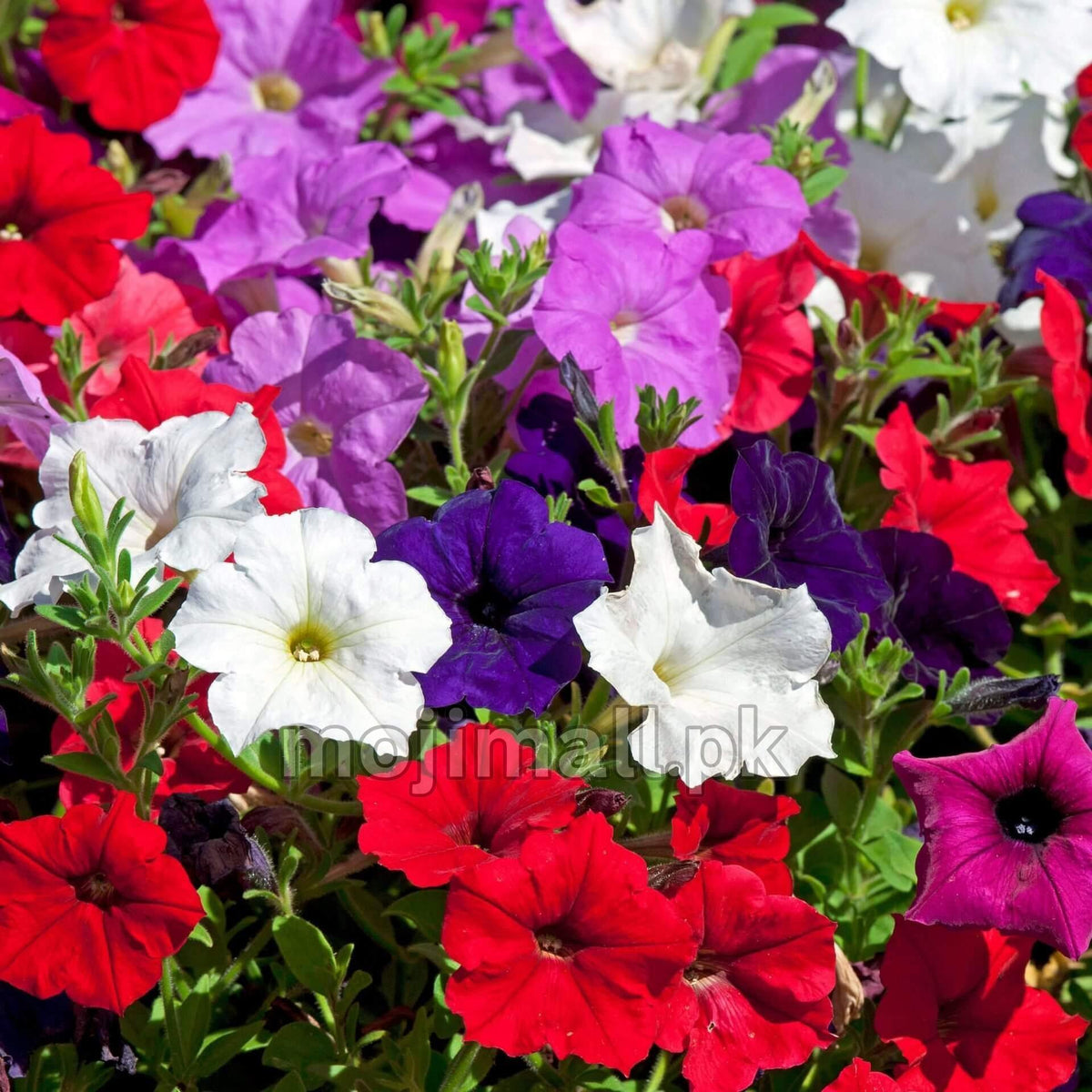
Petunia Mix seeds grow into compact, branching plants covered with soft, trumpet-shaped flowers. The mixture may produce bright and pastel shades of pink, purple, red, white, blue and attractive colour combinations.
Commonly known as Gul-e-Atlas, Petunia flowers grow well in pots, hanging baskets, window boxes and sunny home gardens. Their rounded growth and repeated flowering make them a popular choice for winter container displays.
Why Grow It
- Trumpet-shaped flowers in mixed colours
- Suitable for pots and hanging baskets
- Compact, branching growth
- Produces new buds over an extended period
- Suitable for balconies and rooftops
- Attractive in window boxes and borders
Growing Guide
| Detail |
Recommendation |
| Best sowing time |
September to November |
| Hotter areas |
October to January |
| Colder areas |
February to March in protected trays |
| Germination time |
Usually 6–10 days, sometimes up to 14 days |
| Germination temperature |
Approximately 22–25°C |
| Sowing depth |
Surface sow without covering |
| Sunlight |
At least 6 hours of direct sunlight |
| Pot size |
An 8–10 inch pot for one plant |
| Plant spacing |
Approximately 8–12 inches |
| Mature height |
Commonly 8–15 inches |
| Flowering time |
Usually 10–14 weeks after sowing |
Best Time
The main Petunia flower season in Pakistan runs from winter into spring. In most areas, sow the seeds from September to November so the plants can establish during cool weather.
In Lahore, Faisalabad, Islamabad and Rawalpindi, sow from September to November. In hotter areas such as Karachi and southern Punjab, sow from October into January after the strongest summer heat has eased.
In colder northern and hilly areas, start seeds in protected trays from February to March. Transplant the seedlings outdoors after the danger of hard frost has passed.
How to Sow
- Fill a seedling tray or small pots with a fine, lightly moist seed-starting mixture.
- Scatter the tiny seeds thinly and evenly over the surface.
- Press them gently against the mixture without covering them because they need light to germinate.
- Mist carefully and cover the tray loosely with clear plastic to maintain moisture.
- Remove the cover after germination and transplant seedlings when three true leaves have developed.
Keep the tray warm and bright but away from harsh direct sunlight until the seeds germinate. The surface must remain lightly moist because the tiny seeds and young seedlings can dry quickly.
Pot and Soil
Grow one compact plant in an 8–10 inch pot. Several plants can be arranged in a 12-inch or wider container when they have enough room for branching and airflow.
Use light, fertile soil that drains easily. Combine garden soil with a suitable potting medium to prevent it from becoming heavy or compacted.
A small amount of vermicompost may be mixed into the soil before transplanting. Always use pots, baskets and window boxes with open drainage holes.
Plant Care
- Provide at least 6 hours of direct sunlight during winter.
- Give light afternoon shade as spring becomes hotter.
- Water when the upper soil layer begins to dry.
- Check hanging baskets frequently because they dry faster.
- Avoid leaving the roots in constantly wet soil.
- Pinch the tips of thin young plants lightly to encourage branching.
- Remove faded flowers together with the green seed-forming base.
- Keep enough space between plants for airflow.
- Shelter flowering containers during prolonged rain.
- Trim long, bare stems to encourage fresh growth.
When buds begin developing, mix 1 teaspoon of Flowers Fertilizer in 1 litre of water. Apply it around the soil or spray the plant lightly during the morning or evening. Repeat every 10–15 days during active flowering.
Do not apply fertilizer to completely dry soil or increase the concentration for faster results. Regular light feeding is more suitable for container Petunias than occasional strong applications.
Aphids, whiteflies and thrips may gather around tender shoots and flower buds. Neem oil can be used according to its directions while avoiding unnecessary spraying over open flowers.
Flowering
Plants generally begin flowering approximately 10–14 weeks after sowing. Once the first blooms appear, new buds can continue developing for several months while the weather remains sunny and mild.
Remove faded flowers before seedpods develop if you want the plant to direct more energy towards new buds. If the stems become long and bare, trim them by approximately one-third to encourage fresh branches.
Local Tips
- Use a fine spray bottle so the tiny seeds are not washed away.
- Keep young seedlings close to bright light to prevent stretched growth.
- Introduce seedlings to outdoor sunlight gradually.
- Turn container plants occasionally for balanced growth.
- Water early in the day during foggy or humid weather.
- Protect the soft flowers from prolonged winter rain.
- Increase spacing if crowded leaves remain wet for too long.
- Move hanging baskets away from harsh afternoon sun in late spring.
FAQs
Will one Petunia plant produce all the colours in the mix?
No. Each seed normally produces one plant with its own flower colour or pattern. Grow several seeds for a wider selection of colours.
Why do Petunia leaves and stems feel sticky?
A slightly sticky surface is natural for Petunia plants. Their leaves and stems have small hairs and glands that produce this texture. Check for pests if the stickiness appears with insects, distorted leaves or dark residue.
Can Petunia survive the summer in Pakistan?
Petunias usually decline when temperatures become extremely hot, particularly in humid areas. A plant may survive longer with morning sunlight, afternoon shade and careful watering, but it is generally grown as a winter and spring annual.
What is the difference between compact and trailing Petunias?
Compact Petunias form rounded, bushy plants suitable for regular pots and borders. Trailing types produce longer stems that spread over container edges and are commonly used in hanging baskets.
Can I collect seeds from Petunia Mix?
Yes. Allow selected seedpods to mature and become dry before collecting the tiny seeds. Plants grown from saved seeds may produce different flower colours, sizes or growth habits.
Common Names: Petunia Mix, Garden Petunia, Petunia, Gul-e-Atlas (گل اطلس)