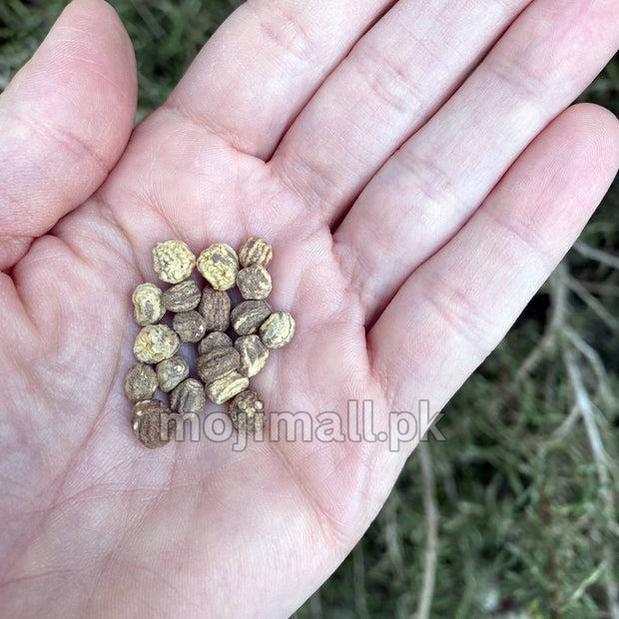
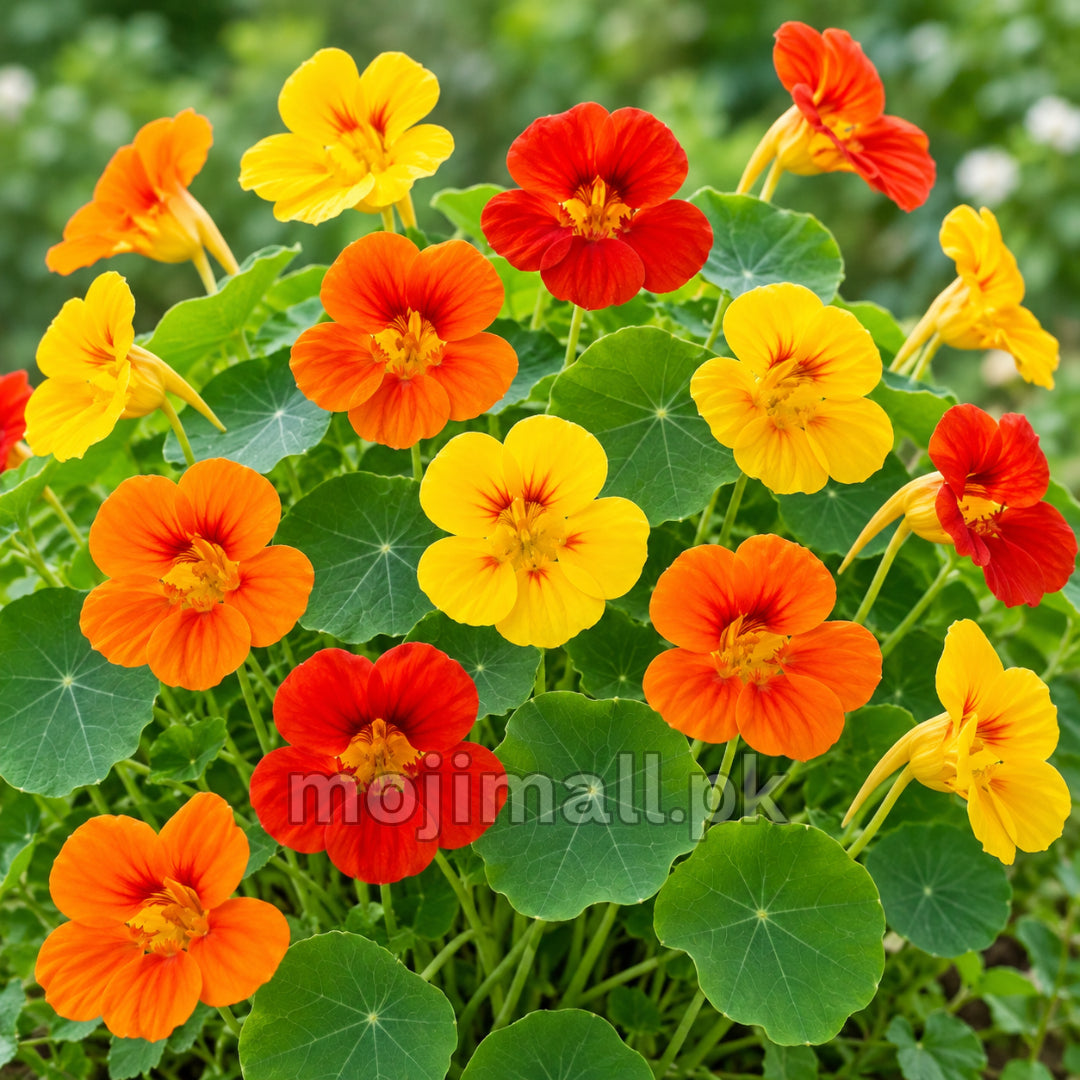
Nasturtium Mix produces bright, spurred flowers in shades of yellow, orange, red, salmon and cream. Depending on the seeds in the packet, blooms may be single, semi-double or double. The rounded, parasol-like leaves and spreading stems look attractive in pots, hanging baskets, window boxes and along flower-bed edges.
Garden Nasturtium traces its origin to Peru, where it developed from plants of the Andean region before becoming popular in gardens worldwide. It prefers cool to mild weather and grows quickly from seed, making it well suited to Pakistan’s winter and spring gardens.
Why Grow It
-
Mixed Colours: One packet creates a display of several warm flower shades.
-
Varied Flowers: Plants may produce single, semi-double or double blooms.
-
Spreading Growth: Stems can cover open soil or spill over container edges.
-
Quick Flowering: Plants complete their growth and flowering within one season.
Best Conditions
-
Germination: Usually 7–14 days
-
Temperature: Around 16–18°C
-
Sunlight: At least 5–6 hours
-
Pot size: A 12–14-inch-wide pot or larger
-
Spacing: About 8–12 inches between plants
-
Plant height: Usually around 12–20 inches
-
Spread: Approximately 24–40 inches, depending on plant type
-
Soil: Light, moderately fertile and well-draining mix
In Lahore, Faisalabad, Islamabad and Rawalpindi, sow from September to November, or again from late January to February. In hotter areas such as Karachi and southern Punjab, sow from October to January after the strongest summer heat has eased. In colder northern and hilly areas, sow from March to April after the risk of hard frost has passed.
How to Sow
Nasturtium is easiest to sow directly in its final pot or flower bed.
- Soak the seeds in room-temperature water for 8–12 hours.
- Fill the final container with moist and well-draining potting mix.
- Make holes around ½ inch deep and 8–12 inches apart.
- Sow one or two seeds in each hole and cover them lightly.
- Water gently and remove the weaker seedling if both seeds grow.
Plant Care
Water when the upper layer of soil begins to dry. Keep young plants evenly moist while they establish, but never allow the soil to remain waterlogged. Guide long stems over pot edges, across open soil or toward a small support as they develop.
Mix only a small amount of Vermicompost into the soil before sowing. Heavy feeding can produce dense foliage with fewer flowers. If aphids gather under the leaves or around tender growth, apply Neem Oil, avoiding open flowers.
Local Gardener Tips
- Sow directly to avoid disturbing the young roots.
- Leave space around pots for spreading or trailing stems.
- Give plants full winter sun and light afternoon shade during warm spring weather.
- Protect emerging seedlings from snails, birds and strong watering.
Flowering
Plants usually begin flowering around 7–9 weeks after sowing. Different colours and flower forms may appear gradually as individual plants mature.
Remove faded flowers regularly to encourage more buds. Leave a few healthy seedpods to become firm and dry if you want to collect seeds for the following season.
FAQs
Can the longer stems be trained upward?
Yes. Longer stems can be guided along a small trellis or railing, although they may need loose ties because Nasturtium does not grip supports strongly.
Are Nasturtium flowers and leaves edible?
Yes, untreated flowers and young leaves can be eaten. Wash them thoroughly and never consume plant material sprayed with products not labelled for edible plants.
Will collected seeds produce the same colour mix?
Not always. Nasturtiums cross-pollinate easily, so saved seeds may produce new colour combinations or different flower forms in the next season.
Common names: Nasturtium Mix, Mixed Nasturtium, Garden Nasturtium, Indian Cress, Tropaeolum majus