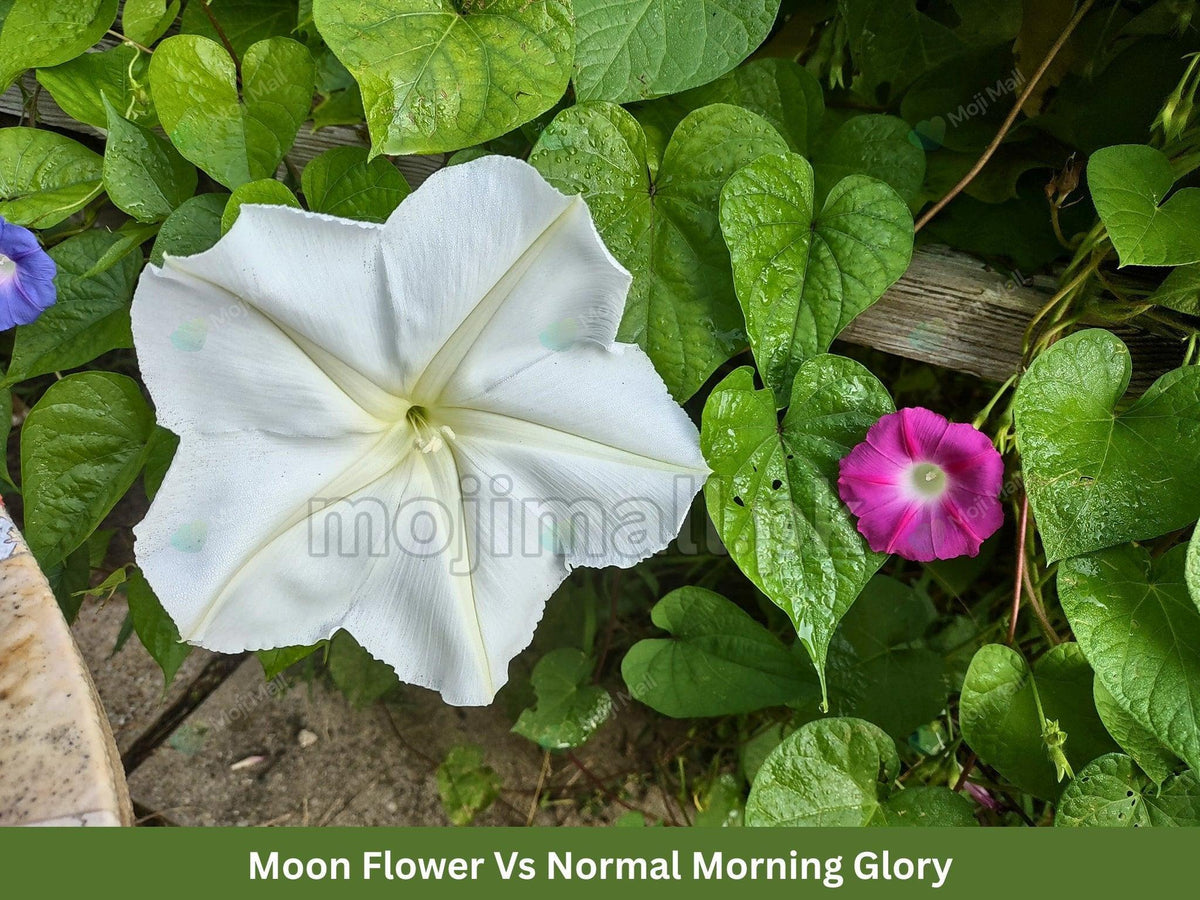
Moonflower is a fast-growing night-blooming vine that produces large, fragrant white flowers after sunset. Its trumpet-shaped blooms remain open through the night and usually close the following morning, making the plant especially attractive near balconies, entrances and outdoor sitting areas.
During Pakistan’s warm spring and monsoon growing seasons, the vigorous twining stems can climb balcony grills, fences, trellises, arches and pergolas. Plant it in full sunlight where its pale flowers and sweet evening fragrance can be enjoyed after dusk.
💐 Growing Guide
-
Sowing
- Gently nick or scratch the hard seed coat, or soak the seeds in warm water overnight.
- Use either method. You do not need to nick and soak the same seed.
- Sow about ½ inch deep and cover lightly with seed-starting mix.
- Sow directly beside a permanent support or start each seed in a separate small pot.
-
Germination & Transplanting
- Keep the growing mix warm and lightly moist, but not waterlogged.
- Once seedlings have 2 to 3 true leaves, move them carefully.
- Keep the soil around the roots intact to reduce transplant disturbance.
-
Spacing & Container Size
- Space vines about 12 to 18 inches apart.
- For one vine, use a container at least 12 to 18 inches wide and deep.
- Choose a heavy container when using a tall trellis so the growing vine does not pull it over.
-
Sunlight, Support & Watering
- Give the plant plenty of direct sun for vigorous growth and flowering.
- Train young vines onto a strong grill, fence, trellis, arch or pergola.
- Water when the upper layer of soil begins to dry, keeping the root area evenly moist but not soggy.
- During the monsoon, make sure excess rainwater can drain freely.
-
Pests & Flower Care
- Check the leaves regularly for aphids, mites and leaf-eating caterpillars.
- Use neem oil only when pests appear, and remove larger caterpillars by hand where practical.
- Remove old flowers to encourage continued blooming and reduce unwanted self-seeding.
Additional Information
Other Names: Moonflower, Moonflower Vine, Moonvine, Tropical White Morning Glory, Ipomoea alba
Best Sowing Time: Sow from February to April in many parts of Punjab and Sindh after cold weather has passed. Sow again during the monsoon where rainfall is regular and the planting area drains well. In cooler northern areas, wait until the nights and soil become warm.
Flower Size: The white trumpet-shaped blooms may reach about 5 to 6 inches across when plants receive sufficient warmth, sunlight and moisture.
Flowering Season: Established vines can continue producing new flowers through the warmer months and into autumn.
Life Cycle: Moonflower is a tropical perennial but is commonly grown as an annual where winter cold damages the vine.
Important: Moonflower seeds can be harmful if swallowed. Keep the seed packet and fallen seeds away from children and pets.
Frequently Asked Questions
How is Moonflower different from Morning Glory?
Most common Morning Glory varieties open in the morning and close later in the day. Moonflower follows the opposite schedule, producing large white, fragrant blooms after sunset.
Is Moonflower the same plant as Datura?
No. This listing is for Ipomoea alba, a twining climbing vine. Datura is a different upright or spreading plant that is also sometimes sold under the name Moonflower.
Why is my Moonflower growing leaves but not producing flowers?
Too little direct sunlight or excessive nitrogen-rich fertiliser can encourage leafy growth instead of blooms. Move the plant to a sunnier position where possible and avoid frequent high-nitrogen feeding.