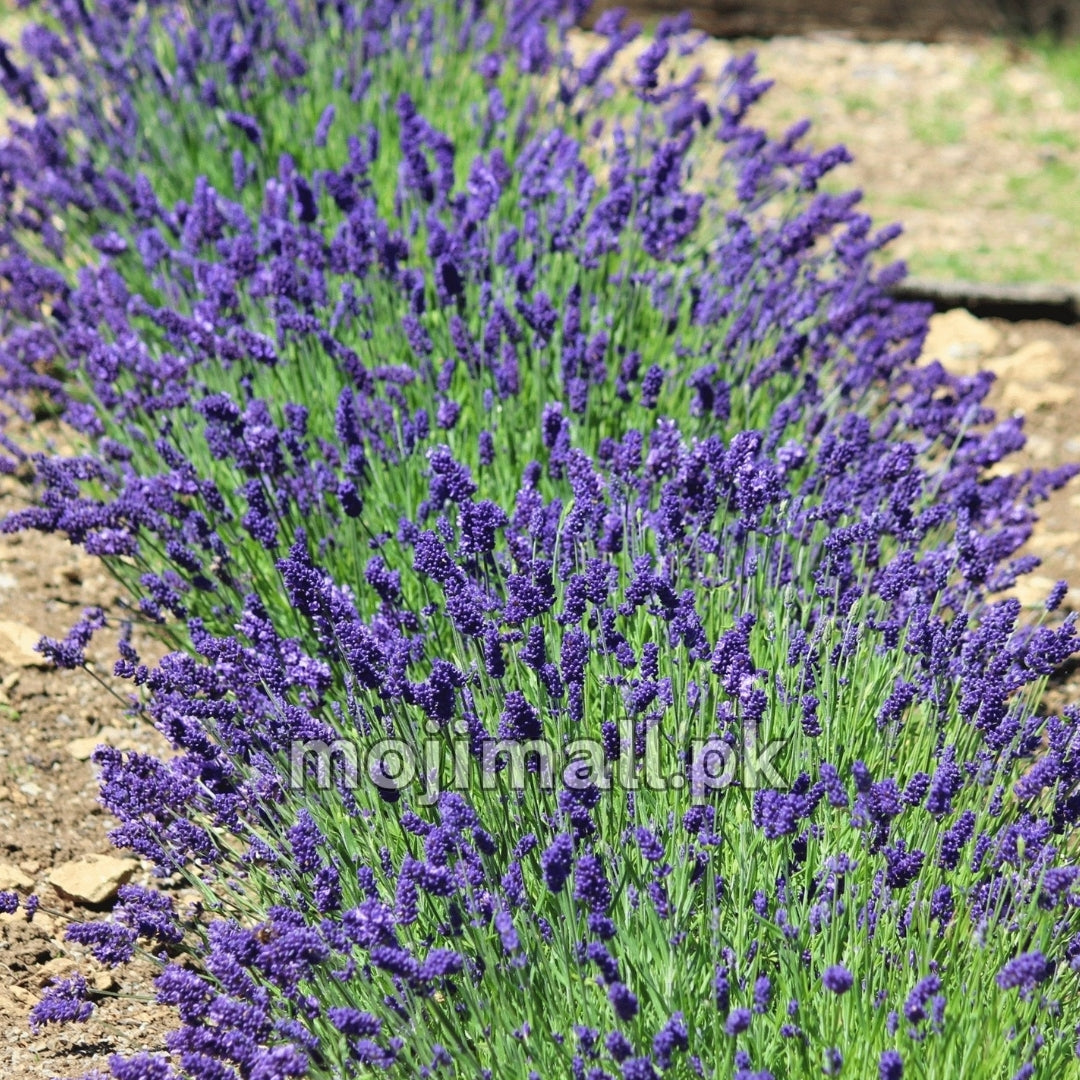
Lavender develops into a compact, woody plant with narrow grey-green leaves and upright spikes of purple flowers. Both the leaves and flowers release their familiar fragrance when touched. It suits sunny pots, herb gardens, borders and pathways where its scent can be enjoyed.
Native from northeastern Spain through France to Italy, Lavender grows naturally in sunny places with dry, stony soil. It can live for several years when protected from standing water, excessive humidity and prolonged monsoon rain.
Why Grow It
-
Fragrant Growth: The leaves and flowers release a fresh herbal scent.
-
Pollinator Friendly: Flowering spikes attract bees and other beneficial insects.
-
Suitable for Drying: Cut stems retain much of their fragrance after drying.
-
Long-Lived Plant: Healthy plants can continue growing for several years.
Best Conditions
-
Germination: Usually 14–28 days, sometimes longer
-
Temperature: Around 18–21°C
-
Sunlight: At least 6 hours
-
Pot size: One plant in a 12–16-inch-wide pot
-
Spacing: About 18–24 inches between plants
-
Plant height: Usually around 12–24 inches
-
Spread: Approximately 18–30 inches
-
Soil: Light, sandy and freely draining mix
In Lahore, Faisalabad, Islamabad and Rawalpindi, sow from October to November, or start protected trays from late January to February. In hotter areas such as Karachi and southern Punjab, sow from November to January after severe heat and humidity have eased. In colder northern and hilly areas, start seeds under protection from February to April and transplant after the risk of hard frost has passed.
How to Sow
Lavender germination can be slow and uneven. If untreated seeds fail repeatedly, sealing them in a small amount of damp seed-starting mix and refrigerating them for 2–4 weeks may improve germination.
- Fill a tray or small pots with fine seed-starting mix.
- Sow the seeds over the surface and press them gently into place.
- Barely cover them with fine mix, no deeper than ⅛ inch.
- Mist gently and keep the tray covered until seedlings begin appearing.
- Move individual seedlings into small pots once they are large enough to handle.
Plant Care
Keep the mix lightly moist while seedlings are developing. After transplanting, allow the upper soil to dry noticeably before watering deeply. Established Lavender handles short dry periods better than constantly wet soil.
Lavender needs little fertilizer. A small amount of Vermicompost can be mixed into poor potting soil before transplanting, but repeated heavy feeding may produce soft leaves with fewer flowers.
Wet soil and poor airflow can cause root rot or leaf spotting. Remove damaged growth and improve drainage immediately if the lower leaves begin blackening. Aphids and spittlebugs may occasionally gather on tender stems and can usually be removed with water or treated with Neem Oil before flowering.
Local Gardener Tips
- Use a pot with several large drainage holes.
- Raise containers slightly so rainwater can escape freely.
- Shelter plants during prolonged monsoon rain.
- Avoid placing Lavender beside plants that need frequent watering.
- Give rooftop plants airflow while protecting them from strong wind.
- Lavender generally remains healthier for longer in cooler, less humid areas.
Flowering and Harvesting
Seed-grown Lavender develops slowly. Some plants may produce a few flower spikes during their first year, while a fuller display commonly appears after the plants have become established.
For drying, cut the stems when the first flowers on each spike begin opening. Harvest during the morning after the dew has dried, tie the stems into small bunches and hang them upside down in a shaded, airy place.
After flowering, remove the spent stalks together with about one inch of leafy growth. Do not cut into bare, leafless wood because old stems may not produce fresh shoots.
FAQs
Can I grow more Lavender from cuttings?
Yes. Take a healthy side shoot without flowers, remove its lower leaves and insert it into a small pot of freely draining mix. A cutting produces a new plant with the same flower colour, fragrance and growth habit as its parent.
Can I collect seeds from my Lavender plant?
Yes. Leave a few flower spikes until they become dry and brown. Cut them into a paper bag and rub the flower heads gently to release the tiny seeds. Plants grown from saved seeds may differ slightly from the parent.
Which herbs can share a large container with Lavender?
Rosemary, thyme, sage and oregano are suitable companions because they also prefer strong sunlight and less frequent watering. Avoid growing Lavender in the same pot as mint, basil or coriander because these herbs generally need more moisture.
Can an established Lavender plant be moved?
Yes. Move it during mild weather before new growth becomes strong. Lift as much of the root ball as possible, replant it immediately and water once to settle the soil. Avoid moving mature plants during extreme heat or prolonged rain.
Common names: Lavender, Common Lavender, English Lavender, Garden Lavender, Narrow-Leaved Lavender, Lavandula angustifolia, Ustukhu Doos, گل اسطخو دوس