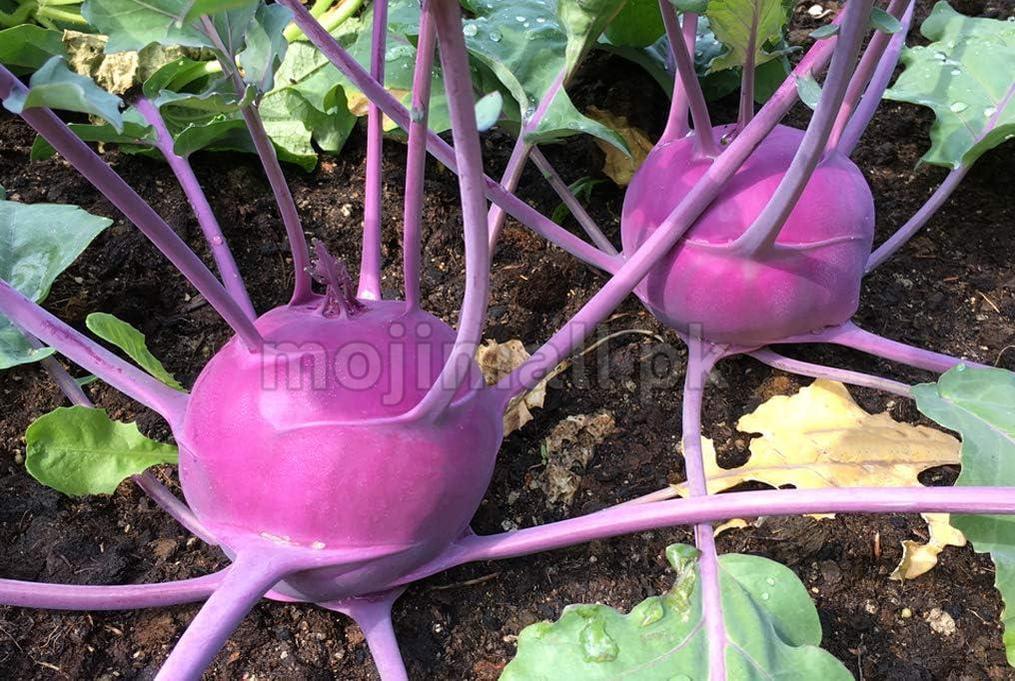
Purple Kohlrabi forms a round, purple swollen stem with crisp, pale flesh. It has a mild cabbage-like flavour and a turnip-like crunch. Eat it fresh in salads or add it to sabzi, curries, soups, stir-fries, paratha fillings and pickles. The leaves are also edible.
Kohlrabi was developed in Europe from the same wild cabbage as kale, broccoli and regular cabbage. Purple types have colourful outer skin, but the inside remains pale. The round edible part develops from the stem just above the soil.
Why Grow It
-
Mild Flavour: Cabbage-like taste with a crisp, turnip-like texture.
-
Purple Skin: Forms an attractive purple stem with pale flesh inside.
-
Two Edible Parts: Both the swollen stem and young leaves can be eaten.
-
Quick Growing: Usually ready within 45–65 days.
-
Pot Friendly: One plant can be grown in a suitable container.
Best Conditions
-
Germination: Usually 4–10 days
-
Temperature: Around 10–25°C
-
Sunlight: At least 6 hours
-
Pot size: A 10–12-inch pot
-
Spacing: About 6–8 inches between plants
-
Plant height: Usually around 12–18 inches
-
Soil: Moist, fertile and well-draining mix
In Lahore, Faisalabad, Islamabad and Rawalpindi, sow from September to November. In hotter areas such as Karachi and southern Punjab, sow from October to January once the strongest summer heat has eased. In colder northern and hilly areas, sow from March to April, after the risk of hard frost has passed.
How to Sow
- Fill a tray or final pot with fine, moist seed starter mix.
- Sow the seeds around ¼–½ inch deep.
- Water gently and keep the mix lightly moist in a bright place.
- Thin or transplant when the seedlings have 3–4 true leaves.
- Keep the young stem above the soil when transplanting.
Plant Care
Keep the potting mix evenly moist while the round stem is developing. Dry soil and hot weather can make it tough or cause it to crack. Remove weeds carefully because Kohlrabi has shallow roots.
Mix a small amount of Vermicompost into the potting mix before planting. Add another small amount after 4–5 weeks if growth appears slow.
Check underneath the leaves for aphids, insect eggs and small green caterpillars. Remove eggs and caterpillars by hand. If aphids appear, spray Neem Oil on the affected leaves, including their undersides.
Local Gardener Tips
- Protect young seedlings from strong watering and heavy rain.
- Use a fine insect net to keep cabbage butterflies away.
- Do not cover the developing round stem with soil.
- Provide afternoon shade when the weather becomes warm.
- Keep the potting mix from drying completely.
Harvesting
Harvest when the swollen stem is around 2–3 inches wide, usually within 45–65 days. Larger stems may become tough and fibrous. Cut the plant just below the round stem near the soil.
Remove the leaves and peel the outer skin if it feels tough. Slice or chop the pale flesh for salads, sabzi, soups, curries and pickles. Young leaves can be cooked like kale or spinach.
FAQs
Is Kohlrabi the same as turnip?
No. Kohlrabi is a swollen stem that grows above the soil, while a turnip is a root that develops underground. Their crisp texture and cooking uses can be similar.
Why is the round stem not forming?
Crowded plants, low sunlight, hot weather or irregular watering can prevent proper swelling. Give each plant enough space and keep the soil evenly moist.
Why is my Kohlrabi producing a flower stalk?
A long period of cold followed by warm weather can make the plant flower early. Once flowering begins, the stem may stop swelling and become tough.
Common names: Purple Kohlrabi, Kohlrabi, German Turnip, Turnip Cabbage, Knol-khol, Ganth Gobi, گانٹھ گوبھی