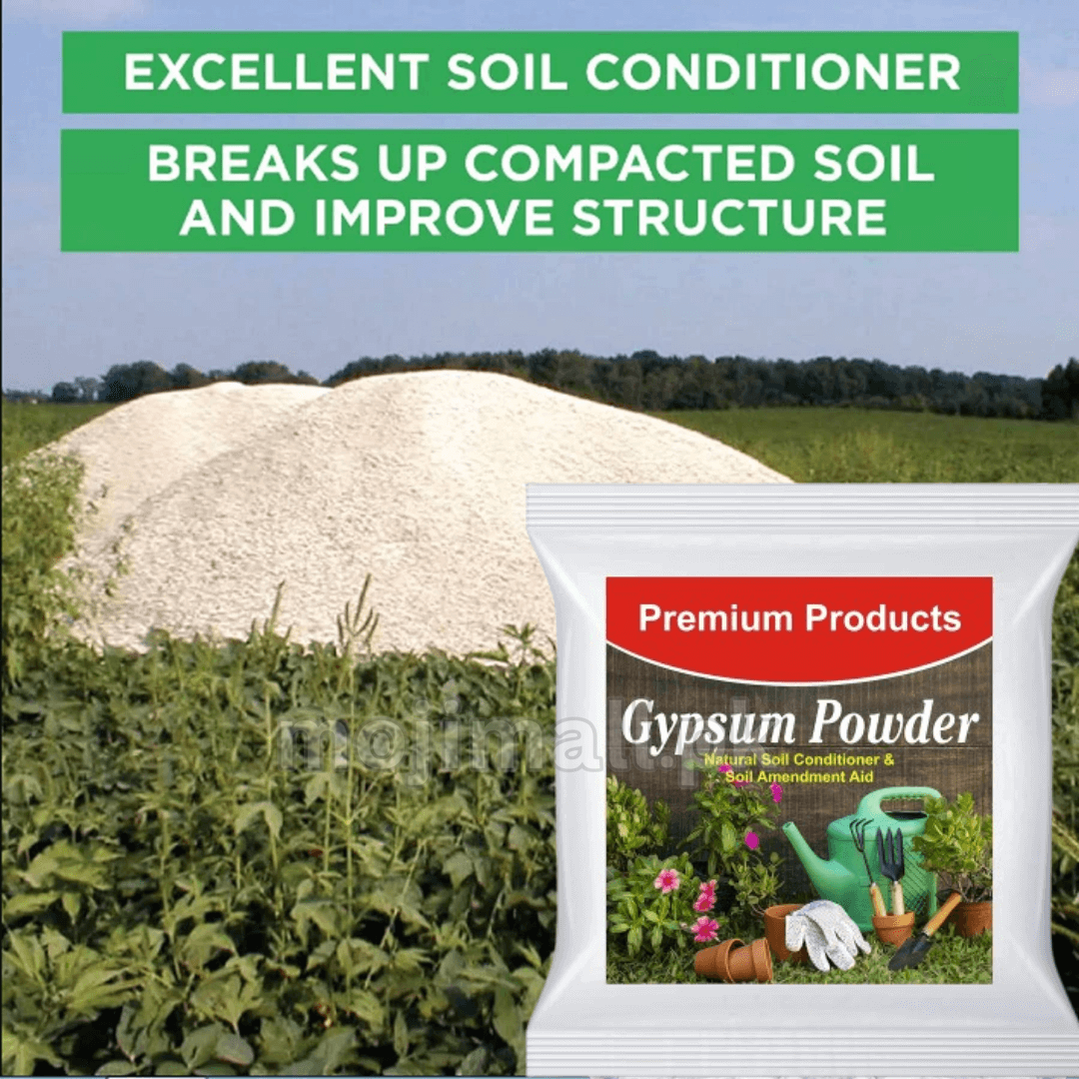
Gypsum Powder for Plants (Soil Conditioner)
Gypsum powder is a natural soil conditioner used to improve soil structure, reduce compaction, and supply essential calcium and sulphur to plants. Unlike lime, it does not raise soil pH, making it suitable for gardens where calcium is needed without changing soil acidity.
It is especially useful for compacted soil, heavy clay areas, raised beds, lawns, and large pots where drainage and root growth are limited.
Key Benefits
- Improves soil aeration and water movement
- Reduces soil compaction and surface crusting
- Provides plant-available calcium and sulphur
- Helps flush excess sodium from problem soils
- Supports stronger roots, stems, and healthy growth
- Safe for vegetables, fruit plants, lawns, and ornamentals
How Gypsum Helps Plants
Calcium strengthens plant cell walls, helping plants develop firm stems and healthier roots. Sulphur supports chlorophyll production and improves nutrient uptake. Gypsum also improves soil aggregation, allowing water and air to reach roots more efficiently.
This makes it suitable for:
- Vegetables or herbs, e.g. tomatoes, chillies, spinach
- Fruit plants, e.g. citrus, guava
- Lawns and turf areas
- Pots and grow bags where soil becomes compact over time
How to Use Gypsum Powder
For Garden Beds & Ground Soil
- Apply 200–400 g per 10 square feet
- Spread evenly over the soil surface
- Lightly mix into the top layer
- Water thoroughly after application
For Pots & Grow Bags
- Mix 1–2 tablespoons in 10 inch pot
- Blend well before planting or apply as a top dressing
- Water deeply after use
For Lawns
- Apply 1–2 kg per 100 square feet
- Spread evenly and water well
- Best applied during active growth periods
Application Frequency
- Every 2–3 months for compacted or problem soils
- Once per growing season for general soil improvement
Avoid overuse. Gypsum works gradually and improves soil over time rather than giving instant results.
Safety for Edible Plants
Gypsum is safe for use on vegetables, fruits, and herbs when applied at recommended rates. There is no harvest waiting period required. Always wash produce thoroughly before use.
FAQs
Does gypsum change soil pH?
No. Gypsum improves soil structure without affecting soil acidity or alkalinity.
Is gypsum better than lime?
Gypsum provides calcium without raising soil pH. Lime is used when soil acidity needs correction.
Can gypsum be used in pots?
Yes. It is effective in pots and grow bags where soil compaction affects drainage.
How long does gypsum take to show results?
Improved drainage may be noticed within a few weeks, while full soil improvement occurs gradually.
Can gypsum be mixed with compost or vermicompost?
Yes. It works well alongside organic matter and improves overall soil balance.