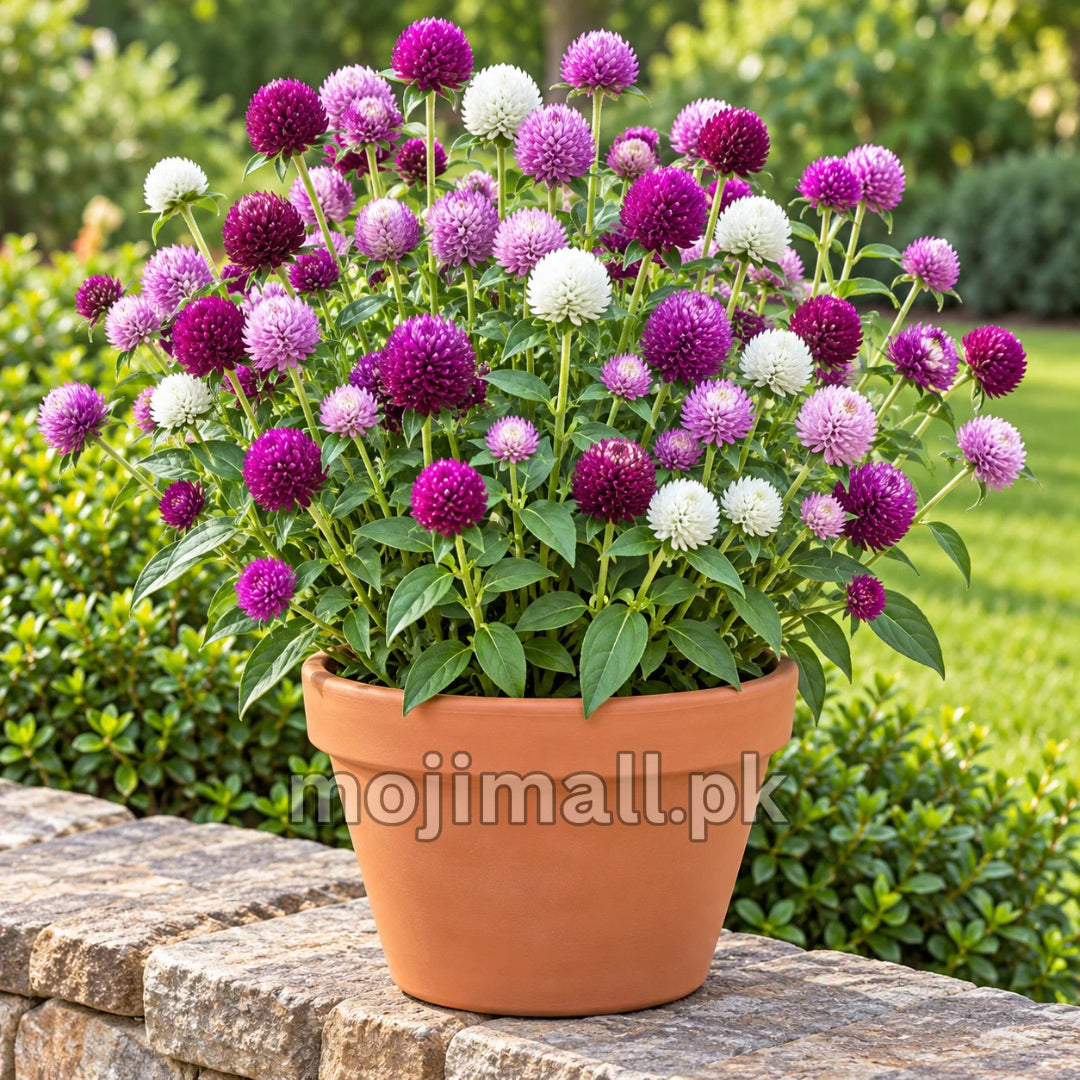
Gomphrena Mixed, locally known as Gul Makhmal, produces rounded, clover-like flower heads in vibrant shades of pink, purple, magenta and white. The papery blooms retain their shape and colour well, making them suitable for garden displays, fresh bouquets and dried arrangements.
Native to Central and South America, this warm-season annual develops upright, branching plants that flower throughout hot and sunny weather. Grow it in pots, borders, flower beds, along pathways or in a dedicated cutting garden.
Why Gardeners Love It
-
Globe-Shaped Flowers: Produces distinctive rounded flower heads on upright stems.
-
Mixed Colours: Includes attractive pink, purple, magenta and white shades.
-
Heat Tolerant: Continues growing and flowering during warm weather.
-
Long-Lasting Blooms: The papery flower heads remain attractive for a long time.
-
Excellent for Drying: Retains its colour and shape in dried arrangements.
Best Conditions
-
Germination: Usually 10–14 days
-
Germination temperature: Around 21–24°C
-
Growing temperature: Around 20–35°C
-
Sunlight: At least 6–8 hours
-
Pot size: An 8–10-inch pot for one plant
-
Spacing: About 8–12 inches between plants
-
Plant height: Usually around 18–24 inches
-
Soil: Fertile, moderately moist and well-draining mix
-
First flowers: Usually around 12–16 weeks after sowing
Sowing note: In Lahore, Faisalabad, Islamabad and Rawalpindi, sow from February to April. In hotter areas such as Karachi and southern Punjab, sow from January to March so the plants can establish before the strongest summer heat. In colder northern and hilly areas, sow from March to May after the risk of severe frost has passed.
How to Sow
- Fill a seed tray or small pots with fine, moist seed starter mix.
- Sow the seeds around ¼ inch deep.
- Cover them lightly and mist the surface without disturbing the seeds.
- Keep the tray warm in a bright location and maintain light moisture.
- Once seedlings appear, provide several hours of direct sunlight each day.
- Transplant after the seedlings develop 2–3 true leaves, leaving 8–12 inches between plants.
Plant Care
Water regularly while the young plants are becoming established. Mature plants tolerate short dry periods, but flower best when watered after the upper inch of soil begins to dry. Avoid constantly wet soil, particularly during humid or rainy weather.
Mix a small amount of Vermicompost into the soil before transplanting. If growth is slow or pale, apply a light dose of NPK 20-20-20 according to the label every 3–4 weeks. Check occasionally for aphids, whiteflies and spider mites. If found, spray Neem Oil on the affected leaves and stems.
Local Gardener Tips
- Pinch the growing tip when the plant is around 4–6 inches tall to encourage branching.
- Give the plants maximum sunlight for compact growth and more flowers.
- Maintain good airflow during humid and monsoon weather.
- Water near the soil to reduce mud splashing onto the slightly hairy leaves.
- Support taller plants if they are exposed to strong wind.
Flowering and Drying
Gomphrena usually begins flowering around 12–16 weeks after sowing. Cutting mature blooms and removing brown flower heads encourages the plant to continue producing new flowering stems.
For dried arrangements, cut the stems when the flower heads have developed full colour but have not started turning brown. Remove the lower leaves, tie a few stems into a small bundle and hang them upside down in a shaded, dry and airy location.
FAQs
Will every plant produce all the colours in the mix?
No. An individual plant usually produces one flower colour. Grow several plants to create a display containing different shades from the mixture.
Should Gomphrena seeds be soaked before sowing?
Soaking is optional, but it can help soften the seed covering and speed up germination. Soak the seeds in room-temperature water for 8–12 hours and sow them immediately.
Why are some seeds germinating later than others?
Gomphrena seeds can germinate unevenly. Cool soil, excessive moisture and deep sowing can delay them. Maintain steady warmth and light moisture for at least two weeks before judging the results.
Will Gomphrena grow again next year?
It is normally grown as an annual. Mature flower heads may release seeds and produce new seedlings during the following warm season, but their colours and growth may differ from the original plants.
Common names: Gomphrena Mixed, Globe Amaranth, Globe Flower, Gul Makhmal, گل مخمل