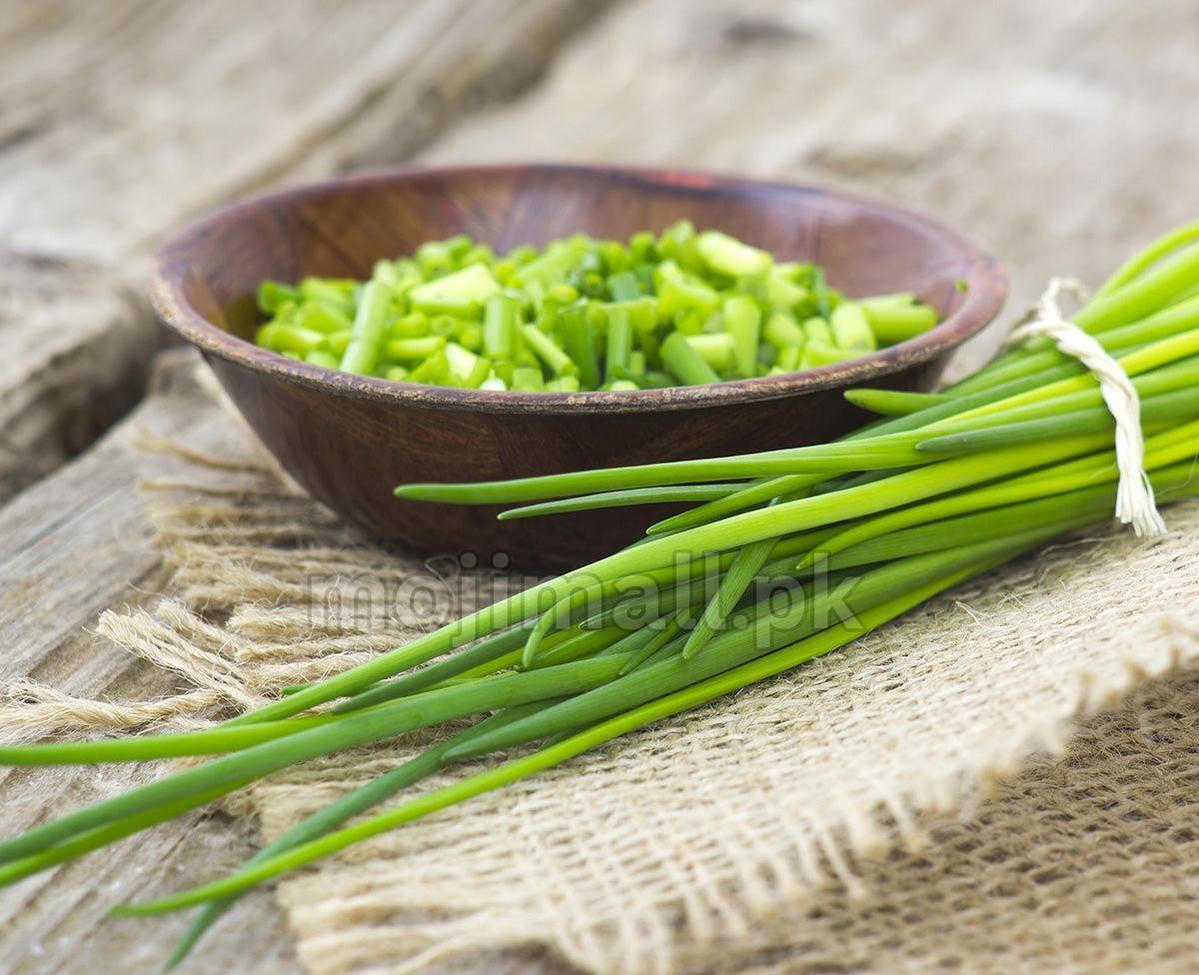
Garlic Chives, also called Chinese Chives or Chinese Leek, is a clump-forming perennial herb with long, flat green leaves and white star-shaped flowers. The leaves have a mild garlic flavour and can be used in eggs, soups, stir-fries, dumplings, salads and sauces.
Native to the Himalayan region and China, garlic chives have long been used in East Asian cooking. Unlike common chives, their leaves are flat rather than hollow. Established plants form fuller clumps and return for several years.
Why Grow It
-
Mild Flavour: Adds a fresh garlic taste without being too strong.
-
Repeated Picking: Cut leaves grow again for several harvests.
-
Long-Lived Herb: Established clumps can return for several years.
-
Edible Flowers: White flowers can be added to salads and other dishes.
-
Pot Friendly: Suitable for balconies, rooftops and small gardens.
Best Conditions
-
Germination: Usually 7–15 days
-
Temperature: Around 15–25°C
-
Sunlight: At least 6 hours
-
Pot size: A 10–12-inch pot
-
Spacing: About 8–12 inches between plants
-
Plant height: Usually around 18–24 inches
-
Soil: Moist, fertile and well-draining mix
Sowing note: In Lahore, Faisalabad, Islamabad and Rawalpindi, sow from September to November, or again from February to March. In hotter areas such as Karachi and southern Punjab, sow from October to February while the weather remains mild. In colder northern and hilly areas, sow from March to April, after the risk of hard frost has passed.
How to Sow
- Fill a tray, small pot or final container with moist seed starter mix.
- Make shallow rows around ¼ inch deep.
- Sow the seeds thinly along the rows.
- Cover them lightly with the mix.
- Water the surface with a gentle spray.
- Keep the mix lightly moist in a bright location.
- Thin crowded seedlings after they appear.
- Transplant tray-grown seedlings once they have 3–4 leaves.
Plant Care
Keep the soil lightly moist while the young plants are becoming established. After that, water when the upper layer of the potting mix begins to dry. Cut the leaves regularly to encourage fresh growth.
Mix a small amount of Vermicompost into the potting mix before sowing. Garlic chives naturally have few pest problems. If onion thrips or aphids appear, spray Neem Oil on the affected leaves, including their undersides.
Local Gardener Tips
- Protect young seedlings from strong watering and heavy rain.
- Provide afternoon shade during extreme summer heat.
- Remove faded flower heads before seeds mature to prevent unwanted spreading.
- Divide crowded clumps around every three years.
- Keep the potting mix from drying completely after harvesting.
Harvesting
Begin light harvesting once the leaves are around 6–8 inches tall. Cut them about 1–2 inches above the soil with clean scissors. Fresh leaves will grow again for another harvest.
Use the leaves fresh for their best flavour. Add them near the end of cooking because prolonged heat weakens their garlic taste. Extra leaves can be chopped and frozen. The white flowers can be picked shortly after opening and used fresh.
FAQs
Why are my garlic chives thin during the first year?
Plants grown from seed begin as small clumps and become fuller over time. Give them strong light, regular watering and enough space to develop.
Why have my garlic chives not produced flowers?
Seed-grown plants may not flower during their first year. Established clumps are more likely to flower after developing stronger roots and receiving sufficient sunlight.
Can garlic chives replace garlic cloves?
They can provide a mild garlic flavour, but they are not as strong as garlic cloves. Use them when you want a fresher and lighter garlic taste.
Will garlic chives survive winter?
Yes. They are perennial plants. The leaves may die back during very cold weather, but established roots can produce new growth when warmer weather returns.
Common names: Garlic Chives, Chinese Chives, Chinese Leek, Asian Chives, Oriental Chives, Gow Choy, Nira, Buchu