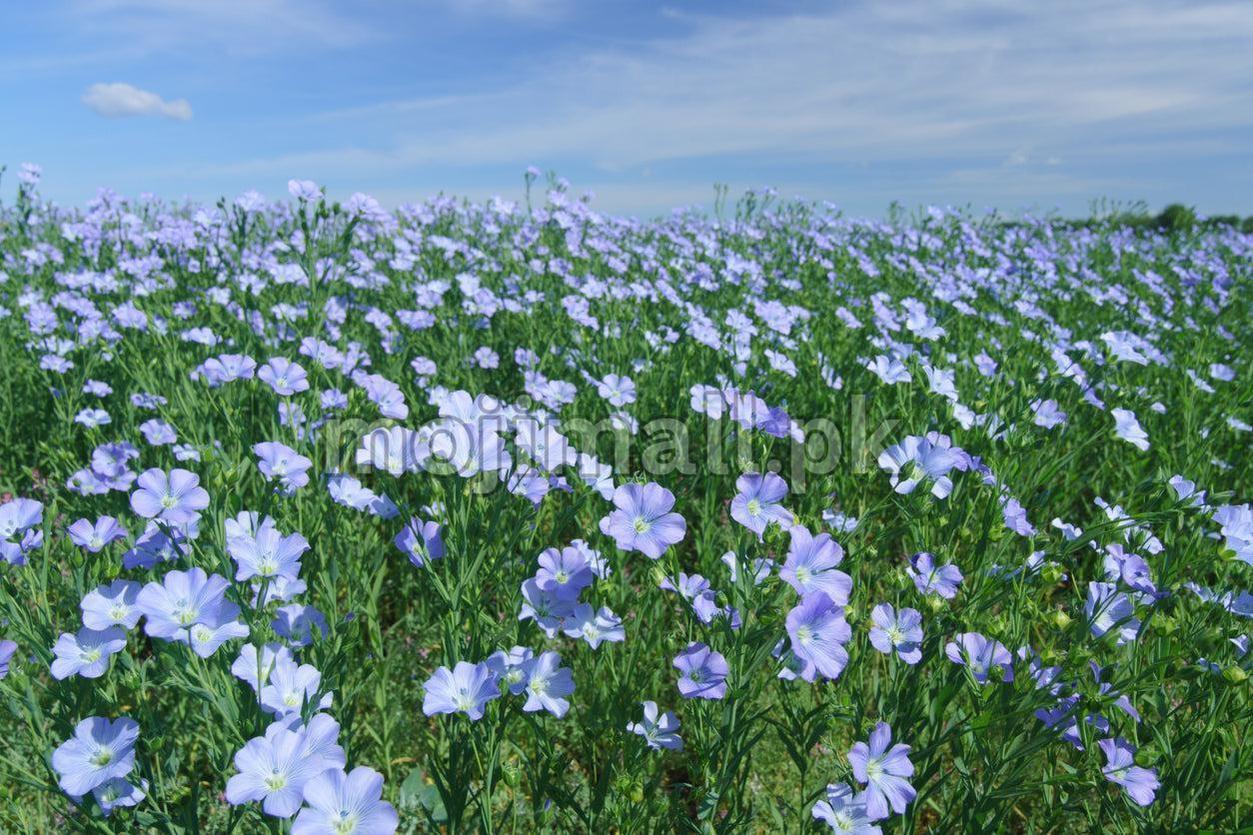
Blue Flax, also called Common Flax, produces delicate sky-blue flowers on fine, upright stems. Its narrow leaves and light, airy growth bring a soft, natural look to sunny pots, borders and flower beds. Several plants grown together create a fuller blue display without hiding nearby flowers.
This cool-season annual is native to parts of western Asia and has been grown for thousands of years for linseed, linen fibre and its simple ornamental beauty. In Pakistan, it develops well through mild winter weather and flowers from late winter into spring.
Why Grow It
-
Sky-Blue Flowers: Clear blue petals create a calm, attractive display.
-
Airy Growth: Fine stems mix easily with fuller winter flowers.
-
Quick Flowering: Plants complete their growth and flowering within one cool season.
-
Pot Friendly: Suitable for sunny containers, borders and small flower beds.
Best Conditions
-
Germination: Usually 7–14 days
-
Temperature: Around 15–24°C
-
Sunlight: At least 6 hours
-
Pot size: 8–12-inch-wide pot or larger
-
Spacing: About 4–6 inches between plants
-
Plant height: Usually around 24–36 inches
-
Soil: Light, moderately fertile and well-draining mix
Sowing note: In Lahore, Faisalabad, Islamabad and Rawalpindi, sow from October to November, or again from late January to February for a shorter spring display. In hotter areas such as Karachi and southern Punjab, sow from October to December after the strongest summer heat has eased. In colder northern and hilly areas, sow from March to April after the risk of hard frost has passed.
How to Sow
Blue Flax is easiest to sow directly in its final pot or flower bed.
- Fill the container with fine, moist and well-draining potting mix.
- Make shallow rows around ¼ inch deep.
- Sow the seeds thinly along the rows.
- Cover them lightly and water using a fine spray.
- Keep the surface lightly moist in a sunny location.
- Thin seedlings at 2–3 inches tall, leaving 4–6 inches between plants.
Plant Care
Water when the upper layer of the mix begins to dry. Keep young plants evenly moist while they are becoming established and forming buds. Once established, Blue Flax can handle short dry periods, but it will not grow well in soggy soil.
Mix a small amount of Vermicompost into the soil before sowing. Blue Flax does not need regular feeding. Too much fertilizer can produce tall, weak stems that lean easily.
The plant usually has few pest problems. If aphids gather around the tender tips and buds, spray Neem Oil on the affected stems and leaves, avoiding open flowers.
Local Gardener Tips
- Protect newly sown pots from strong watering and heavy rain.
- Grow several plants together while maintaining the recommended spacing.
- Give plants full winter sun, then light afternoon shade as spring becomes warmer.
- Shelter the slender stems from strong rooftop winds and forceful watering.
Flowering
Plants usually begin flowering around 7–10 weeks after sowing. The small, five-petalled blooms appear near the tops of the slender stems while the weather remains cool to mild.
Remove dry or untidy stems as the display begins to fade. Leave a few round seed capsules to turn brown if you want to collect seeds for the next season.
FAQs
Why do Blue Flax flowers lose their petals so quickly?
Each flower naturally lasts for only a short time and may lose its petals later in the day, especially during warm sunlight. New buds open on following mornings, so this is not a sign of poor plant health.
Common names: Blue Flax, Common Flax, Flax, Linseed, Flaxseed, Alsi, Alsee, السی, Linum usitatissimum