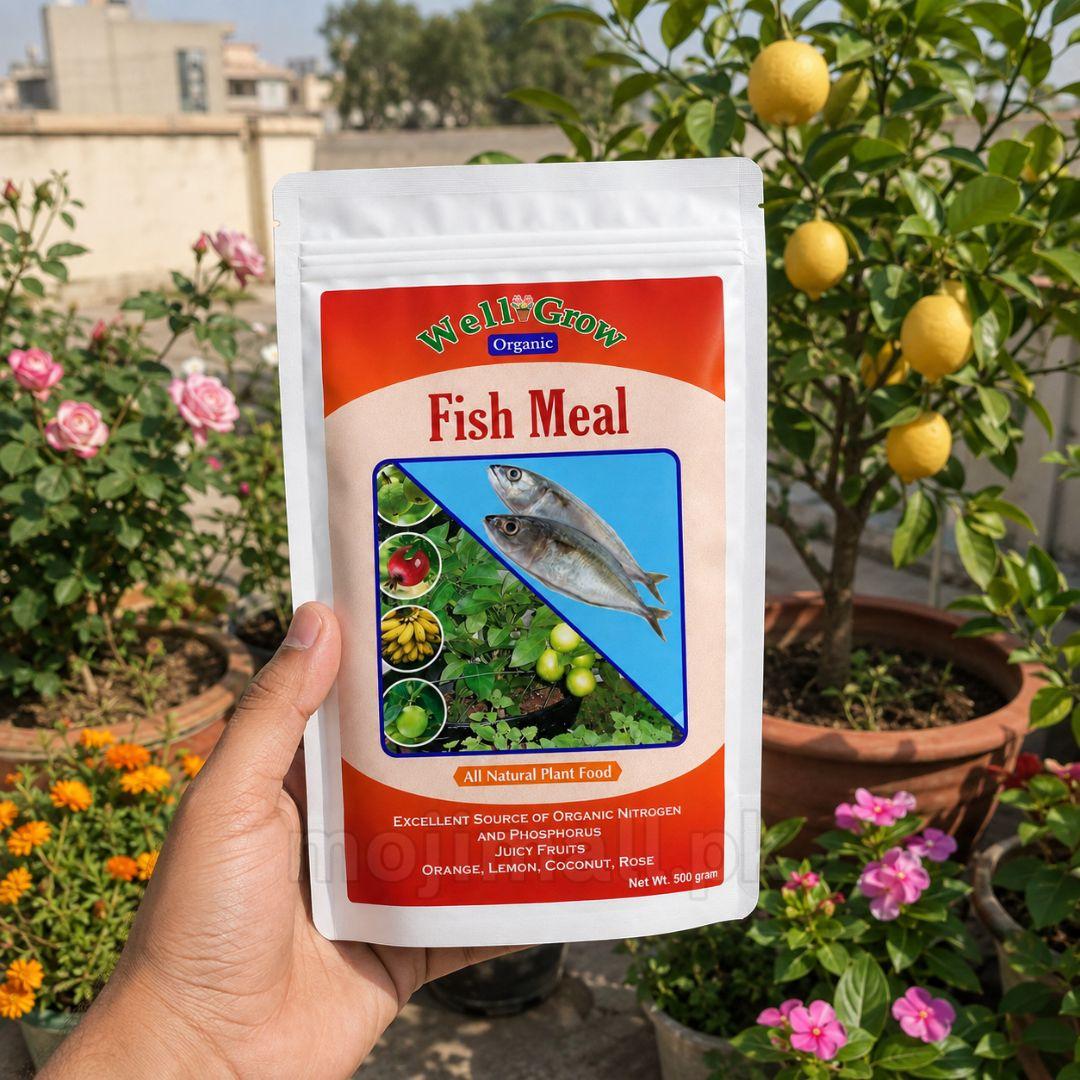
Fish Meal Organic Fertilizer is a dry, soil-applied plant food made from processed fish material. It provides organic nitrogen and phosphorus that become available gradually as the material breaks down in moist soil.
Nitrogen supports green leaves and new growth, while phosphorus contributes to root development, flowering and fruit formation. The 500g pack can be used for pots, garden beds, flowering plants, vegetables and established fruit plants.
Why Use It
- Organic source of nitrogen and phosphorus
- Releases nutrients gradually in the soil
- Suitable for pots and garden beds
- Useful for vegetables and flowering plants
- Can be applied to roses and fruit plants
- Easy to mix into the upper soil layer
- Suitable for active plant growth
Fish meal provides useful nutrients but should not be treated as a complete fertilizer for every plant. Potassium and other nutrients may still be required according to the soil and plant.
Product Details
| Detail |
Information |
| Main material |
Processed fish meal |
| Main nutrients |
Organic nitrogen and phosphorus |
| Pack size |
500g |
| Application |
Mixed into soil or used as top feed |
| Best suited to |
Pots, beds, flowers and fruit plants |
| Release |
Gradual |
Natural fish meal can vary slightly in colour, texture and particle size.
Suitable Plants
Fish meal can be used for:
- Tomato, chilli and brinjal
- Gourds, cucumber and melon
- Leafy vegetables
- Roses and other flowering plants
- Lemon and orange plants
- Banana and papaya
- Coconut and other established garden plants
- Ornamental shrubs
- Plants growing in pots and grow bags
Use a smaller amount for young plants and small containers. Larger established plants can receive more according to their size and existing soil fertility.
Starting Rates
The following are conservative starting amounts for home gardens:
| Planting area |
Suggested amount |
| 6 to 8-inch pot |
1 teaspoon |
| 10 to 12-inch pot |
1 tablespoon |
| 14 to 18-inch pot |
2 tablespoons |
| Garden bed |
1 tablespoon per square foot |
| Small established tree |
2 to 4 tablespoons |
Apply once every four to six weeks during active growth when additional feeding is needed. Start with the lower amount if the potting medium already contains compost or another fertilizer.
Future packaging directions should take priority if a specific application rate is printed on the pack.
How to Use
- Loosen the upper 1 to 2 inches of soil.
- Measure the fish meal according to the plant and container size.
- Spread it around the plant without placing it against the stem.
- Mix it thoroughly into the upper soil layer.
- Water after application.
Do not leave a concentrated pile directly over roots or beside the plant stem. Applying more than the suggested amount will not make nutrients available faster.
When to Apply
Fish meal is most useful while plants are actively producing leaves, branches, roots and new flowers.
It can be applied:
- Before planting, after mixing it properly through the soil
- After transplanting has become established
- During active vegetative growth
- Before flowering as part of a balanced feeding plan
- After heavy watering has gradually reduced nutrients in containers
Reduce or stop feeding when plant growth slows during very cold weather.
Fruit Plants
For lemon, orange and other established fruit plants, spread fish meal over the soil beneath the outer part of the canopy instead of placing it against the trunk.
Mix it lightly into the surface and water afterward. A balanced fertilizer may still be needed because fish meal is not specifically a high-potassium fruiting fertilizer.
Local Care
In warm weather, soil organisms can break down organic fertilizers more actively. Use moderate amounts in small rooftop and balcony containers and keep the soil normally moist after application.
Avoid applying immediately before prolonged monsoon rain because nutrients may be washed away from exposed pots and beds.
In Karachi and other humid areas, mix fish meal thoroughly into the soil instead of leaving it on the surface. Keep unused material tightly sealed between applications.
Storage
Close the pouch firmly after use and keep it in a dry, shaded place. Protect the fertilizer from moisture, direct sunlight, insects and animals.
Do not store it beside food, animal feed or cooking ingredients. Wash your hands after handling and avoid breathing dust while applying it.
FAQs
Can fish meal be used in indoor pots?
It can be used, but its natural smell may be unpleasant indoors. Apply only a small amount, mix it completely into the potting medium and keep the pot away from pets.
Is fish meal the same as fish emulsion?
No. Fish meal is a dry fertilizer that is mixed into soil and releases nutrients gradually. Fish emulsion is a liquid concentrate that is diluted with water before application.
Can it be added when sowing seeds?
It may be mixed into the growing medium before sowing, but concentrated fish meal should not touch the seeds directly. Seedlings are sensitive to excessive nutrition, so use a light amount or wait until they are established.
Can it be applied with another fertilizer?
Yes, but check what the other fertilizer contains first. Combining several nitrogen or phosphorus sources can result in unnecessary overfeeding and may damage roots.
Common Names: Fish Meal, Fish Meal Fertilizer, Organic Fish Fertilizer, Machli Ki Khad (مچھلی کی کھاد)