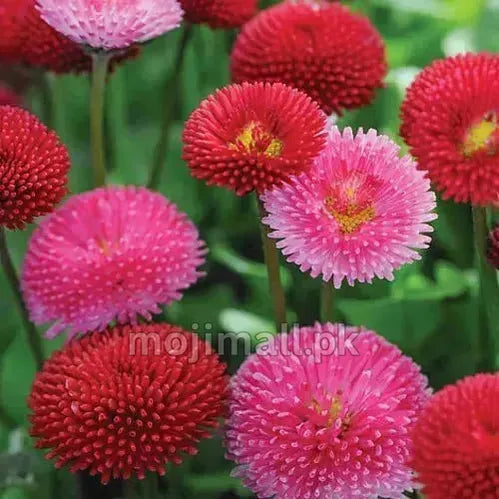
English Daisy produces compact, button-like flowers in shades of white, pink and red. The rounded blooms rise just above tidy rosettes of fresh green leaves, creating a neat display along pot rims, pathways and the front of flower beds. Several plants grown together form a fuller patch of colour without hiding nearby flowers.
Native to Europe and nearby temperate regions, English Daisy prefers cool, moist conditions. In Pakistan, it grows best through winter and early spring, flowering while the weather remains mild.
Why Grow It
-
Button-Like Blooms: Many narrow petals give each flower a rounded, full appearance.
-
Mixed Colours: White, pink and red shades create a soft winter display.
-
Low Growing: Compact plants fit easily around taller seasonal flowers.
-
Neat Edging: Suitable for pot rims, pathways and the front of flower beds.
Best Conditions
-
Germination: Usually 10–20 days
-
Temperature: Around 15–21°C
-
Sunlight: At least 4–6 hours
-
Pot size: 8–12-inch-wide pot or larger
-
Spacing: About 6–8 inches between plants
-
Plant height: Usually around 4–6 inches
-
Spread: Approximately 6–9 inches
-
Soil: Moist, fertile and well-draining mix
Sowing note: In Lahore, Faisalabad, Islamabad and Rawalpindi, sow from September to November, or again from late January to February for a shorter spring display. In hotter areas such as Karachi and southern Punjab, sow from October to January after the strongest summer heat has eased. In colder northern and hilly areas, sow from March to April after the risk of hard frost has passed.
How to Sow
Start English Daisy in a seedling tray or small pots because the tiny seeds are easier to manage there.
- Fill the tray or pots with fine, moist seed starter mix.
- Scatter the tiny seeds thinly and evenly over the surface.
- Press them gently into the surface and cover very lightly.
- Water the surface carefully using a fine spray.
- Keep the mix lightly moist in a bright, cool location.
- Transplant after 3–4 true leaves appear, leaving 6–8 inches between plants.
Plant Care
Water when the surface of the mix begins to dry. English Daisy has shallow roots and prefers fairly even moisture, especially while buds are forming. Keep the mix moist but never leave it soggy.
Mix a small amount of Vermicompost into the final soil before transplanting. For plants growing through a long winter, mix another light amount into the upper soil after 4–6 weeks.
English Daisy usually has few pest problems. If aphids gather around the tender leaves and buds, spray Neem Oil on the affected growth in the evening, avoiding open flowers.
Local Gardener Tips
- Protect newly sown trays from strong watering and heavy rain.
- Give plants full winter sun, then light afternoon shade as spring becomes warmer.
- Place them near the front of beds where taller flowers will not block their light.
- Keep pots away from heat-reflecting walls and hot rooftop surfaces during spring.
Flowering
Autumn-sown plants usually begin flowering around 12–16 weeks after sowing, although cold weather may delay the first buds. The display continues while temperatures remain cool to mild.
Remove faded flower stems near their base to encourage later buds and keep the plants tidy. Flowering usually slows once warm weather arrives.
FAQs
Why do English Daisy flowers close during the evening?
The blooms naturally close at night or during dull weather and reopen when the light becomes brighter. This does not indicate a watering or plant health problem.
Will English Daisy return next winter?
English Daisy is a perennial in cool climates, but Pakistan’s strong summer heat often damages or kills it. Plants may survive or produce self-sown seedlings in cooler areas, but sowing fresh seeds each season gives a more reliable display.
Common names: English Daisy, Common Daisy, Lawn Daisy, Double Daisy, True Daisy, Bellis perennis