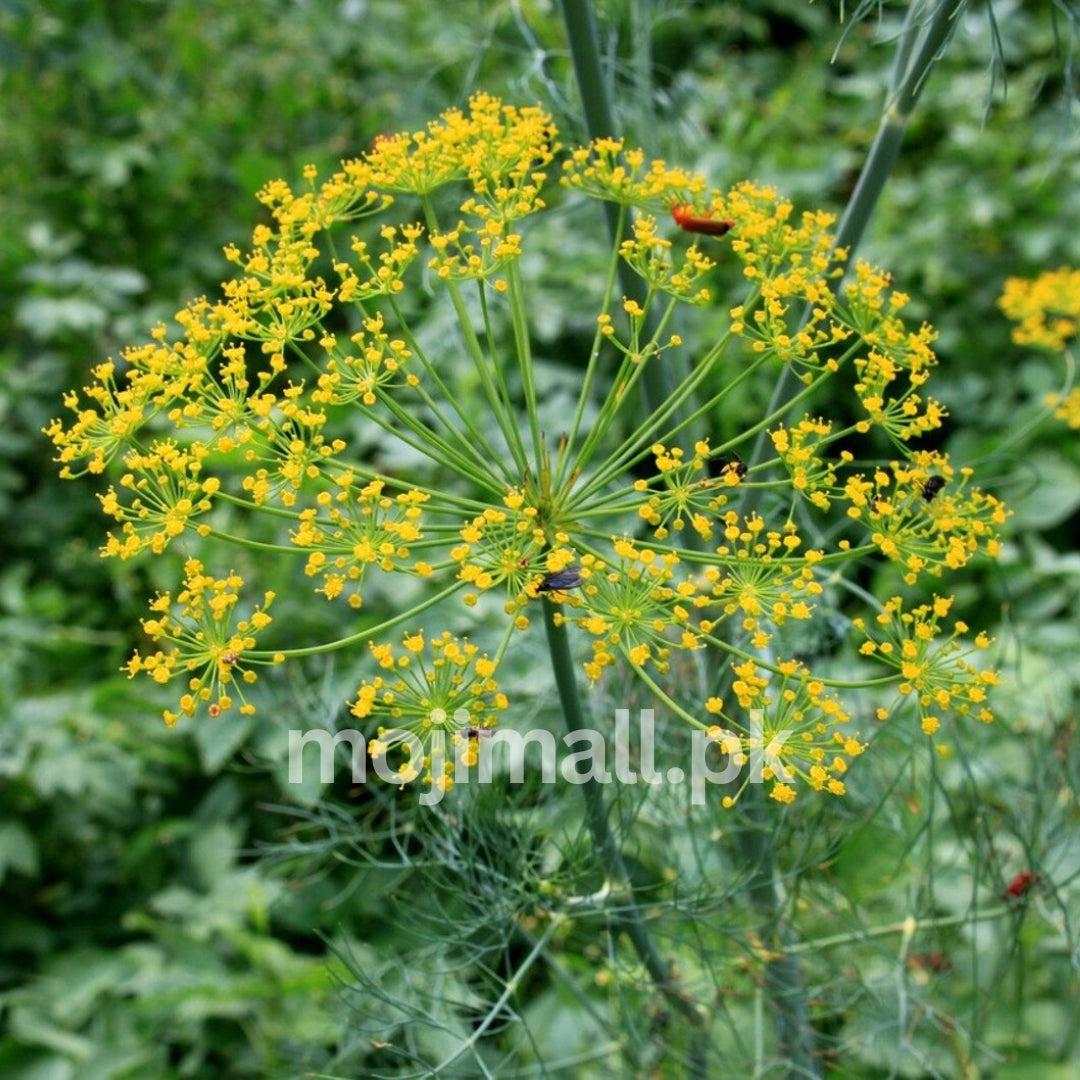
Dill, locally known as Soya or Sowa, is a cool-season annual herb with soft, feathery leaves and flat heads of yellow flowers. The fresh leaves taste light and slightly sweet, with mild anise and lemon flavours. Dill seeds are stronger and more aromatic than the leaves.
Native to parts of North Africa and West Asia, dill has long been grown in Pakistan as a winter herb. Its leaves are used in salads, soups, potatoes, eggs, fish and meat dishes, while the seeds are commonly used in pickles, bread and spice mixtures.
Why Grow It
-
Fresh Flavour: Light and slightly sweet with a gentle citrusy taste.
-
Two Harvests: Both the fresh leaves and mature seeds can be used.
-
Quick Growing: Leaves can usually be picked within 6–8 weeks.
-
Pollinator Friendly: Yellow flowers attract bees and beneficial insects.
-
Pot Friendly: Suitable for balconies, rooftops and small gardens.
Best Conditions
-
Germination: Usually 7–15 days
-
Temperature: Around 15–25°C
-
Sunlight: At least 6 hours
-
Pot size: A 10–12-inch deep pot
-
Spacing: About 8–12 inches between plants
-
Plant height: Usually around 24–36 inches
-
Soil: Light, moderately fertile and well-draining potting mix
Sowing note: In Lahore, Faisalabad, Islamabad and Rawalpindi, sow from September to November, or again from February to early March. In hotter areas such as Karachi and southern Punjab, sow from October to January while the weather remains mild. In colder northern and hilly areas, sow from March to April, after the risk of hard frost has passed.
How to Sow
- Fill the final pot or garden space with moist potting mix.
- Make shallow rows around ¼ inch deep.
- Sow the seeds thinly along the rows.
- Cover lightly and water with a gentle spray.
- Place the pot in a bright, sunny location.
- Keep the mix lightly moist until seedlings appear.
- Thin the seedlings when they are around 2 inches tall.
- Sow another small batch after 2–3 weeks for later picking.
Plant Care
Water regularly while the plants are young. Once established, water when the upper layer of the potting mix begins to dry. Avoid keeping the soil constantly wet.
Mix a small amount of Vermicompost into the potting mix before sowing. Avoid frequent fertilizer, as excessive feeding can produce weak, floppy growth.
Tall dill stems may bend during strong wind or rain. Keep the pot in a sheltered location or support the main stems with a thin stake.
If aphids, thrips or spider mites appear, spray Neem Oil on the affected leaves, including their undersides.
Local Gardener Tips
- Sow directly because dill roots dislike disturbance.
- Grow small batches every 2–3 weeks for continued picking.
- Provide afternoon shade if warm weather arrives early.
- Protect tall plants from strong wind and heavy rain.
- Leave one or two healthy plants to produce seeds.
Harvesting
Begin picking the outer leaves once the plant is around 6–8 inches tall. Cut only a few sprigs from each plant and leave the central growth undisturbed. The leaves have their best flavour before the yellow flowers open.
Add fresh dill near the end of cooking because prolonged heat weakens its flavour. Extra leaves can be chopped and frozen, as drying usually reduces their fresh taste.
For seeds, allow the flower heads to turn brown. Cut them into a paper bag and leave them in a dry, airy place. Once completely dry, separate the seeds and store them in a sealed container.
FAQs
Why is my dill flowering while still small?
Dill naturally flowers quickly during hot or dry weather. Crowded plants and irregular watering can also cause early flowering. Sow during cooler months and keep the soil evenly moist.
Is dill the same as fennel?
No. Their leaves look similar, but dill is usually shorter and has a lighter flavour. Fennel grows larger and has a stronger saunf-like taste.
Is Soya dill the same as soybean?
No. In Pakistan, Soya or Sowa is a local name for dill. Soybean is a completely different plant grown for beans and oil.
Will dill return next season?
Dill is an annual plant and usually completes its life cycle after producing seeds. However, fallen seeds may germinate naturally when suitable weather returns.
Common names: Dill, Garden Dill, Dill Weed, Indian Dill, Pakistani Dill, Soya, Sowa, Soa, Sawa, Soya Saag, سویا, سویا ساگ