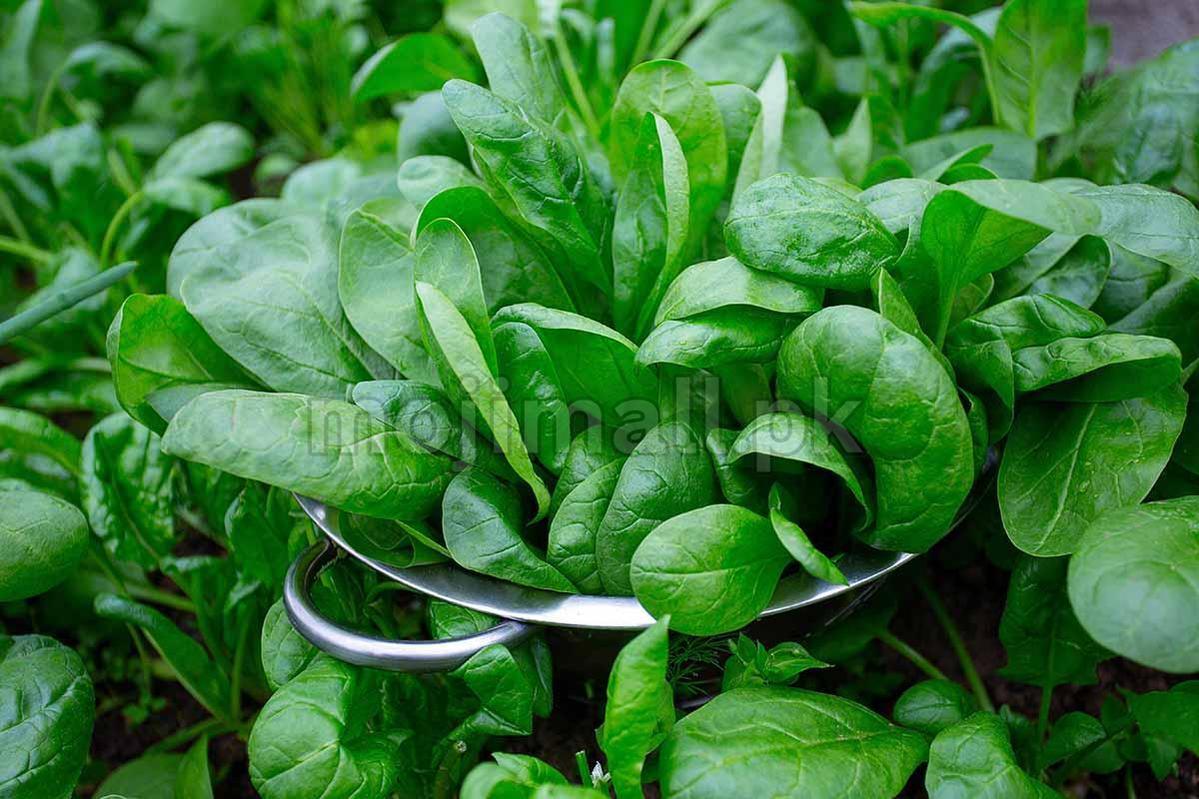
Desi Spinach grows into loose clusters of tender green leaves with the traditional palak flavour used in Pakistani cooking. The leaves soften quickly and are suitable for palak, saag, parathas, soups, rice, omelettes and mixed vegetable dishes.
This desi selection grows well when sown directly in garden rows, rooftop trays or wide containers. Smaller leaves can be picked early, while the remaining plants continue developing larger leaves for regular winter harvesting.
Why Grow It
-
Traditional Palak: Fresh leaves for everyday Pakistani dishes.
-
Tender Leaves: Softens quickly when cooked for palak and saag.
-
Direct Sowing: Grows easily from seeds sown directly in beds or containers.
-
Regular Picking: Mature outer leaves can be collected over several weeks.
-
Large Pack: The 100g pack is suitable for repeated rows and larger home gardens.
Best Conditions
-
Germination: Usually 5–8 days
-
Temperature: Around 10–25°C
-
Sunlight: At least 4–6 hours
-
Pot size: A wide container at least 8–10 inches deep
-
Spacing: About 2–4 inches between plants
-
Plant height: Usually around 6–12 inches
-
Soil: Loose, fertile and well-draining soil
In Lahore, Faisalabad, Islamabad and Rawalpindi, sow from September to February. In hotter areas such as Karachi and southern Punjab, sow from October to February once the weather becomes cooler. In colder northern and hilly areas, sow from August to September, or from March to April after severe frost has passed.
How to Sow
- Loosen the soil in a garden bed, rooftop tray or wide container.
- Make rows around ⅓–½ inch deep and 6–8 inches apart.
- Sow the seeds thinly and cover them lightly with soil.
- Water with a gentle spray and keep the surface moist.
- Thin crowded seedlings to 2–4 inches apart after true leaves appear.
Plant Care
Keep the soil evenly moist while new leaves are developing. Water around the base of the plants and avoid leaving the roots in standing water.
Mix well-rotted compost into the soil before sowing. After the first heavy picking, give the plants NPK 20-20-20 Fertilizer mixed at 1 teaspoon per litre of water to encourage fresh leaves.
Remove weeds while they are small because spinach roots grow close to the soil surface. Check the leaves for aphids and winding leaf-miner trails. If insects begin spreading, spray Neem Oil in the evening, including underneath the affected leaves.
Local Gardener Tips
- Sow only part of the 100g pack at one time and keep the remaining seeds dry.
- Plant a fresh row every 10–14 days for a longer supply.
- Give late sowings light afternoon shade if the weather becomes warm.
- Cut or pinch leaves cleanly instead of pulling the complete plant.
- Remove weeds by hand to avoid damaging the shallow roots.
Harvesting
Begin harvesting when the leaves are around 4–6 inches long, usually 30–40 days after sowing. Pick the larger outer leaves first and leave the smaller central leaves to grow.
When a larger amount is needed for palak or saag, cut the leaves around 2 inches above the soil. Leave the base undamaged so new leaves can develop. Wash the harvested leaves thoroughly before cooking.
FAQs
Why are the seeds not germinating during warm weather?
Spinach seeds germinate poorly in hot soil. Move containers to a cooler place, keep the surface moist and sow again once temperatures remain below 25°C.
Why is a long stem growing from the centre?
The plant has started flowering due to warm weather or longer days. Harvest the remaining leaves because new growth will become smaller and stronger in flavour.
What is eating the leaves during the night?
Slugs and snails may chew irregular holes while the garden is dark. Check beneath pots, boards and damp debris early in the morning or after sunset.
Common names: Spinach, Desi Spinach, Palak, Garden Spinach, پالک, دیسی پالک