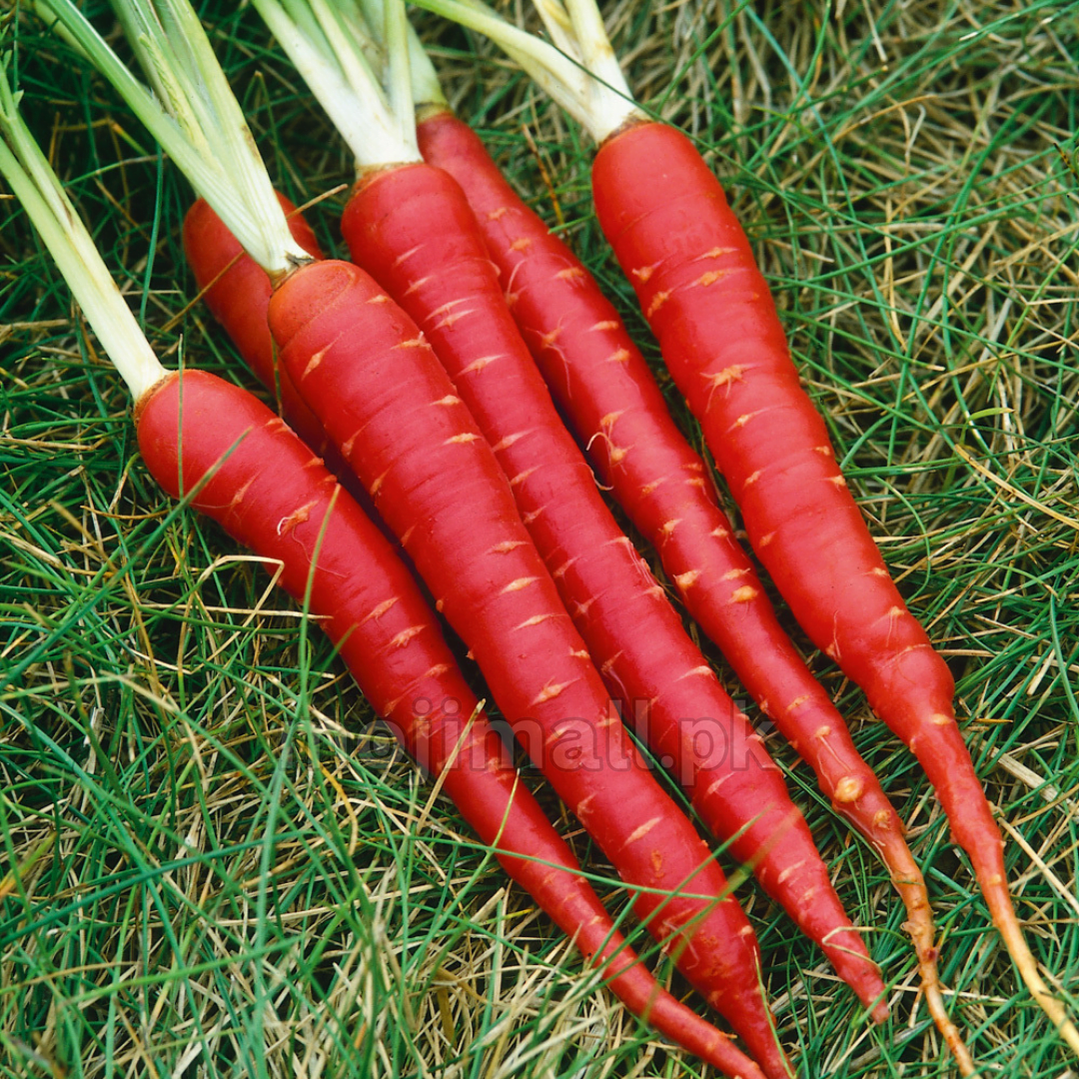
Desi Red Carrot produces long, tapered roots with a deep red to reddish-red colour and feathery green leaves. The roots have a crisp, juicy texture and a naturally sweet flavour. Use them in salads, juice, achar, sabzi, soups, pulao and gajar ka halwa.
Carrots were first grown in Central Asia, and traders and growers later carried red-rooted types through Persia and South Asia. Their deep colour, sweetness and suitability for cool winters helped them become a familiar seasonal vegetable in Pakistan and northern India.
Why Gardeners Love It
-
Deep Red Colour: Adds rich colour to winter meals and drinks.
-
Traditional Favourite: Well suited to halwa, juice, achar and salads.
-
Fresh Crunch: Young roots stay crisp, juicy and tender.
-
Flexible Harvesting: Pull smaller carrots or allow them to grow longer.
-
Small-Space Growing: Suits deep pots, grow bags and garden beds.
Best Conditions
-
Germination: Usually 7–14 days
-
Growing temperature: Around 10–25°C
-
Sunlight: At least 6 hours
-
Pot size: A container or grow bag at least 12 inches deep
-
Spacing: About 2–3 inches between plants
-
Harvest: Usually around 70–90 days after sowing
-
Soil: Deep, loose, stone-free and well-draining soil
In Lahore, Faisalabad, Islamabad and Rawalpindi, sow from September to December, with another small sowing possible during January. In hotter areas such as Karachi and southern Punjab, sow from October to February after the strongest heat has eased. In colder northern and hilly areas, sow from March to April after the risk of hard frost has passed, or from August to September for autumn growth.
How to Sow
- Loosen the soil at least 10–12 inches deep and remove stones, roots and hard lumps.
- Make shallow rows around ¼ inch deep and water along them before sowing.
- Spread the seeds thinly, then cover them with a fine layer of soil.
- Water with a gentle spray and keep the soil surface moist until seedlings appear.
- When seedlings are around 2–3 inches tall, leave 2–3 inches between the strongest plants.
Plant Care
-
Watering: Keep the soil surface moist while the seeds germinate. After the seedlings become established, water deeply whenever the upper soil begins drying. Avoid repeated changes between very dry and very wet soil because the roots may crack.
-
Feeding: Mix a small amount of Vermicompost into the soil before sowing. Carrots usually need no additional feeding in properly prepared soil. Avoid fresh manure and heavy nitrogen feeding because these can encourage excessive leaves, hairy roots and branching.
-
Pests: Check young plants for cutworms that sever seedlings near soil level and aphids gathering on new leaves. Remove visible cutworms and keep nearby weeds under control. If aphids continue spreading, spray Neem Oil in the evening according to the product directions.
Local Gardener Tips
- Sow directly because transplanted carrots often develop bent or forked roots.
- Mix the tiny seeds with dry sand to spread them more evenly.
- Thin crowded seedlings by cutting extras at soil level.
- Remove weeds by hand without digging deeply around the roots.
- Sow a short row every 2–3 weeks for a longer supply.
Harvesting
Begin checking the roots around 70 days after sowing. Brush a little soil away from the shoulder to check its colour and thickness. Young roots may be lighter, while the red colour usually becomes stronger as the carrots mature.
Water dry soil the day before harvesting. Loosen the soil beside each carrot with a hand fork, then lift it carefully by the leaves to avoid breaking the root. Remove the leafy tops after harvesting and wash the carrots just before use.
FAQs
Why are my carrot seeds taking so long to sprout?
Carrot seeds naturally sprout slowly and may take up to three weeks. If none appear, the seeds may have been buried too deeply, the soil surface may have dried out or a hard crust may have formed after heavy watering.
Why are my carrots forked or twisted?
Forking can be caused by stones, compacted soil, fresh manure or damage to the young root. This is usually a shape problem, and the carrot can still be eaten if it is otherwise healthy.
Why are the leaves large while the roots remain thin?
The plants may be overcrowded, shaded or receiving too much nitrogen. Thin them to the correct spacing, provide enough sunlight and avoid strong nitrogen feeding.
Why are some harvested roots lighter red than others?
The colour can vary with root age, temperature and natural differences between plants. Allowing healthy young roots more time to mature may deepen their colour.
Common names: Carrot, Red Carrot, Garden Carrot, سرخ گاجر, Surkh Gajar.