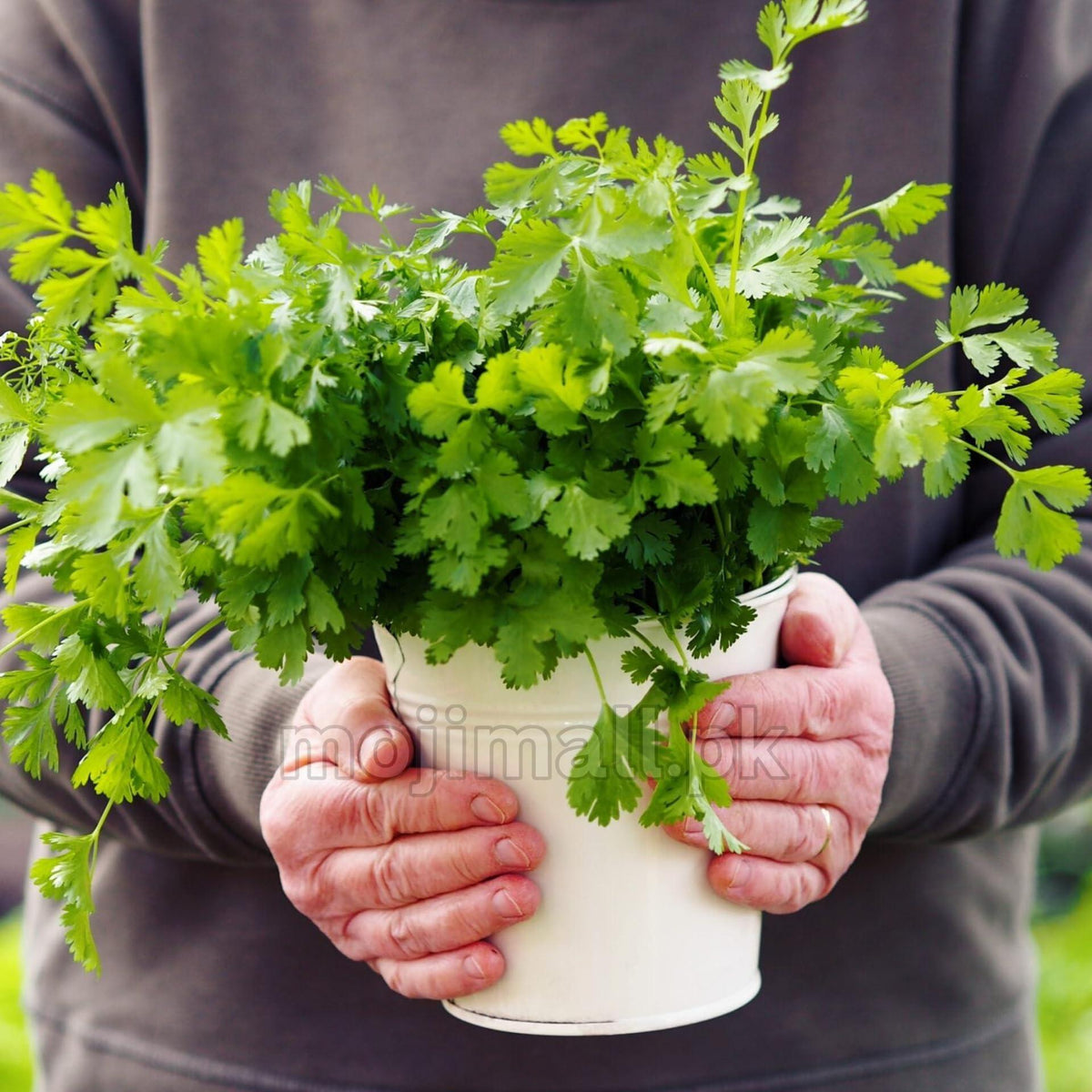
Grow fresh coriander at home from Desi dhania seeds suitable for pots, trays and garden beds. The aromatic green leaves are widely used in chutneys, raita, salads, curries, daal, biryani and everyday garnishing. Mature plants can also be allowed to form dry coriander seeds for use as a spice.
This fast-growing annual herb prefers mild weather and loose soil that drains easily. Small sowings made every few weeks can provide a longer supply of tender leaves throughout the cool season.
Why Gardeners Love It
- Fresh, aromatic leaves for everyday cooking
- Suitable for pots, trays and garden beds
- Can provide both green leaves and dry seeds
- Direct sowing makes it suitable for beginners
- Small repeat sowings provide leaves for longer
- Each packet contains 500+ seeds
Growing Guide
| Detail |
Recommendation |
| Best sowing time |
September to February in most plains |
| Germination time |
Usually 7–21 days |
| Growing temperature |
Approximately 15–25°C |
| Sowing depth |
About ¼–½ inch |
| Sunlight |
At least 4–6 hours |
| Pot depth |
At least 8–10 inches |
| Plant spacing |
Approximately 2–3 inches for leaves |
| Mature height |
Commonly 12–24 inches |
| First cutting |
Usually 30–45 days after sowing |
| Plant type |
Cool-season annual herb |
In Lahore, Faisalabad, Islamabad and Rawalpindi, sow from September to February. In hotter areas such as Karachi and southern Punjab, sow from October to February after the strongest summer heat has eased. In colder northern and hilly areas, sow from March to April after the risk of hard frost has passed, or from August to September for autumn leaves.
How to Sow
- Fill the final pot, tray or garden bed with loose, well-draining soil.
- Gently press or rub the round coriander seed balls so some separate into halves. Do not grind them into powder.
- Sow approximately ¼–½ inch deep, leaving about 1 inch between seeds.
- Water gently and keep the upper soil lightly moist until seedlings appear.
- Thin crowded seedlings after they develop a few leaves, leaving approximately 2–3 inches between plants.
What is commonly called one coriander seed is actually a small, round dry fruit that can separate into two halves. Lightly splitting some before sowing allows moisture to reach the seeds more easily, but fully crushing them can damage them.
Plant Care
- Keep the soil lightly moist during germination.
- Water established plants when the soil surface begins to dry.
- Provide morning sun or at least 4–6 hours of direct sunlight.
- Give afternoon shade when temperatures begin rising.
- Thin crowded seedlings to improve airflow and leaf growth.
- Avoid disturbing the roots through unnecessary transplanting.
- Remove yellow or badly damaged leaves when needed.
- Sow another small batch every 2–3 weeks for a continuing supply.
Mix a small amount of vermicompost into the soil before sowing. Coriander grown for leaves usually needs little additional feeding when planted in fresh, moderately fertile soil.
Check tender shoots and leaf undersides for aphids and other small sap-feeding insects. If they continue spreading, use neem oil in the evening according to the product directions and observe the stated interval before harvesting.
Harvesting Leaves
Begin cutting when the plants are approximately 4–6 inches tall, usually 30–45 days after sowing. Pick the larger outer stems first and leave the younger centre growth in place.
For a larger cutting, trim a small group approximately 1 inch above the soil. The plants may produce some new leaves, although coriander usually gives better results when fresh batches are sown regularly instead of repeatedly cutting the same plants.
Wash harvested leaves gently and use them fresh. Place the stems in a glass containing a small amount of water for short storage, or wrap the dry leaves loosely before refrigerating.
Saving Seeds
Leave a few healthy plants uncut and allow them to flower. Small white flowers will be followed by round green seed heads.
Wait until the seed heads become beige or light brown. Cut the stems and place them in a paper bag in a dry, airy location. Once completely dry, rub the seed heads gently to release the coriander seeds.
Store fully dried seeds in an airtight container away from moisture, heat and direct sunlight. They can be kept for later sowing or used whole or ground in cooking.
Local Tips
- Sow directly into the final container because coriander roots dislike frequent disturbance.
- Use a wide pot or tray if growing mainly for fresh leaves.
- Avoid scattering seeds too densely because crowded plants remain thin.
- Protect seedlings from strong midday sun during unexpectedly warm weather.
- Water gently so the small seeds are not displaced or exposed.
- Make repeat sowings before the previous batch begins flowering.
- Raise outdoor containers slightly during heavy rain so excess water can drain freely.
FAQs
Why are my coriander seeds not germinating?
Deep sowing, dry soil, very low temperatures or constantly soaked soil can prevent germination. Some whole seed balls may also take longer to absorb moisture. Keep the upper soil lightly moist, provide mild warmth and allow up to 21 days before sowing again.
Why is my coriander flowering while still small?
Warm weather, longer days, dry soil and crowded roots can make coriander flower early. Once flowering begins, the plant produces fewer tender leaves. Harvest the remaining leaves and begin another sowing in a cooler position.
Will coriander grow again after cutting?
It can produce some new leaves when cut approximately 1 inch above the soil and the centre remains undamaged. Regrowth is usually limited, so repeat sowing every 2–3 weeks is more reliable for maintaining fresh leaves.
Why are the upper leaves thin and feathery?
Coriander naturally develops finer upper leaves as it matures and prepares to flower. This is a normal stage of growth and does not mean that a different plant has appeared.
Can coriander grow indoors?
It can grow beside a bright, sunny window, but weak indoor light may produce thin stems and limited leaves. A balcony, rooftop or outdoor position receiving at least 4–6 hours of sunlight usually gives better growth.
Common Names: Coriander, Dhania (دھنیا), Hara Dhania (ہرا دھنیا), Cilantro, Chinese Parsley