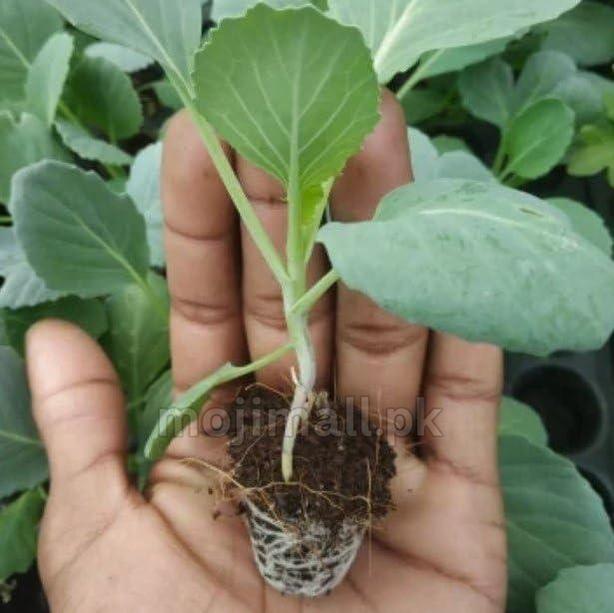
Desi Cabbage produces broad green outer leaves around a firm, rounded head. The inner leaves are crisp and mild, with a light sweetness that softens when cooked. Use them raw in salads and slaws, or cook them in sabzi, soups, noodles, stir-fries, rolls and pickles.
Cabbage is a cultivated form of Brassica oleracea, developed in Europe from wild leafy ancestors and grown for centuries. During cool weather, its inner leaves gradually overlap and tighten into a compact head.
Why Gardeners Love It
-
Fresh Crunch: Home-grown heads bring crisp texture to everyday meals.
-
Kitchen Favourite: Useful in salads, sabzi, noodles, soups and pickles.
-
Winter Growing: Fills the garden while many summer vegetables are resting.
-
Container Friendly: One plant fits a large pot or grow bag.
-
Rewarding to Watch: Loose leaves gradually form a firm, rounded head.
Best Conditions
-
Germination: Usually 5–10 days
-
Growing temperature: Around 10–24°C
-
Sunlight: At least 6–8 hours
-
Pot size: A 14–16-inch-wide pot at least 12 inches deep
-
Spacing: About 12–18 inches between plants
-
Harvest: Usually 60–100 days after transplanting
-
Soil: Fertile soil that holds moisture but drains well
In Lahore, Faisalabad, Islamabad and Rawalpindi, sow from late August to October for winter harvesting. In hotter areas such as Karachi and southern Punjab, sow from September to November after the strongest heat has eased. In colder northern and hilly areas, sow from March to April after the risk of hard frost has passed, or from July to August for autumn harvesting.
How to Sow
- Fill a seedling tray or small pots with fine, moist seed starter mix.
- Sow one or two seeds in each space, around ¼–½ inch deep.
- Water gently and keep the mix lightly moist in a bright location.
- If both seeds germinate, keep the stronger seedling.
- Transplant when seedlings have 4–6 true leaves, leaving 12–18 inches between plants.
Plant Care
-
Watering: Water deeply when the upper soil begins drying. Keep moisture reasonably even, especially while the head is forming. Add a light mulch to reduce moisture loss during warmer weather.
-
Feeding: Mix a small amount of Vermicompost into the soil before transplanting. If established plants remain pale and make little new growth despite correct watering and sunlight, apply NPK 20-20-20 Fertilizer once at 1 teaspoon per litre of water. Avoid feeding after the head begins forming.
-
Pests: Check the undersides and centre of the leaves for aphids, eggs and green caterpillars. Remove caterpillars and badly damaged leaves by hand. If aphids continue spreading, spray Neem Oil in the evening according to the product directions.
Local Gardener Tips
- Press the soil gently around transplants so wind cannot loosen them.
- Protect nursery seedlings from heavy rain and harsh afternoon sunlight.
- Cover plants with fine insect mesh when white butterflies appear.
- Avoid damaging the centre because the cabbage head develops there.
- Remove nearby weeds by hand before they compete with the roots.
Harvesting
Harvest when the head feels firm and does not press inward easily. The exact time depends on the variety, temperature and growing conditions.
Use a clean, sharp knife to cut the stem just below the head. Leave two or three healthy outer leaves attached to protect the cabbage during handling. Harvest promptly once the head becomes firm rather than leaving it on the plant for too long.
FAQs
Why is my cabbage producing leaves but not forming a head?
Hot weather, close spacing, excessive nitrogen or damage to the central growing point can prevent head formation. Give the plant enough room, protect its centre and allow it to develop during steady cool weather.
Why did the cabbage head split?
Splitting often happens when dry soil suddenly receives a large amount of water. It can also occur when a mature head remains on the plant for too long. Keep soil moisture even and harvest firm heads promptly.
What causes dry brown edges inside the head?
This is often tipburn. Uneven watering or excessively rapid growth can prevent enough calcium from reaching the young inner leaves, even when calcium is present in the soil. Maintain steady moisture and avoid heavy feeding after the head begins forming.
Common names: Cabbage, Green Cabbage, Head Cabbage, Desi Cabbage, Band Gobhi, بند گوبھی