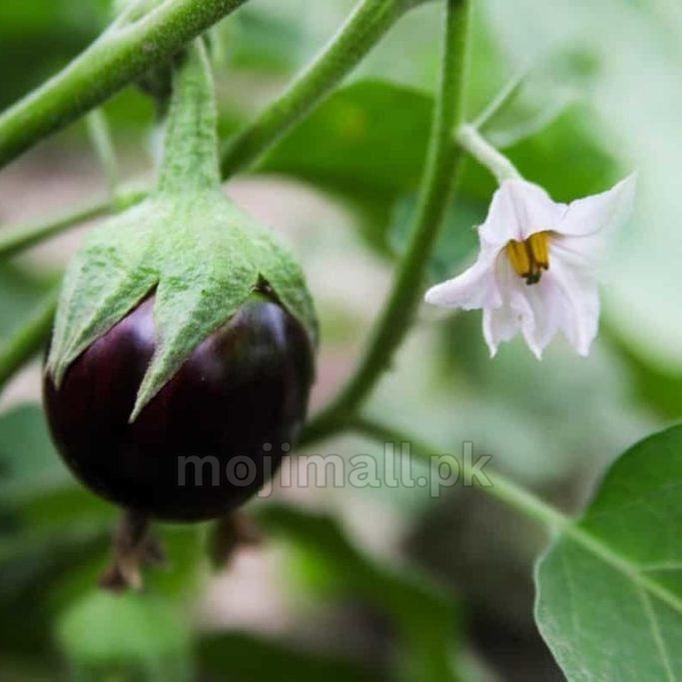
Desi Baingan seeds grow into warm-season vegetable plants that produce traditional purple brinjals for everyday home cooking. Fresh baingan can be grilled, roasted, fried or used in bharta, curries and mixed vegetable dishes.
Brinjal plants grow well in sunny home gardens, large pots and grow bags. They need warm conditions, fertile soil and consistent watering throughout flowering and fruit development.
Why Grow It
- Traditional desi brinjal for home cooking
- Suitable for pots, grow bags and garden beds
- Performs well in warm and sunny conditions
- Can continue producing fruit over an extended period
- Suitable for home gardeners growing vegetables from seed
Fruit size, shape and colour intensity may vary slightly between individual plants because this is a traditional desi variety.
Growing Guide
| Detail |
Recommendation |
| Best sowing time |
January to March and June to August |
| Germination time |
Usually 7–14 days |
| Sowing depth |
Approximately 0.5 cm |
| Germination temperature |
Approximately 22–30°C |
| Sunlight |
6–8 hours of direct sunlight |
| Pot size |
At least 14–16 inches for one plant |
| Plant spacing |
Approximately 18–24 inches |
| Transplanting stage |
About 5–7 true leaves |
| First picking |
Commonly 70–100 days after transplanting |
| Plant type |
Warm-season fruiting vegetable |
Brinjal grows best after cold weather has passed and daytime conditions have become consistently warm. Avoid starting seedlings outdoors during frost, prolonged cold or the most severe summer heat.
In Lahore, Faisalabad, Islamabad and Rawalpindi, seeds can be started from January to March for spring planting. Another sowing may be started from June to August for autumn growth where young seedlings can be protected from extreme heat and heavy rain.
In Karachi and warmer parts of Sindh and southern Punjab, sow during the milder periods from January to February or August to October. In colder northern and hilly areas, begin from March to May after the risk of frost has passed.
How to Sow
- Fill a seed tray or small pots with a light, clean seed-starting mixture.
- Sow the seeds approximately 0.5 cm deep and cover them lightly.
- Water gently and keep the mixture evenly moist without leaving it soaked.
- Place the tray in a warm, bright location. Germination usually takes 7–14 days.
- Transplant healthy seedlings after they develop 5–7 true leaves and the weather is warm.
Gradually introduce seedlings to stronger sunlight before transplanting them outdoors. Move each seedling with its surrounding soil to minimise root disturbance.
Pot and Soil Requirements
Use one pot at least 14–16 inches wide and deep for each plant. Large varieties may benefit from an even deeper container with additional root space.
Brinjal prefers fertile soil that holds some moisture while allowing excess water to drain. Heavy soil and blocked drainage holes can cause weak growth and root problems.
Mix garden soil with a suitable potting medium and well-decomposed vermicompost to improve fertility, moisture balance and drainage.
Do not leave container plants standing in collected water after irrigation or heavy rain.
Plant Care
- Provide at least 6 hours of direct sunlight each day.
- Water deeply when the upper soil layer begins to dry.
- Maintain consistent moisture while flowers and fruit are developing.
- Avoid repeatedly soaking the leaves during watering.
- Keep one plant in each 14–16 inch pot.
- Install a stake if the stems begin bending under the weight of the fruit.
- Remove yellow, damaged or badly affected lower leaves.
- Keep enough space between plants for airflow.
- Remove weeds that compete for water and nutrients.
- Avoid excessive nitrogen, which may encourage leaves instead of fruit.
During very hot weather, water early in the morning and check container plants more frequently. Temporary afternoon protection can help young plants during severe heat, but established plants still require strong daily sunlight.
Feeding
Mix well-decomposed compost or vermicompost into the soil before transplanting. Allow the seedling to become established before beginning additional feeding.
A balanced fertilizer such as NPK 20-20-20 may be used during active leafy growth according to its directions.
When flower buds begin forming, switch to NPK 5-15-45. Mix 1 teaspoon in 1 litre of water and apply through the soil or as a light foliar spray every 10–15 days, if needed.
Do not apply fertilizer to completely dry soil, spray open flowers or increase the concentration. For edible plants, wait 7–10 days after application before harvesting and wash the brinjals thoroughly before use.
Flowering and Fruit Formation
Brinjal flowers are generally self-fertile, but movement from wind and visiting insects helps release pollen. Gently shaking the flowering branches during the morning may improve pollination when plants are growing in a sheltered balcony.
Flower drop may occur because of extreme heat, cold nights, irregular watering, poor pollination or excessive nitrogen. Correct the growing conditions before applying additional fertilizer.
Once fruit begins forming, maintain regular watering. Sudden changes between very dry and heavily soaked soil can stress the plant and affect fruit quality.
Harvesting
Pick brinjals while the fruit is firm, glossy and has reached a useful size. The skin should recover when pressed gently.
Use clean scissors or pruning shears and leave a short section of stem attached. Do not pull or twist the fruit because this can damage the branch.
Fruit that becomes dull, yellowish or very hard may be overmature and contain tougher seeds. Regular picking encourages the plant to continue forming new flowers and fruit.
Common Problems
Small Holes in Leaves
Flea beetles and other chewing insects can produce numerous small holes, particularly on young seedlings. Inspect both sides of the leaves and remove badly damaged material when necessary.
Aphids and Mites
Aphids may gather around tender shoots, while mites commonly affect leaves during hot, dry conditions. Neem oil can be applied according to its directions when required.
Yellow Lower Leaves
Occasional yellowing of older leaves can be normal. Widespread yellowing may indicate overwatering, poor drainage, root stress or an unsuitable feeding programme.
Wilting Despite Wet Soil
Wilting while the soil remains wet can indicate damaged or oxygen-starved roots. Check the drainage holes and allow the upper soil layer to begin drying before watering again.
Better Results
- Start seeds in a warm place because cold soil delays germination.
- Move seedlings outdoors gradually before transplanting.
- Plant only after cold conditions have passed.
- Keep watering consistent during flowering and fruit development.
- Stake heavily loaded branches before they bend or break.
- Inspect young leaves regularly for pest damage.
- Pick fruit while its skin remains firm and glossy.
FAQs
Why are my brinjal flowers falling without producing fruit?
Flower drop can result from extreme temperatures, irregular watering, weak pollination or excessive nitrogen. Keep the soil evenly moist, avoid heavy feeding and gently shake flowering branches during the morning to help release pollen.
Does brinjal require hand pollination?
Usually not. Brinjal flowers can pollinate themselves, although wind, insects or gentle movement helps distribute the pollen. Plants growing in protected balconies may benefit from a light shake while the flowers are open.
Why does my baingan taste bitter?
Fruit may become more bitter when it is left on the plant too long or when the plant experiences severe water stress. Harvest while the fruit is firm and glossy, and maintain consistent watering as it develops.
How can I tell when a brinjal is overripe?
An overripe brinjal may lose its shine, become yellowish or develop tough flesh and hard seeds. Pick the fruit earlier while its skin is glossy and responds slightly to gentle pressure.
Can I save seeds from the harvested fruit?
Yes, but the fruit selected for seed saving must remain on the plant beyond the normal eating stage until fully mature. Separate the developed seeds, wash them and allow them to dry completely before storage. Plants grown from saved seeds may show some natural variation.
Common Names: Desi Baingan, Brinjal, Eggplant, Aubergine, Baingan (بینگن)