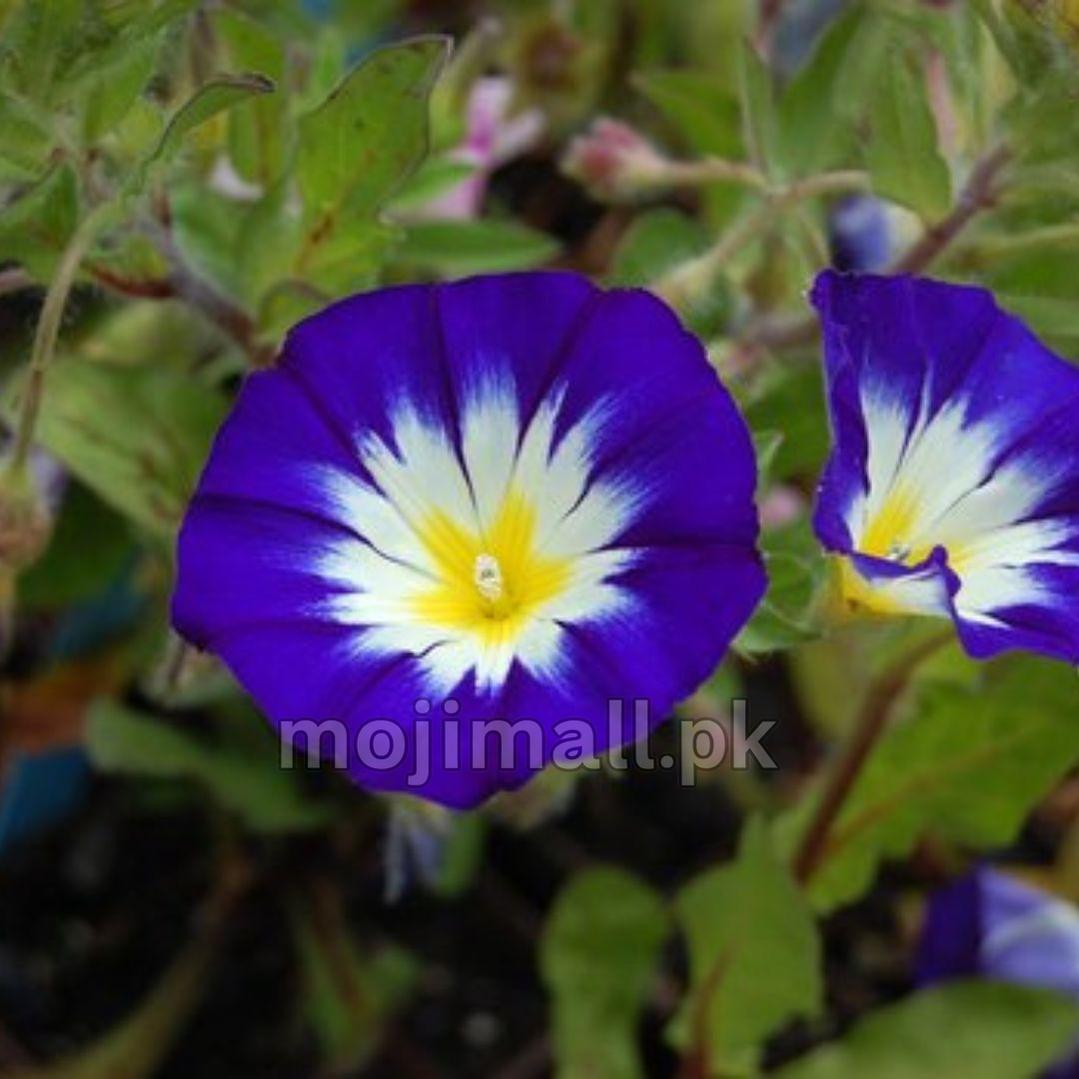
Deep blue flowers with white star-shaped markings and golden-yellow centres make Convolvulus tricolor Royal Ensign a distinctive choice for sunny pots and low borders. Its trumpet-shaped blooms stand out against the green foliage and bring strong colour to balconies, window boxes and garden edges.
Also called Dwarf Morning Glory, Royal Ensign forms a low, branching plant with gently spreading stems. The species originates from Mediterranean regions, and this variety is grown for its rich blue flowers and compact garden display.
Why Gardeners Love It
-
Rich Blue Flowers: Adds a strong blue shade to mixed flower beds and container displays.
-
Contrasting Centres: White markings and yellow centres give the blooms their distinctive three-colour pattern.
-
Compact Growth: Suits smaller gardens, balcony pots and the front of borders.
-
Extended Display: Develops fresh buds throughout the flowering season.
-
Spreading Habit: Softens container edges and fills spaces between upright flowers.
Best Conditions
-
Germination: Usually 14–21 days
-
Germination temperature: Around 18–24°C
-
Sunlight: At least 6 hours
-
Pot size: A 10–12-inch pot for one plant
-
Spacing: About 10–12 inches between plants
-
Plant height: Usually around 10–12 inches
-
Soil: Light, moderately fertile and well-draining mix
-
First flowers: Usually around 11–13 weeks from sowing
Sowing note: In Lahore, Faisalabad, Islamabad and Rawalpindi, sow from February to April, protecting early seedlings from late frost. In hotter areas such as Karachi and southern Punjab, sow from February to March, or again from September to October once the strongest summer heat has eased. In colder northern and hilly areas, sow from April to May after the risk of frost has passed.
How to Sow
- Prepare final pots with a light, well-draining mix, or loosen garden soil and remove weeds before levelling the surface.
- Soak the seeds in clean, lukewarm water for 2–4 hours, then drain them and sow while they are still moist.
- Sow seeds around ⅛ inch deep, cover lightly with fine mix and water gently without washing them out of position.
- Keep the sowing area bright and sheltered, checking moisture daily and protecting containers from heavy rain or strong afternoon heat.
- Once seedlings appear, increase their exposure to morning sunlight gradually and continue watering gently whenever the surface begins to dry.
- Thin seedlings after 2–3 true leaves develop, leaving one strong plant per pot or about 10–12 inches between garden plants.
Plant Care
Water regularly while the plants establish, then allow the upper layer of the mix to begin drying between waterings. Established plants tolerate short dry periods, but prolonged drying can interrupt flowering. Empty water from pot saucers and keep drainage holes clear.
Mix a small amount of Vermicompost into the final growing mix if it needs enrichment. Frequent heavy feeding is unnecessary in reasonably fertile soil. Check young shoots and leaf undersides for aphids and spider mites. If needed, apply Neem Oil according to its label, avoiding open flowers and strong sunlight.
Local Gardener Tips
- Provide light afternoon shade during extreme summer heat.
- Keep pots sheltered from prolonged monsoon rain.
- Position plants where taller flowers will not shade them.
- Check container moisture more frequently during hot, windy weather.
Flowering and Display
Remove faded flowers carefully, leaving nearby unopened buds intact. Regular attention keeps the display tidy and encourages continued flowering.
Plant Royal Ensign beside white petunias or yellow marigolds for a clear colour contrast. It also works well in a row along pathways or near the edges of raised beds, where its low growth keeps the patterned flowers visible.
FAQs
Can Royal Ensign climb a fence or trellis?
No. Its stems spread along the ground or over container edges without twining around supports. Climbing Morning Glory varieties used to cover fences belong to Ipomoea; Royal Ensign is a bushy Convolvulus.
Why do the flowers close in cloudy weather or towards evening?
This is normal. The blooms open in bright daylight and close as light levels fall. Each flower lasts one day, while other buds open to continue the display.
Why are seedlings falling over with thin or brown stems at soil level?
This can indicate damping-off, a disease that damages young stems and roots. Remove affected seedlings. For another sowing, use cleaned containers and fresh seed starter mix, and avoid cool, persistently wet conditions. Seedlings with rotted stems usually cannot recover.
Common names: Royal Ensign, Convolvulus tricolor ‘Royal Ensign’, Dwarf Morning Glory, Bush Morning Glory, Tricolour Convolvulus