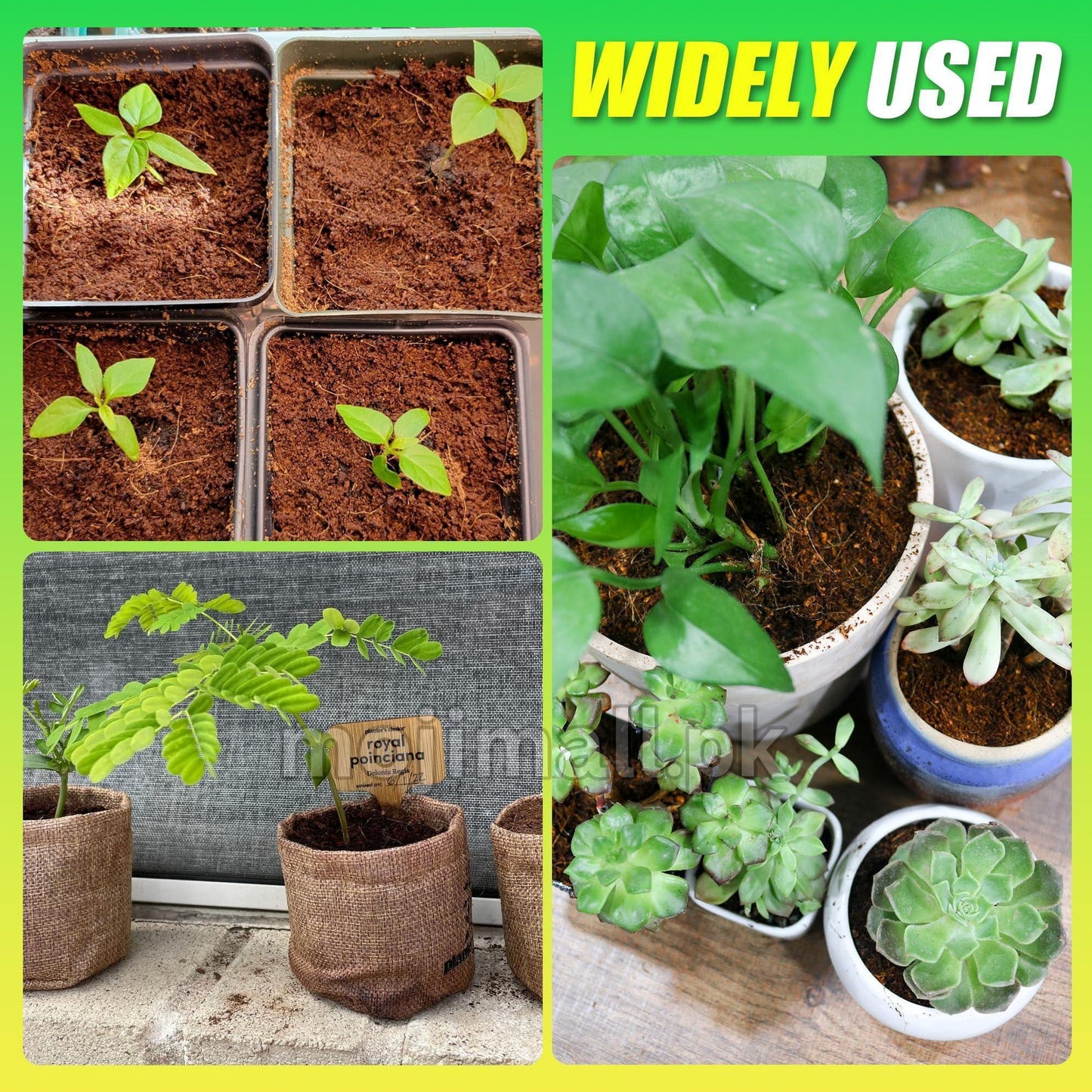
Coco Peat is a loose, ready-to-use growing medium made from processed coconut husk fibre. It holds moisture while keeping potting mixtures lighter and less compact than heavy garden soil used alone.
This coco peat has already been expanded and washed, so it does not require soaking or breaking apart before use. Add it directly to potting mixtures for containers, grow bags, seed trays, raised beds and home gardens.
Why Use It
- Loose and ready to use
- Holds moisture around plant roots
- Helps loosen heavy potting soil
- Keeps container mixtures lighter
- Suitable for pots, grow bags and seed trays
- Useful for rooftop and balcony gardening
- Can be mixed with soil, compost and perlite
Coco peat is a growing-medium ingredient, not a complete fertilizer. Combine it with a suitable source of plant nutrition for continued growth.
Product Details
| Detail |
Information |
| Material |
Processed coconut husk fibre |
| Form |
Loose and expanded |
| Preparation |
Washed and ready to use |
| Main purpose |
Moisture retention and soil improvement |
| Available packs |
800g, 3kg and 5kg |
| Suitable for |
Pots, grow bags, seed trays and raised beds |
| Application |
Mixed with soil or other potting ingredients |
How It Helps
Coco peat absorbs water and releases it gradually as the surrounding mixture begins to dry. This helps containers maintain more even moisture between watering.
Its soft, fibrous texture also separates fine soil particles. This makes the mixture easier for roots to enter and prevents heavy garden soil from becoming tightly packed inside a pot.
Coco peat can still remain wet for too long when used excessively or placed in containers with blocked drainage. The amount should be adjusted according to the plant and season.
Potting Mix
For general container plants, use coco peat as approximately 30–50% of the completed mixture. Combine it with ingredients that provide nutrition, structure and drainage.
A practical home-garden mixture can contain:
- Two parts coco peat
- One part garden soil or compost
- One part perlite, rice husk or another drainage material
The exact mixture can be changed according to the plant. Succulents need more drainage, while leafy plants may benefit from greater moisture retention.
A moderate amount of vermicompost may be included to provide organic nutrition. Avoid making the mixture excessively rich for very young plants.
How to Use
- Loosen the coco peat by hand inside a clean container.
- Measure the required soil, compost and drainage ingredients.
- Mix everything thoroughly until the texture is even.
- Fill the pot without pressing the mixture too firmly.
- Water slowly and confirm that excess water leaves through the drainage holes.
The coco peat is already expanded. Water is required after planting, but no separate soaking process is needed before mixing.
Seed Starting
Coco peat can be used in seed-starting mixtures because it is light and holds moisture around germinating seeds. Mix it with perlite to prevent small tray cells from staying overly wet.
Seeds do not require strong feeding during germination, but young seedlings need suitable nutrition after their first true leaves develop. For a balanced ready-made option containing coco peat, perlite, vermicompost and fungicide, use a seed starter mix.
Always follow the correct sowing depth for each variety. Fine seeds may need only a light covering, while larger seeds are normally planted deeper.
Grow Bags
Coco peat is useful in grow bags because it reduces the amount of heavy garden soil required and helps the mixture retain moisture during warm weather.
Combine it with compost, soil and a drainage ingredient instead of filling the entire grow bag with coco peat alone. Fruiting vegetables and long-term plants require regular nutrition that plain coco peat does not provide.
Check that the bag has enough drainage holes and is not standing in collected rainwater.
Garden Soil
Mix coco peat into sandy soil to improve moisture retention or into heavy soil to make the upper planting area lighter.
Spread a layer over the selected area and mix it through the upper 6–8 inches of soil. Adding compost at the same time can improve nutrition and structure.
Coco peat alone cannot correct a low or waterlogged garden area. Standing water must be addressed through proper drainage.
Soilless Growing
Coco peat may be used as a main rooting medium in soilless growing systems. Because it contains little plant nutrition, a properly prepared nutrient solution is required.
Monitor watering carefully. A container filled mainly with coco peat can look dry on the surface while remaining moist deeper around the roots.
Gardeners unfamiliar with nutrient solutions may find a prepared potting mixture easier for regular home plants.
Watering
Water only after checking the growing mixture. Push a finger below the surface or lift a small pot to judge how much moisture remains.
Coco peat becomes lighter in colour as it dries. If it remains dark and wet for several days, reduce watering and inspect the drainage holes.
During hot and windy weather, containers may need more frequent checks. During the monsoon or humid weather, allow the upper layer to begin drying before watering again.
Plant Food
Coco peat does not contain enough nutrition to support established plants by itself. Mix it with compost or vermicompost and provide additional plant food according to the needs of the plant.
Do not add several fertilizers at the same time without considering their combined strength. Excess fertilizer can accumulate in container mixtures and damage roots.
Occasional deep watering can help move accumulated soluble salts out through the drainage holes, provided the container drains freely.
Local Tips
- Use it to lighten clay-based garden soil placed inside pots.
- Add perlite when the completed mixture holds water for too long.
- Mix thoroughly so pockets of dry coco peat are not left around roots.
- Protect stored coco peat from rain and contaminated water.
- Raise grow bags slightly during the monsoon to improve drainage.
- Check moisture below the surface before watering rooftop containers.
- Do not press the mixture firmly when filling seed trays or pots.
FAQs
Why has coco peat pulled away from the sides of the pot?
Coco peat can shrink when it becomes extremely dry. Rewet it gradually by applying small amounts of water several times. Pouring a large amount at once may cause the water to run through gaps without moistening the root area evenly.
Why are plants turning yellow in a coco peat mixture?
Yellow leaves may result from insufficient nutrition, excessive watering or unsuitable soil pH. Coco peat contains little nutrition, so established plants may require compost or an appropriate fertilizer. Check the moisture level before adding plant food.
Can used coco peat be added to compost?
Yes. Old coco peat can be mixed into a compost pile when it is free from serious pests, disease and chemical contamination. Its fibrous texture can help prevent wet compost materials from becoming tightly packed.
Can coco peat be reused after repotting?
It may be reused if it is still loose, drains properly and did not contain diseased roots. Remove old roots and debris before mixing it with fresh ingredients. Discard material from plants affected by serious root disease.
How long does coco peat remain useful in a pot?
Coco peat decomposes slowly and may remain in a potting mixture for several growing seasons. Replace or refresh the mixture when it becomes compacted, drains poorly or can no longer hold a healthy root system.