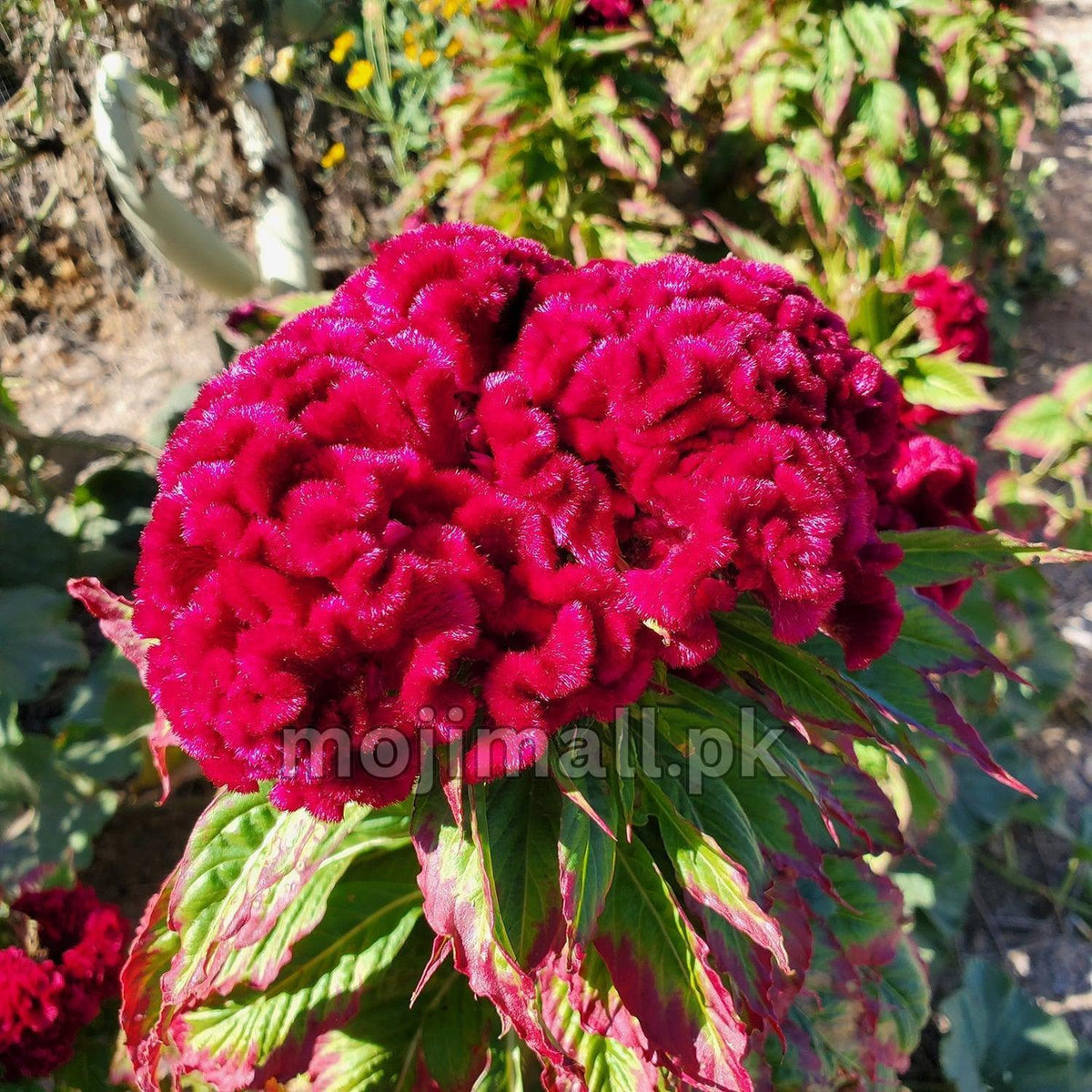
Cockscomb Mix Seeds grow into compact summer plants topped with broad, velvety flower crests in red, pink, yellow and orange shades. Their folded, fan-like shape resembles a rooster’s comb and creates a bold display in pots, borders and sunny flower beds.
This heat-loving Celosia continues flowering through warm weather when provided with strong sunlight and good drainage. The long-lasting flower heads can be enjoyed in the garden, cut for arrangements or dried for later use.
Why Gardeners Love It
-
Velvety Crests: Produces soft, folded flower heads with an unusual sculptural shape.
-
Bright Colour Mix: Includes rich red, pink, yellow and orange shades.
-
Compact Growth: Suitable for pots, borders and the front of flower beds.
-
Heat Loving: Performs well during Pakistan’s warm growing season.
-
Useful Flowers: Suitable for both fresh and dried arrangements.
Best Conditions
-
Germination: Usually 7–14 days
-
Germination temperature: Around 21–27°C
-
Growing temperature: Around 20–35°C
-
Sunlight: At least 6–8 hours
-
Pot size: An 8–10-inch pot for one plant
-
Spacing: About 8–12 inches between plants
-
Plant height: Usually around 10–18 inches
-
Soil: Moist, fertile and well-draining mix
-
First flowers: Usually around 8–12 weeks after sowing
Sowing note: In Lahore, Faisalabad, Islamabad and Rawalpindi, sow from February to April, or again from July to August after prolonged rain has eased. In hotter areas such as Karachi and southern Punjab, sow from February to March, or from August to September. In colder northern and hilly areas, sow from March to May after the risk of severe frost has passed.
How to Sow
- Fill a seed tray or small pots with fine, moist seed starter mix.
- Scatter the small seeds thinly across the surface.
- Press them gently and cover with a very thin layer of the mix.
- Mist carefully and keep the tray warm in a bright location.
- Maintain light moisture without keeping the surface continuously wet.
- Transplant after the seedlings develop 2–3 true leaves, before their roots become crowded.
Plant Care
Water when the upper layer of soil begins drying, keeping the roots moderately moist without waterlogging them. Avoid wetting the flower heads repeatedly because trapped moisture can cause discolouration or fungal damage. Do not leave young plants crowded in seed trays for too long.
Mix a small amount of Vermicompost into the soil before transplanting. If growth is weak or pale, apply NPK 20-20-20 at a light dose every 3–4 weeks during early growth. Check for aphids, thrips and spider mites. If found, spray Neem Oil on the affected foliage, including the undersides.
Local Gardener Tips
- Protect young seedlings from cold nights and sudden temperature changes.
- Transplant before the seedlings become crowded or root-bound.
- Leave enough space between plants for airflow during humid weather.
- Remove damaged leaves before they begin trapping moisture around the stem.
- Protect developing flower heads from prolonged heavy rain.
Flowering and Drying
Cockscomb develops its distinctive crested flower heads during warm weather. Remove faded or damaged blooms to keep the plants tidy and allow side branches to continue developing.
For dried arrangements, cut the stems after the flower heads have developed full colour but before their lower edges begin turning brown. Remove the leaves and hang small bundles upside down in a shaded, dry and airy location.
FAQs
Why did my Cockscomb begin flowering while still very small?
Cold exposure, crowded roots, dry soil or delayed transplanting can cause premature flowering. Keep young plants warm, growing steadily and transplant them before they become root-bound.
Will every plant produce all the colours in the mix?
No. Each plant usually produces one flower colour. Grow several plants to create a display containing different shades from the mixture.
Should I pinch the top of a Cockscomb plant?
Leave it unpinched if you want one larger central flower head. Pinching the growing tip can produce more branches and several smaller flower heads.
What is the difference between Cockscomb and Celosia Plumosa?
Cockscomb develops broad, folded and velvety crests. Celosia Plumosa produces upright, feathery flower plumes. They are related plants but create noticeably different displays.
Common names: Cockscomb Mix, Crested Celosia, Woolflower, Brain Celosia, Gul Kalgha, گل کلغہ, Celosia argentea var. cristata