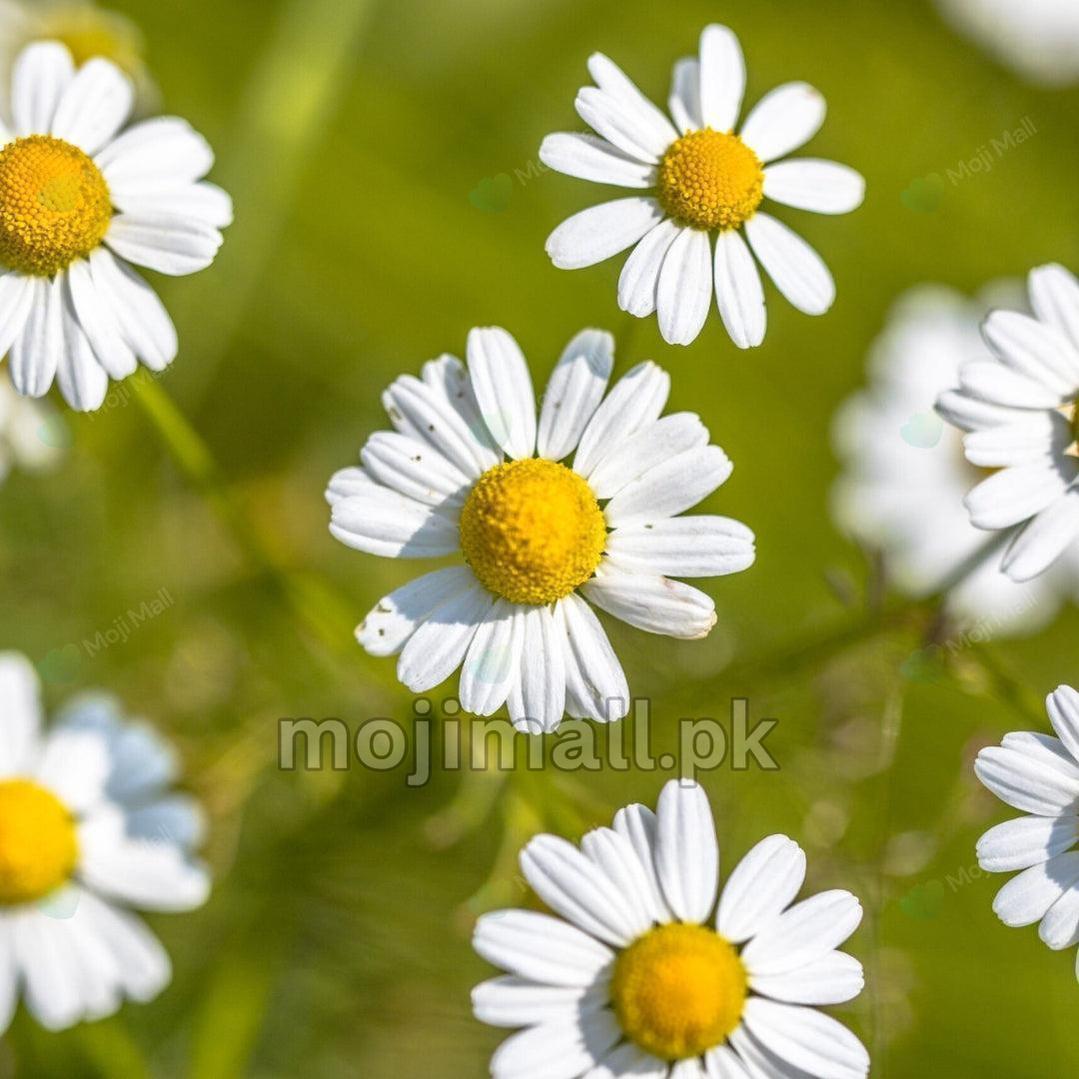
Chamomile Seeds, also known as Babuna or Gul-e-Babuna, produce fine, feathery plants covered with small white flowers and raised yellow centres. The lightly scented flowers can be used fresh or dried for herbal tea, potpourri and decorative crafts.
Native to Europe and western Asia, chamomile reached the Indian subcontinent during the Mughal period. It became known locally through traditional and Unani herbal use. Chamomile grows well in pots, borders and home herb gardens, preferring mild weather, bright sunlight and soil that drains easily.
Why Grow It
-
Tea Flowers: Fresh or dried flowers can be used for herbal tea.
-
Apple-Like Aroma: Flowers have a light, pleasant fragrance.
-
Long Flowering: Regular picking encourages further blooms.
-
Pollinator Friendly: Small flowers attract bees and beneficial insects.
-
Pot Friendly: Suitable for balconies, rooftops and small gardens.
Best Conditions
-
Germination: Usually 7–14 days
-
Temperature: Around 15–25°C
-
Sunlight: At least 5–6 hours
-
Pot size: 8–12-inch pot
-
Spacing: About 6–8 inches between plants
-
Plant height: Usually around 12–24 inches
-
Flowering: Can begin around 8–10 weeks after sowing
-
Soil: Light, moderately fertile and well-draining potting mix
Sowing note: In Lahore, Faisalabad, Islamabad and Rawalpindi, sow from October to November. In Karachi and Southern Punjab, sow from November to January after the summer heat eases. In colder northern and hilly areas, sow from March to April after the risk of hard frost has passed.
How to Sow
- Fill a tray or small pot with fine, moist seed starter mix.
- Scatter the seeds thinly over the surface.
- Press them gently into the mix, but do not bury them too deep.
- Mist carefully and cover the tray with a clear lid or plastic.
- Keep the covered tray in bright, indirect light.
- Open the cover daily and keep the surface lightly moist.
- Remove the cover after germination, then thin or transplant the seedlings.
Plant Care
Water young plants regularly until they become established. After that, water when the upper layer of the potting mix begins to dry. Avoid keeping the roots constantly wet.
Mix a small amount of Vermicompost into the final potting mix. Chamomile generally does not need regular fertilizer, as too much feeding can produce more leaves and fewer flowers.
If pests such as aphids, thrips, whiteflies or spider mites appear, spray Neem Oil on the affected leaves, including their undersides.
Local Gardener Tips
- Protect the seeds from heavy rain and strong watering.
- Thin crowded seedlings early to improve airflow.
- Avoid frequent or heavy fertilizer.
- Provide afternoon shade during strong heat.
- Remove weeds before they compete with young plants.
Harvesting
Pick flowers shortly after they open fully, preferably on a dry morning after the dew has disappeared. Regular picking encourages the plant to continue flowering.
Use the flowers fresh or spread them in a single layer to dry in a shaded, airy place. Once completely dry, store them in a sealed container away from heat and sunlight.
FAQs
Can I sow chamomile directly in its final pot?
Yes. Direct sowing works well and avoids disturbing the small roots during transplanting.
How many chamomile plants should I keep in one pot?
Keep one strong plant in a 10–12-inch pot. Too many plants in one pot can become crowded and weak.
Why are my chamomile seedlings falling over?
Tall, thin seedlings usually need more light. If the stems turn dark or collapse near the soil, damping off may be the cause. Move leggy seedlings to brighter light, reduce watering and improve airflow.
Common names: Chamomile, Babuna, بابونہ, Gul-e-Babuna, گلِ بابونہ