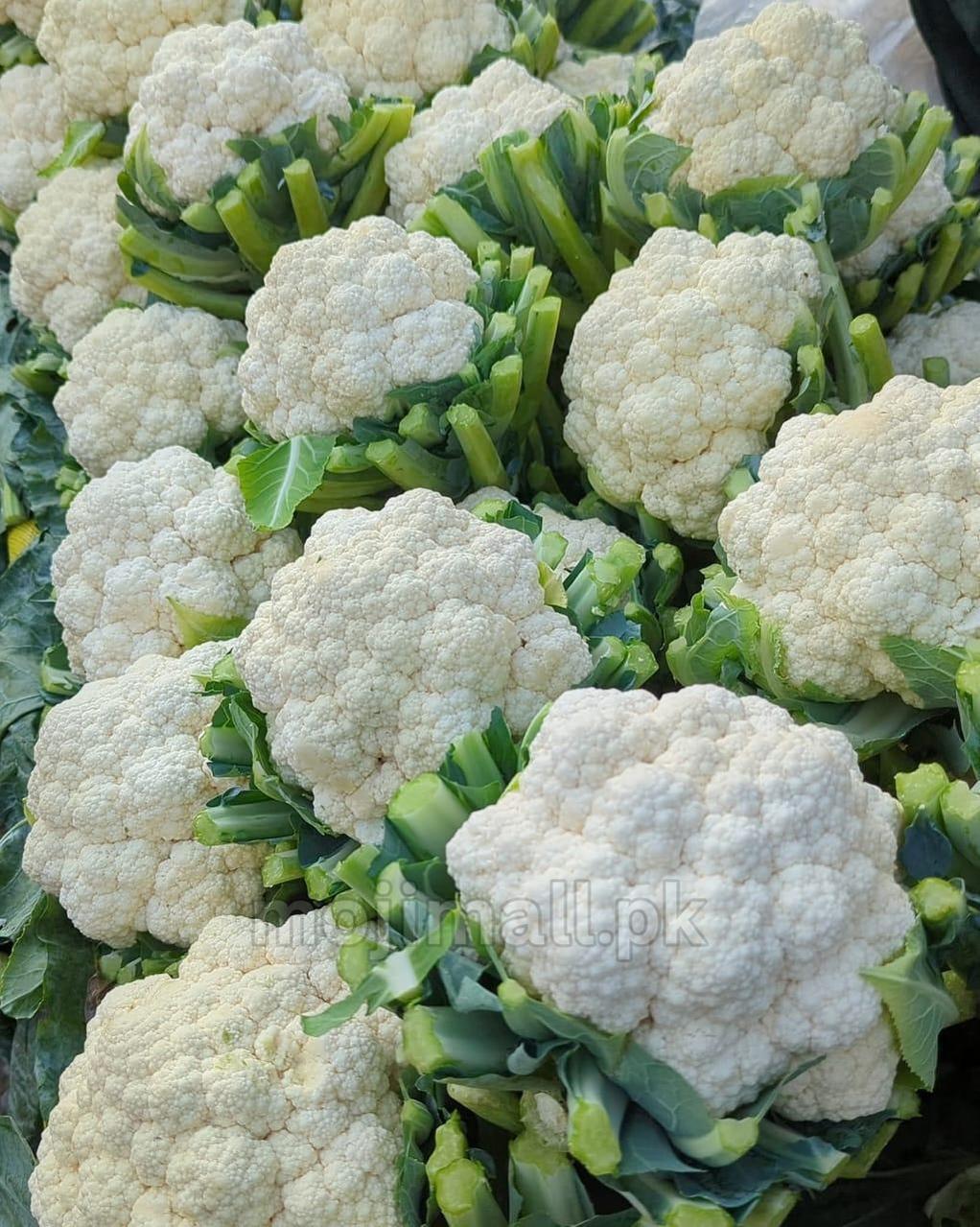
Cauliflower F1 Hybrid develops broad green leaves around a firm, white head. The head has a mild taste that absorbs spices well, making it suitable for aloo gobi, mixed sabzi, pakoras, pulao, soups and roasted dishes.
This F1 Hybrid is selected for plants that grow more evenly and form heads with a similar shape and size. The heads are also more likely to become ready within a closer period, making it easier to manage several plants together. Correct seasonal timing remains important because cauliflower needs cool weather while its head is forming.
Why Grow It
-
Firm White Heads: Forms closely packed heads with a tender texture.
-
Even Development: Plants grow at a similar pace when given equal care.
-
Similar Timing: Several plants can become ready within a closer period.
-
Everyday Cooking: Suitable for common Pakistani vegetable dishes and snacks.
-
Winter Pots: One plant can be grown in a large pot or grow bag.
Best Conditions
-
Germination: Usually 5–10 days
-
Temperature: Around 15–22°C
-
Sunlight: At least 6 hours
-
Pot size: A 14–16-inch wide pot for one plant
-
Spacing: About 18–24 inches between plants
-
Plant height: Usually around 18–24 inches
-
Soil: Loose, fertile and well-draining potting mix
In Lahore, Faisalabad, Islamabad and Rawalpindi, sow from September to November so the heads can develop during cooler weather. In Karachi and southern Punjab, sow from October to November after the summer heat has eased. In colder northern and hilly areas, sow from March to April after the risk of hard frost has passed.
How to Sow
- Sow the seeds around ¼ inch deep in a seedling tray filled with moist seed starter mix.
- Water gently and keep the tray in a bright place until the seedlings appear.
- Keep one healthy seedling in each cell and remove weaker seedlings.
- Begin introducing the seedlings to outdoor conditions when they have 4–5 true leaves.
- Transplant before the roots become crowded, keeping each seedling at its previous soil level.
Plant Care
Cauliflower grows best when its progress is not interrupted by dry soil or poor feeding. Water around the roots whenever the upper soil begins drying, but do not leave the pot waterlogged. Keep the healthy outer leaves because they supply energy to the developing head and protect it from strong sunlight.
Mix Vermicompost into the final potting mix before transplanting. Add another small amount around the plant after 3–4 weeks. Once the centre begins thickening, avoid excessive feeding that encourages leaves at the expense of the head.
Cabbage caterpillars can hide near the centre or beneath the leaves. Inspect the plants regularly and remove caterpillars and insect eggs by hand. If aphids or whiteflies appear, spray Neem Oil on the affected areas during the evening.
Local Gardener Tips
- Do not keep seedlings in small tray cells for too long.
- Handle the roots gently while transplanting.
- Give light afternoon shade if temperatures rise unexpectedly.
- Bend a few outer leaves over the developing head if strong sunlight is causing it to yellow.
Harvesting
Do not wait for the head to become as large as shop-bought cauliflower. Harvest when it feels firm and its surface remains tightly packed. Once the small sections begin separating, its texture starts becoming coarse.
Use a clean knife to cut the main stem below the head. Leave a few surrounding leaves attached to protect the cauliflower during handling and storage. Refrigerate it soon after harvesting if it will not be cooked the same day.
FAQs
Why did the plant form a very small head?
This can happen when seedlings become rootbound, suffer transplant damage or face unsuitable temperatures soon after planting. Starting with young, actively growing seedlings reduces this problem.
Can cauliflower leaves be eaten?
Yes. Healthy young leaves can be washed and cooked like cabbage leaves. Older outer leaves may be tougher and require longer cooking.
Why does the white head have a purple or pink tint?
Cold weather or direct sunlight can sometimes cause light colouring on the head. It is usually harmless if the cauliflower remains firm and shows no signs of decay.
Will another large head grow after the first one is removed?
Usually not. Cauliflower forms one main head. Small side growth may appear afterward, but it normally does not develop into another full-sized head.
Common names: Cauliflower, Phool Gobhi, Phool Gobi, پھول گوبھی