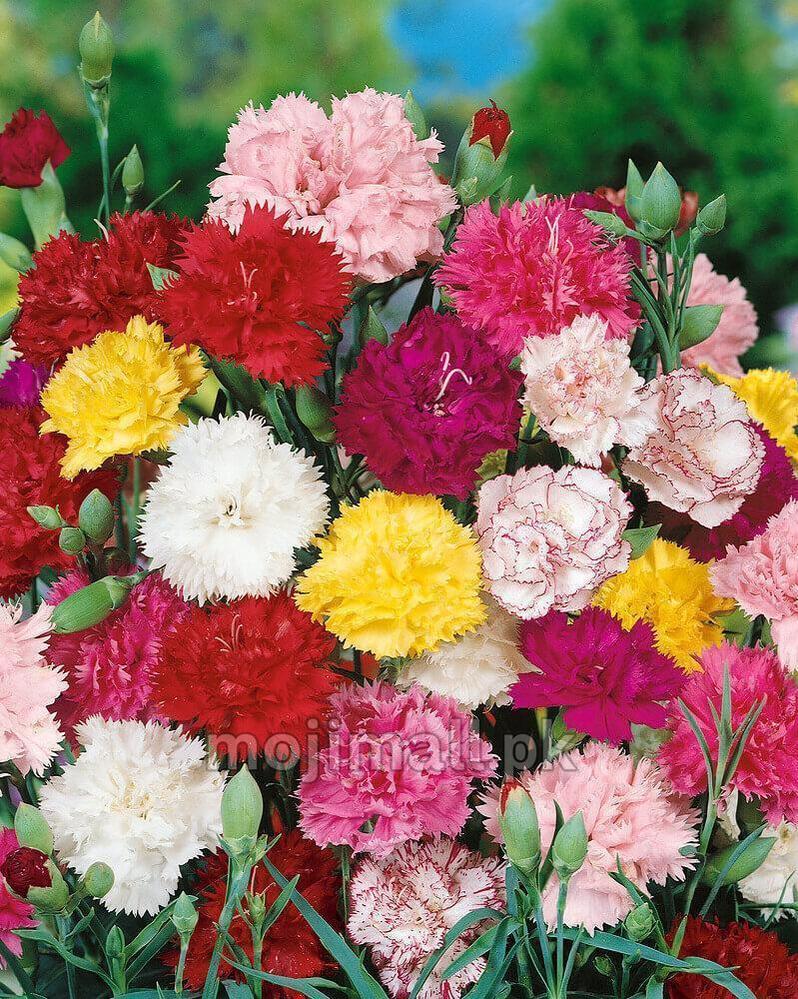
Carnation Chabaud Giant Mix produces tall, branching stems carrying ruffled double flowers in red, pink, yellow, white and other mixed shades. The blooms have a soft, clove-like fragrance and rise above narrow blue-green leaves. Their long stems make them especially suitable for pots, borders and cut-flower arrangements.
Garden Carnation is native to the Balkan Peninsula, while the Chabaud series is an old French group selected for fragrant cut flowers. It grows best during cool, sunny weather and flowers through Pakistan’s late winter and spring when sown early.
Why Grow It
-
Double Blooms: Layered, fringed petals give the flowers a full appearance.
-
Mixed Colours: Produces red, pink, yellow, white and other attractive shades.
-
Spicy Fragrance: Blooms carry a soft scent similar to clove.
-
Long Vase Life: Cut stems remain attractive for several days in clean water.
-
Seed Quality: Germination-tested Carnation seeds with a high germination rate.
Best Conditions
-
Germination: Usually 7–14 days
-
Temperature: Around 15–21°C
-
Sunlight: At least 6 hours
-
Pot size: One plant in a 8–12-inch-wide pot
-
Spacing: About 10–12 inches between plants
-
Plant height: Usually around 24–36 inches
-
Soil: Light, fertile and well-draining mix
In Lahore, Faisalabad, Islamabad and Rawalpindi, sow from September to November. In hotter areas such as Karachi and southern Punjab, sow from October to December once the strongest summer heat has eased. In colder northern and hilly areas, sow from March to April, after the risk of hard frost has passed.
How to Sow
Start Chabaud Carnation in a seedling tray because it needs a long growing period before flowering.
- Fill the tray with fine, moist seed starter mix.
- Sow 2–3 seeds per cell or space them thinly.
- Cover the seeds with around ⅛ inch of the mix.
- Water the surface gently using a fine spray.
- Keep the container at 18–21°C with light moisture.
- Transplant at 3–4 true leaves, leaving 10–12 inches between plants.
Plant Care
Water when the upper layer of soil begins to dry. Keep young plants evenly moist, but never allow the pot to remain soggy because the roots and lower stems can rot.
Pinch the main growing tip after the plant develops 5–6 pairs of leaves. This encourages more side branches and flowering stems. Provide light support before the buds become heavy in windy locations.
Mix a small amount of Vermicompost into the final potting mix before transplanting. Feed lightly when buds begin forming. If aphids or spider mites appear, apply Neem Oil to the affected foliage while avoiding open flowers.
Local Gardener Tips
- Transplant seedlings during a cool evening to reduce stress.
- Give full winter sun and light afternoon shade as spring becomes warmer.
- Leave space between plants and avoid wetting the leaves late in the evening.
- Protect developing buds from prolonged rain and heavy rooftop watering.
Flowering
Chabaud Carnations generally begin flowering around 130–140 days after sowing. The plants can continue producing buds while the weather remains mild. Remove faded flowers by cutting just above a pair of leaves.
For indoor arrangements, cut a stem when its first flower is fully open and one or two other buds are beginning to open. Place the stems in clean water immediately.
FAQs
Why are the flower buds turning brown before opening?
Prolonged moisture, poor airflow or water remaining inside the buds can encourage fungal rot. Remove damaged buds, increase spacing and water near the soil instead of wetting the flowers.
Common names: Carnation, Chabaud Carnation, Chabaud Giant Mix, Border Carnation, Clove Pink, Gul Lahmi, گل لہمی