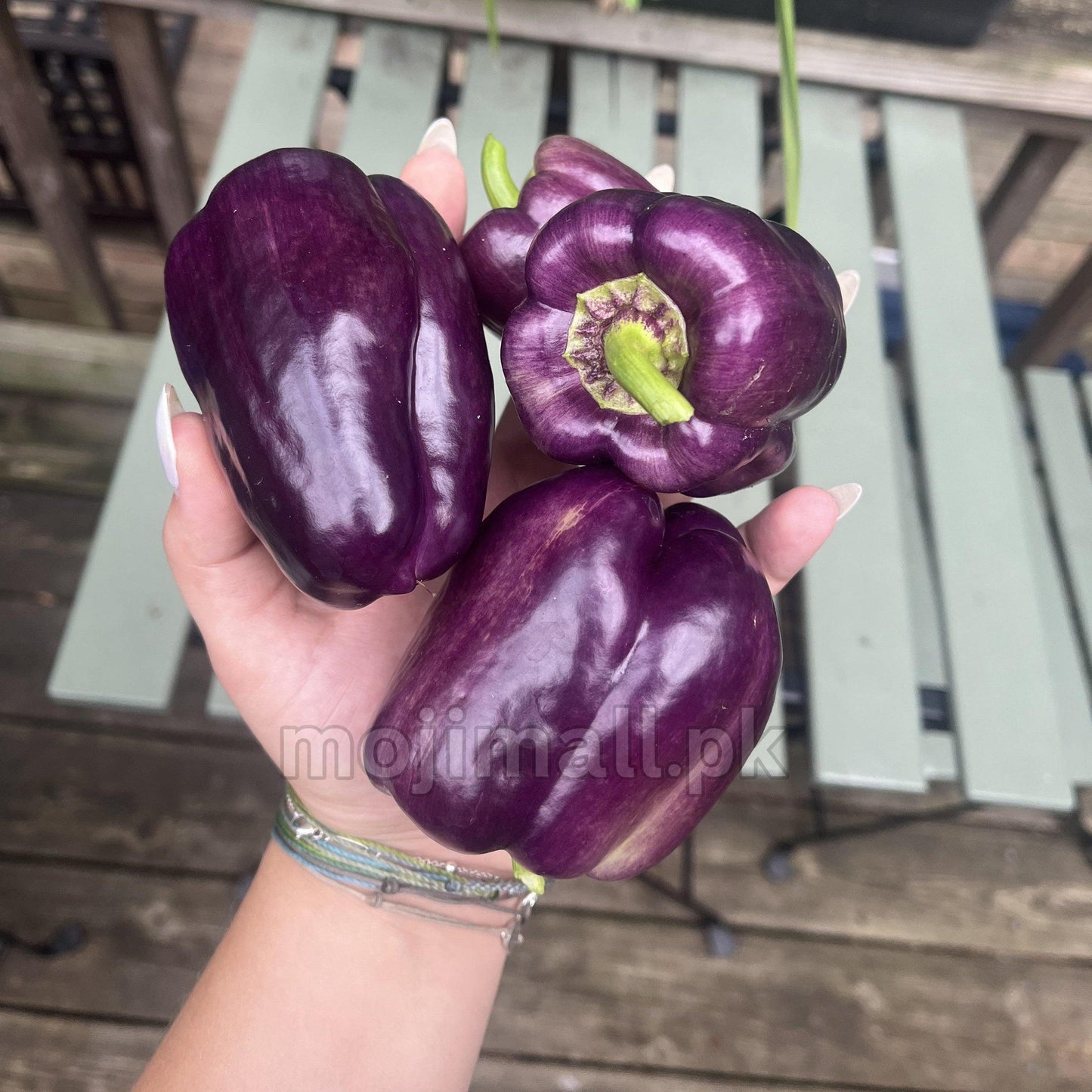
Purple Capsicum F1 Hybrid produces sweet, crunchy bell peppers with a rich purple colour. The fruits can be eaten fresh or used in salads, sandwiches, pizza, noodles, rice, omelettes, stir-fries and stuffed capsicum dishes.
As an F1 Hybrid, it is selected for even plant growth and fruits that develop with a similar shape, size and purple colour under the same growing conditions. Steady watering, sufficient sunlight and regular feeding help the plants maintain these characteristics.
Why Grow It
-
Even Plant Growth: F1 plants develop at a similar pace when given the same care.
-
Similar Fruits: Produces capsicums with a more consistent shape and size.
-
Purple Colour: Adds a different colour to salads and cooked dishes.
-
Sweet and Crunchy: Suitable for eating fresh and for everyday cooking.
-
Pot Friendly: Can be grown in large pots, grow bags and raised beds.
Best Conditions
-
Germination: Usually 10–21 days
-
Temperature: Around 20–30°C
-
Sunlight: At least 6–8 hours
-
Pot size: A 14–16-inch pot for one plant
-
Spacing: About 18–24 inches between plants
-
Plant height: Usually around 24–36 inches
-
Soil: Fertile, loose and well-draining potting mix
In Lahore, Faisalabad, Islamabad and Rawalpindi, sow from January to March, or again from July to August with protection from intense heat and heavy rain. In Karachi and southern Punjab, sow from January to February, or from September to October after the strongest summer heat has eased. In colder northern and hilly areas, sow from March to April after the risk of frost has passed.
How to Sow
- Fill a seedling tray or small pots with fine, moist seed starter mix.
- Sow one seed in each cell, around ¼ inch deep.
- Keep the tray warm and maintain light moisture without making the mix soggy.
- Move the seedlings into bright sunlight gradually after they appear.
- Transplant when the seedlings have 3–4 true leaves and strong stems.
Plant Care
Water deeply whenever the upper layer of soil begins to dry. Keep the moisture steady while flowers and fruits are developing because repeated drying and heavy watering can damage the fruits. Stake the main stem if it begins bending under the weight of the capsicums.
Mix a small amount of Vermicompost into the final potting mix before transplanting. Add another small amount around the plant when flowering begins, keeping it away from the main stem.
Check the undersides of leaves for aphids, whiteflies and spider mites. Remove badly affected leaves and spray Neem Oil on the remaining affected leaves during the evening.
Local Gardener Tips
- Give newly transplanted seedlings light afternoon shade for the first few days.
- Shelter plants from prolonged monsoon rain and waterlogged soil.
- Gently shake flowering branches if plants are growing where few insects visit.
- Use light mulch around the plant to reduce rapid soil drying during warm weather.
Harvesting
Purple Capsicum F1 Hybrid generally begins giving mature fruits around 70–85 days after transplanting. Harvest when the capsicums have developed a clear purple colour and feel firm, plump and smooth.
Cut each fruit with scissors or a clean knife, leaving a short piece of stem attached. Regular picking allows the plant to continue developing new fruits.
FAQs
Why are the capsicums not turning purple?
The fruits may still be immature. Give them additional time on the plant and make sure they receive sufficient sunlight. Fruits hidden under dense leaves may develop colour more slowly.
Why are the flowers falling without forming fruits?
Flower drop can happen during extreme heat, cold nights, irregular watering or poor pollination. Keep the soil evenly moist and gently shake the flowering branches in the morning.
What causes a dark, sunken patch at the bottom of the fruit?
This is usually blossom-end rot. It commonly develops when irregular watering prevents the plant from taking up calcium properly. Maintain steady soil moisture and avoid allowing the pot to dry completely.
Why are the fruits small or thin?
Small fruits may result from insufficient sunlight, crowded plants, dry soil or weak feeding. Give each plant enough space and remove weak or damaged fruits so the remaining ones can develop properly.
Common names: Purple Capsicum, Purple Bell Pepper, Purple Sweet Pepper, Baingani Shimla Mirch, Jamni Shimla Mirch, بینگنی شملہ مرچ, جامنی شملہ مرچ