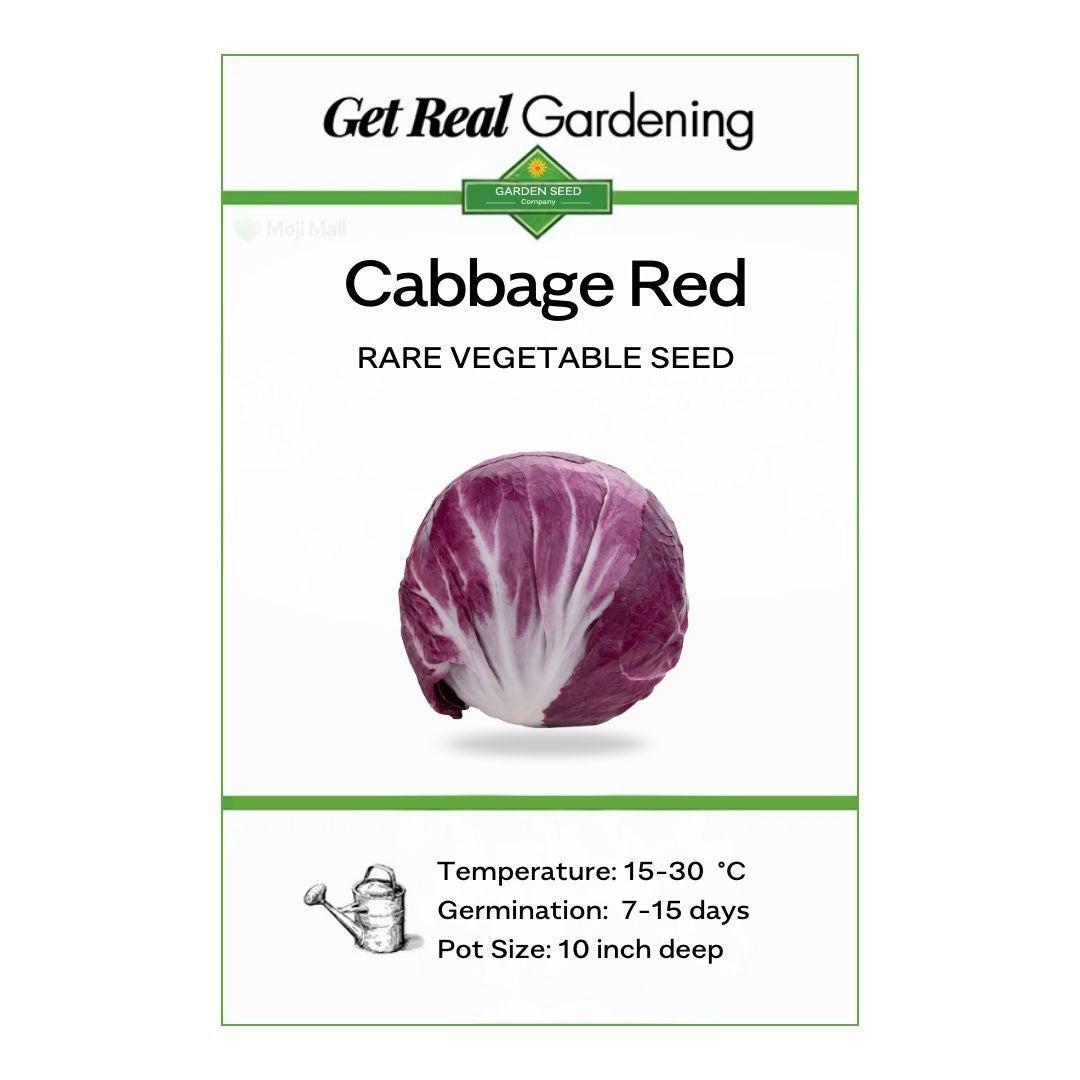
Red Cabbage forms firm, rounded heads of tightly layered red-purple leaves. It has a mildly sweet cabbage flavour and a crisp texture. Slice it into salads, sandwiches and wraps, or use it in stir-fries, soups, pickles, fermented foods and cooked vegetable dishes.
Red Cabbage was developed from wild cabbage native to the Atlantic coasts of western Europe. Generations of selection produced the dense heads and deeply coloured leaves grown today.
Why Grow It
-
Colourful Heads: Deep red-purple leaves add colour to fresh and cooked dishes.
-
Crisp Texture: Firm leaves provide a satisfying crunch.
-
Many Uses: Suitable for salads, wraps, pickles, soups and cooked vegetables.
-
Winter Growing: Develops best during cool weather.
-
Container Suitable: One plant can be grown in a large pot.
Best Conditions
-
Germination: Usually 5–10 days
-
Temperature: Around 10–25°C
-
Sunlight: At least 6 hours
-
Pot size: A 14–16-inch pot for one plant
-
Spacing: About 12–18 inches between plants
-
Plant height: Usually around 12–18 inches
-
Soil: Moist, fertile and well-draining mix
In Lahore, Faisalabad, Islamabad and Rawalpindi, sow from August to October for transplanting into cooler weather. In hotter areas such as Karachi and southern Punjab, sow from September to November once the strongest heat has eased. In colder northern and hilly areas, sow from March to April after severe frost has passed, or from July to August for an autumn harvest.
How to Sow
- Fill a seed tray or small pots with fine, moist seed starter mix.
- Sow the seeds around ¼–½ inch deep.
- Cover them lightly and water with a gentle spray.
- Keep the mix lightly moist in a bright location.
- Transplant seedlings when they have 3–4 true leaves, leaving 12–18 inches between plants.
Plant Care
Water regularly to keep the soil evenly moist, particularly after the head begins forming. Avoid allowing the soil to become completely dry between waterings. Remove weeds carefully without disturbing the shallow roots.
Mix a small amount of Vermicompost into the soil before transplanting. Add another small amount around the plant after 3–4 weeks if growth appears slow.
Check the undersides of leaves for aphids, flea beetles and cabbage caterpillars. Remove caterpillars and badly damaged leaves by hand. If aphids appear, spray Neem Oil on the affected leaves, including their undersides.
Local Gardener Tips
- Grow only one plant in each 14–16-inch pot.
- Protect young seedlings from strong rain and watering.
- Give the plants full winter sunlight for compact growth.
- Check curled and folded leaves regularly for caterpillars.
- Harvest firm heads promptly instead of leaving them on the plant too long.
Harvesting
Red Cabbage is generally ready around 85–110 days after sowing, depending on the variety and weather. Harvest when the head has reached a useful size and feels firm when gently pressed.
Cut the head close to its base with a clean, sharp knife. Remove damaged outer leaves but keep healthy wrapper leaves around the head during storage. Refrigerate the harvested cabbage and wash it shortly before use.
FAQs
Why is my Red Cabbage growing leaves but not forming a head?
Loose heads can result from warm weather, crowding, weak sunlight or interrupted growth. Give each plant enough space, maintain regular watering and allow it to develop during cool weather.
Why has the cabbage head split?
Splitting commonly happens when heavy watering or rain follows a dry period. The inner leaves expand faster than the outer leaves can stretch. Keep the soil evenly moist and harvest the head once it becomes firm.
Why does Red Cabbage turn blue while cooking?
The natural pigment in Red Cabbage changes colour in alkaline conditions. Adding a little lemon juice or vinegar during cooking helps maintain its red-purple colour.
Common names: Red Cabbage, Purple Cabbage, Red Head Cabbage, Rotkohl, سرخ بند گوبھی