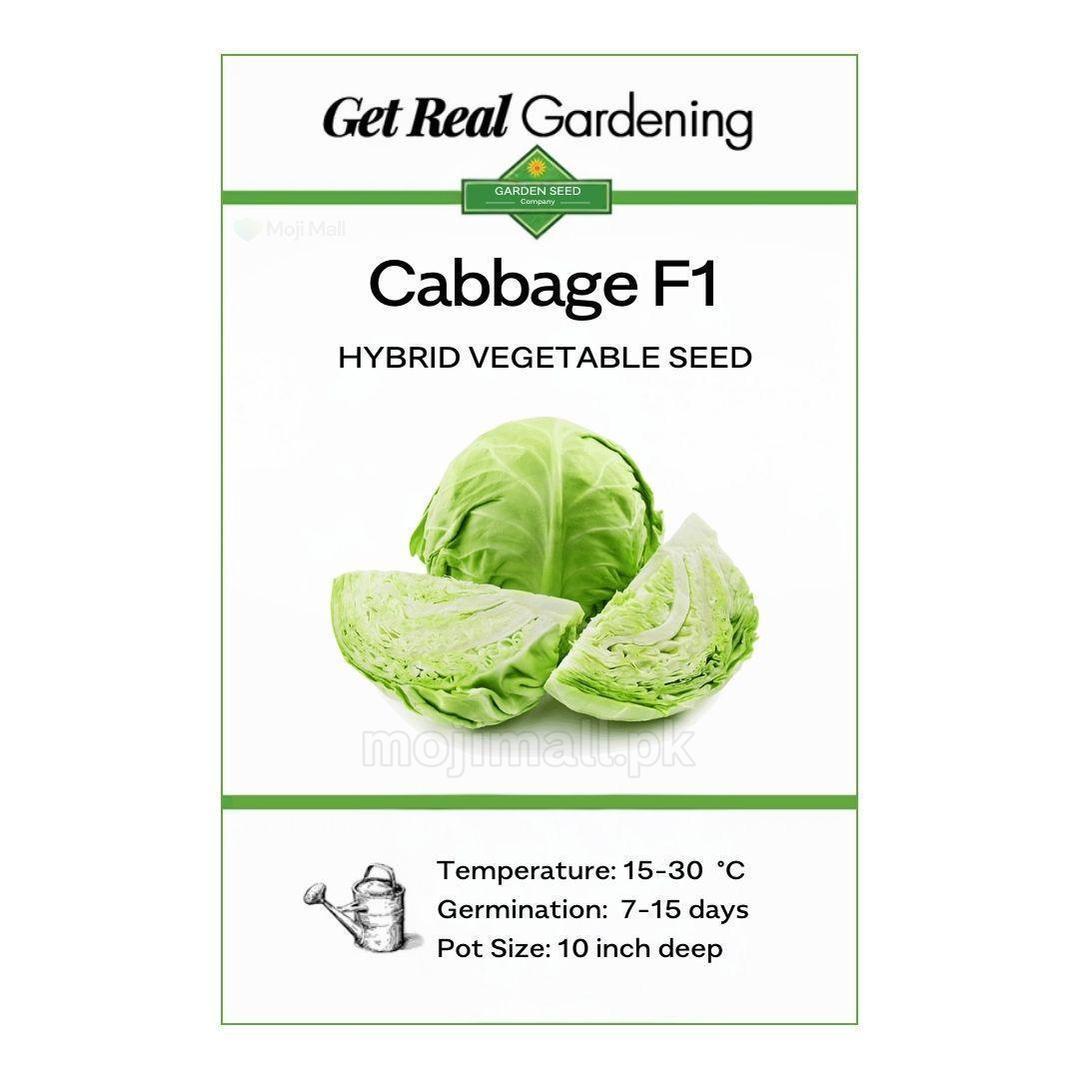
Cabbage F1 Hybrid produces firm, round green heads with crisp, tightly layered leaves. The fresh cabbage can be used in salads, sandwiches, soups, noodles, stir-fried dishes and everyday sabzi.
This F1 Hybrid is selected for even plant growth, strong head formation and heads that develop at a similar pace. These traits make several plants easier to manage and harvest when they receive the same spacing, sunlight, water and cool weather.
Why Grow It
-
Even Growth: Plants tend to develop at a similar rate under the same conditions.
-
Strong Head Formation: Forms firm, tightly layered cabbage heads.
-
Similar Heads: Plants are more likely to produce heads with a consistent shape and size.
-
Crisp Leaves: Fresh leaves have a firm and crunchy texture.
-
Pot Friendly: Suitable for garden beds, large pots and grow bags.
Best Conditions
-
Germination: Usually 5–10 days
-
Temperature: Around 15–22°C
-
Sunlight: At least 6–8 hours
-
Pot size: A 14–16-inch pot for one plant
-
Spacing: About 12–18 inches between plants
-
Plant height: Usually around 12–24 inches
-
Soil: Moist, fertile and well-draining mix
In Lahore, Faisalabad, Islamabad and Rawalpindi, sow from September to November. In hotter areas such as Karachi and southern Punjab, sow from October to December once the strongest summer heat has eased. In colder northern and hilly areas, sow from March to April after the risk of hard frost has passed.
How to Sow
- Fill a seedling tray or small pots with fine, moist seed starter mix.
- Sow the seeds about ¼ inch deep and cover them lightly.
- Mist gently and place the tray in bright, indirect light.
- Keep the mix lightly moist until the seedlings appear.
- Transplant when seedlings have 4–6 true leaves, leaving 12–18 inches between plants.
Plant Care
Water deeply whenever the upper soil begins to dry. Keep the moisture steady while the heads are forming, but do not leave the roots in soggy soil. Avoid keeping the leaves wet overnight, especially during humid weather.
Mix a small amount of Vermicompost into the final soil before transplanting. Another small amount can be mixed into the upper soil about four weeks later. Stop adding extra fertilizer once the heads begin forming because excessive feeding can cause loose or split heads.
Check the undersides of leaves regularly for insect eggs, cabbage worms, loopers and aphids. Remove visible eggs and caterpillars by hand. Spray Neem Oil on affected leaves, including their undersides, when aphids or other small pests appear.
Local Gardener Tips
- Transplant during the evening or on a cloudy day to reduce wilting.
- Protect new transplants from strong sunlight and wind for the first two days.
- Keep the soil gently firm around the base so the plant remains upright.
- Remove standing water from the centre of the plant after heavy rain.
Harvesting
Cabbage is usually ready around 70–90 days after sowing. Because the plants grow more evenly, several heads may become ready within a similar period.
Harvest when a head feels firm and compact when pressed gently. Cut through the stem below the head with a clean, sharp knife. Leave two or three outer leaves around the head for protection and keep the harvested cabbage refrigerated.
FAQs
Why has the cabbage head split?
A mature head may split when heavy watering or rain follows a dry period. Delayed harvesting can also increase the risk. Harvest firm heads promptly when they are ready.
Why are the inner leaf edges brown?
This is often caused by uneven moisture or very rapid growth during head formation. Keep watering steady and avoid excessive fertilizer.
Why has the plant produced a flower stem?
Young cabbage exposed to cold stress followed by warmer weather may begin flowering early. Sudden temperature changes can also cause this problem.
Should damaged outer leaves be removed?
Remove leaves that are badly damaged, rotting or touching wet soil. Keep healthy outer leaves because they help the plant form and protect its head.
Common names: Cabbage, Green Cabbage, Head Cabbage, Band Gobhi, بند گوبھی